- Home
- ACADEMIC
- Drama & Performance Studies
- Theatre Making
- Marching Song
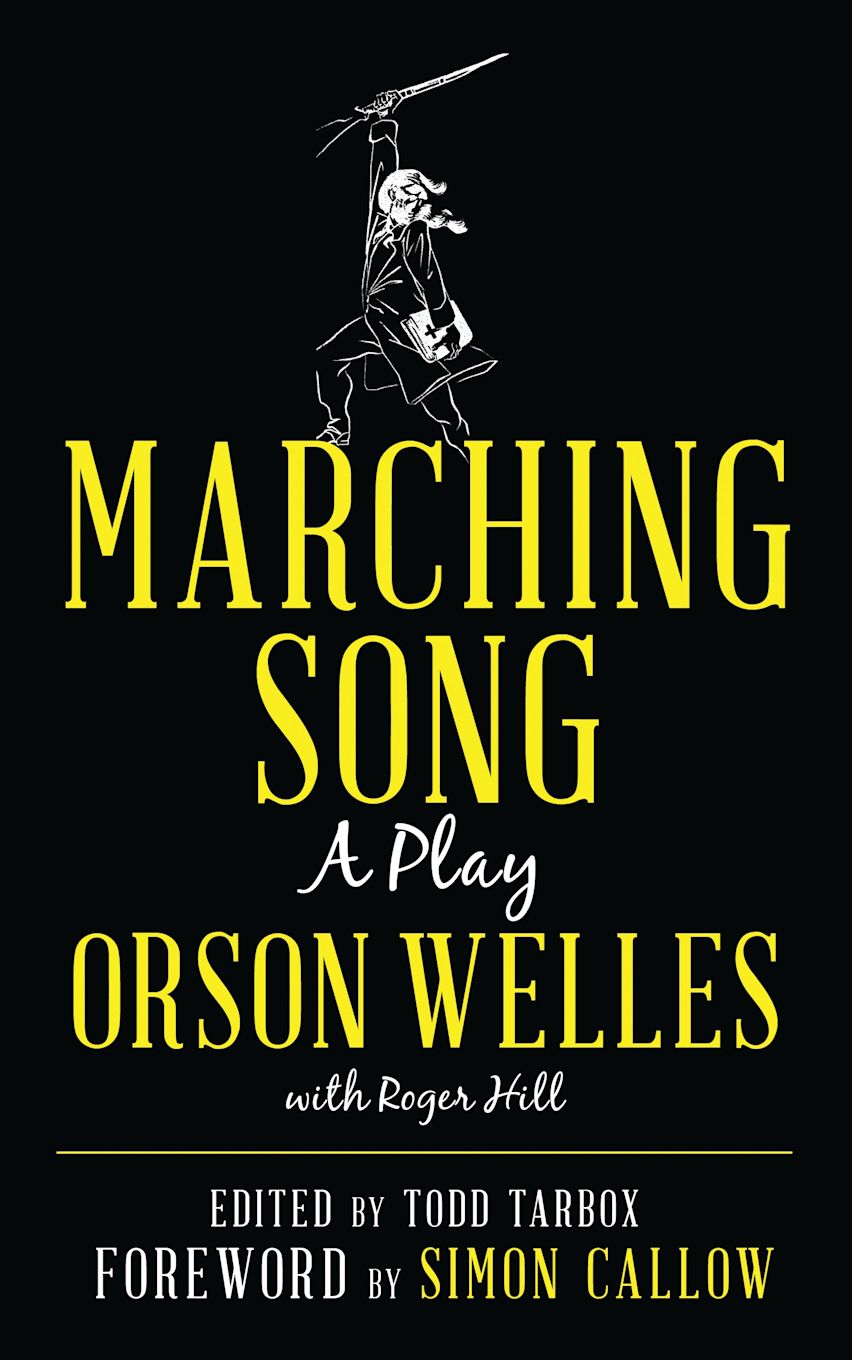
Marching Song
A Play
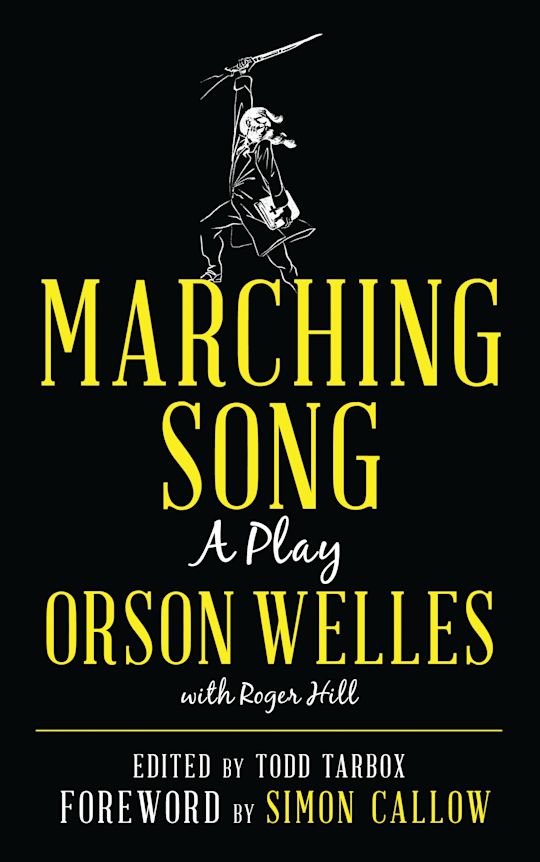
Marching Song
A Play

You must sign in to add this item to your wishlist. Please sign in or create an account
Description
Before The Cradle Will Rock, before War of the Worlds, before Citizen Kane—there was Marching Song.
At the age of 25 Orson Welles co-wrote, directed, and starred in Citizen Kane, widely regarded as one of the greatest films of all time. But this was not the first achievement in the young artist’s career. A few years earlier he terrorized America with his radio broadcast of War of the Worlds. And even before he conquered the airwaves, Welles had made a name for himself in New York theatre, with his dynamic stagings of Shakespeare classics and the politically charged musical The Cradle Will Rock. But before all of these there was Marching Song—a play about abolitionist John Brown—that Welles had co-written at the age of 17. While attending the Todd School for Boys, Welles collaborated with Roger Hill, the schoolmaster at Todd, to produce this full-length drama.
Marching Song: A Play is a work by one of America’s true geniuses at an early stage of his creative growth. Steeped in historical detail, the play chronicles Brown’s fight against slavery, his raid on Harper’s Ferry, his capture, his conviction for treason, and his execution. In addition to the entire text of the play, this volume features a biographical sketch of Welles and Hill—written by Hill’s grandson—during their days together at Todd.
A fascinating dramatization of a pivotal event in American history, this play also demonstrates Welles’ burgeoning development as social commentator and an advocate for human rights, particularly on behalf of African Americans. Featuring a foreword by noted Welles biographer, Simon Callow, Marching Song: A Play is an important work by an American icon.
Product details
| Published | Aug 09 2019 |
|---|---|
| Format | Ebook (Epub & Mobi) |
| Edition | 1st |
| Pages | 200 |
| ISBN | 9781538125533 |
| Imprint | Rowman & Littlefield |
| Illustrations | 25 BW Photos, 2 Textboxes |
| Publisher | Bloomsbury Publishing |
About the contributors
Reviews
-
Marching Song is an exemplary publication in many ways. Opening with Welles’s touching 1982 eulogy to the editor’s grandmother, the book contains a magnificent preface by Simon Callow emphasizing how important Hill’s mentorship of the young Welles was in that very creative environment that the Todd school represented, one that puts many traditional establishments past, present, and futire, to shame. Without the encouragement of Hill, it is doubtful whether the future director would have gone on to contribute to the artistic glory of innovative cinema. . . . Significant works contain a relevance not just to their period of origin but also beyond. In his astute editing, Todd Tarbox recognizes the validity of this important axiom making his edition of Marching Song all the more relevant today.
Film International
-
The play’s themes of racial justice remain significant and the text offers a glimpse of the young author’s immense creativity and burgeoning social conscience; however, the supplementary essays are what make this publication a particular treat. . . the cumulative effect of the play, the essays, and rare photos and illustrations makes for an engaging and thought-provoking read.
Book & Film Globe
-
A significant cultural event. . . One of the first things that strikes the reader about Marching Song is that it is more advanced in its approach—one might say, far more advanced—than virtually anything else in the American theater in the 20th century—including the efforts, as sincere and serious as they certainly were, of Eugene O’Neill, Arthur Miller, Clifford Odets, Tennessee Williams, William Inge, Edward Albee, etc. Welles’ play owes far more to Shakespeare and other epic traditions than it does to the cramped psychological drama so beloved by American playwrights.
The World Socialist Website
-
[Marching Song] is intensely vatic. . . . what a lot of people do not know is that Welles, for all of the (inaccurate) charges against him of cupidity and sloth, was a veritable crusader in the cause of equal rights. His civic-minded radio programmes reflect this dedication, as do his underappreciated newspaper columns. Welles even used his pulpit in print to chase down race-motivated murderers. The rediscovered Marching Song makes for an interesting reading experience. It is overlong – an irony given Welles’s penchant for cutting. (He sliced and diced Shakespeare like no one has, and he was good at it.) But it also has something of the dyadic approach of Kane: a ladling of fear, a coating of mystery, with proto-noir touches. Welles scholars will be drawn to those connections, but the thing is damn autonomous, and more clear-eyed than one could think the work of a boy could be.
Times Literary Supplement
-
I can't recommend the book highly enough. The play itself is a fascinating piece of work, perhaps classifiable as juvenilia but marked by a passion and commitment that's remarkable in an artist of any age. Welles was a special kind of humanist, one who knew that idealism without works is dead. Hence his portrayal of Brown. Hence his 1946 radio addresses on Isaac Woodard, Jr., which are reproduced in the copious and sensitive supporting materials buttressing the play at both ends of the volume.
Glen Kenny, Some Came Running
-
This script of an action-filled play about John Brown that was never performed on stage raises profound questions about the role of violence in the crusade against slavery. The drama is compelling--no surprise, since one of the playwrights was Orson Welles, master of stage, screen, and radio, who uses this medium to illustrate a key event that brought on the Civil War.
James M. McPherson, author of Battle Cry of Freedom