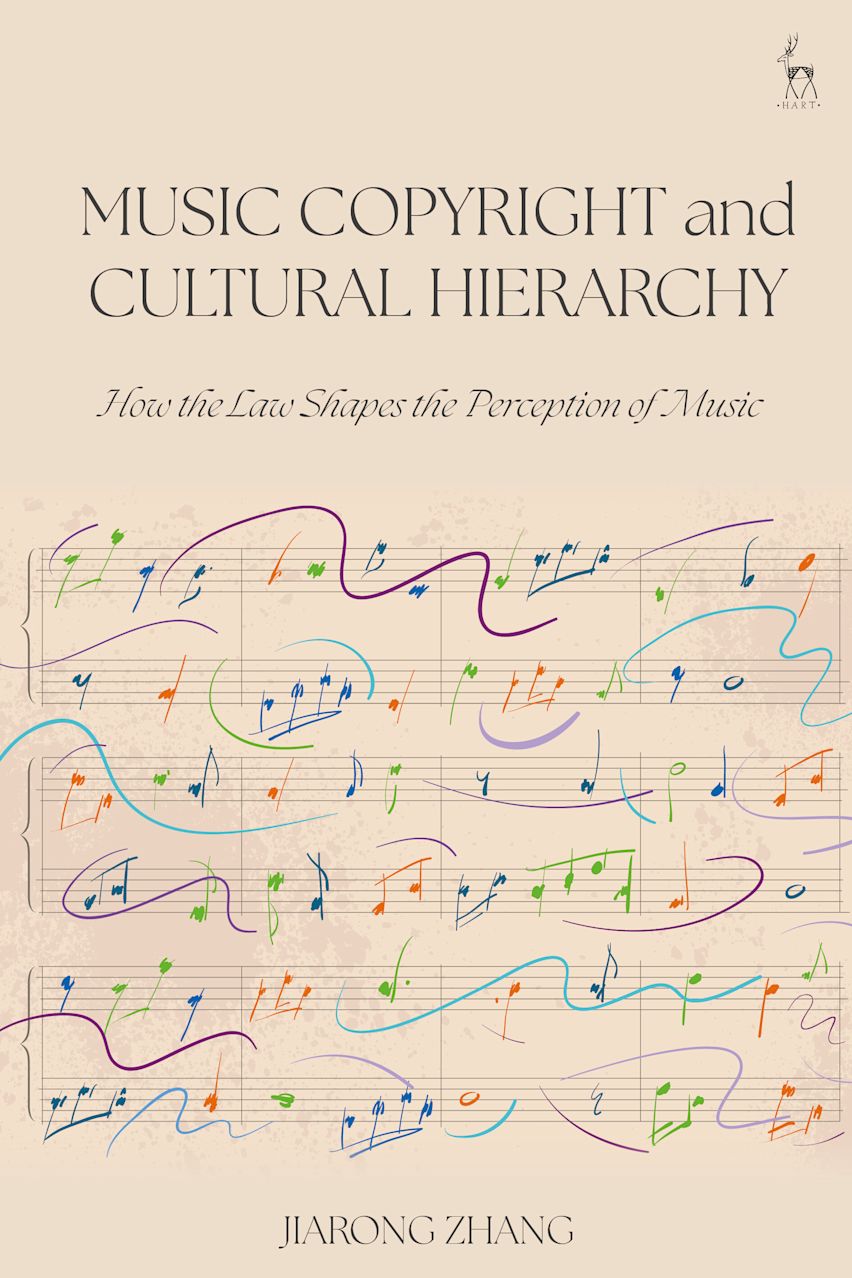
Music Copyright and Cultural Hierarchy
How the Law Shapes the Perception of Music
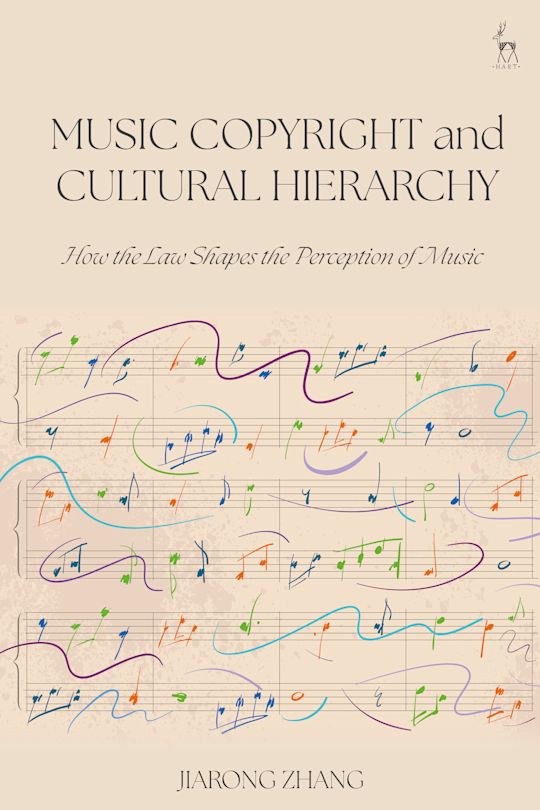

Music Copyright and Cultural Hierarchy
How the Law Shapes the Perception of Music
Buying pre-order items
Ebooks and Audiobook
You will receive an email with a download link for the ebook or audiobook on the publication date.
Payment
You will not be charged for pre-ordered books until they are available to be shipped. Pre-ordered ebooks will not be charged for until they are available for download.
Amending or cancelling your order
For orders that have not been shipped you can usually make changes to pre-orders up to 72 hours before the publishing date.
Payment for this pre-order will be taken when the item becomes available
Description
This book explores how (UK) copyright law shapes a cultural hierarchy of music, positioning Western classical music as 'high culture' and (Scottish) traditional music as 'low culture'.
Taking an interdisciplinary, socio-legal, and critical approach, the book connects copyright law, cultural production, and cultural perception and addresses the central issue through three sub-themes. (1) It reveals the resonances and dissonances between copyright notions (ie originality, authorship, and fixation) and the respective production paradigms (ie the creation process, creatorship, and creation form) of the two music genres. (2) It investigates how these notions reconfigure and perpetuate the production paradigm of a music genre in historical (ie the 1770s–1840s) and contemporary contexts. (3) It analyses how the resulting changes in the production paradigm endow a music genre with new aesthetic characteristics and ultimately ascribe the genre to 'high culture' or 'low culture'. Bringing these themes together, the book develops a model of how copyright law shapes cultural hierarchy.
As the first book dedicated to examining the cultural hierarchy of music through a copyright lens, Music Copyright and Cultural Hierarchy fills a critical research gap in intellectual property law, (ethno)musicology, and cultural studies. The model provides a new framework for examining the impact of law on cultural production and perception, within and beyond the field of music. It will spark interest among intellectual property researchers, critical legal scholars, legal historians, (ethno)musicologists, cultural studies scholars, musicians, and anyone interested in the intersection of law and music.
Accessibility Information
Additional accessibility information
- PDF/UA-2, 1.4
- accessibility@bloomsbury.com
Hazards
The publication contains no hazards
Support for non-visual reading
Has alternative text descriptions for images
Navigation
- Page list to go to pages from the print source version
- Elements such as headings, tables, etc for structured navigation
- All or substantially all textual matter is arranged in a single logical reading order
Table of Contents
2. Identifying the Hierarchy
3. Originality: Making Music within a Finite System
4. Authorship: Ascribing Music to a Creator
5. Fixation: Textualising Sounds into Notes
6. Conclusion
Product details
| Published | Mar 04 2027 |
|---|---|
| Format | Ebook (PDF) |
| Edition | 1st |
| Pages | 272 |
| ISBN | 9781509989386 |
| Imprint | Hart Publishing |
| Publisher | Bloomsbury Publishing |
Related Titles