The Piano Teacher’s Guidebook to the Extra-Ordinary Student
For Learners Who Are Neurodivergent, Gifted, Twice-Exceptional, or Physically Diverse
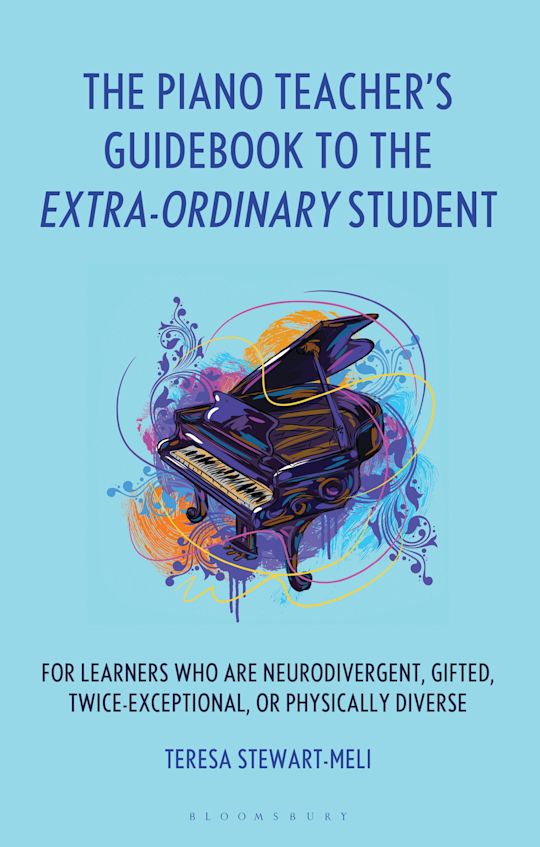

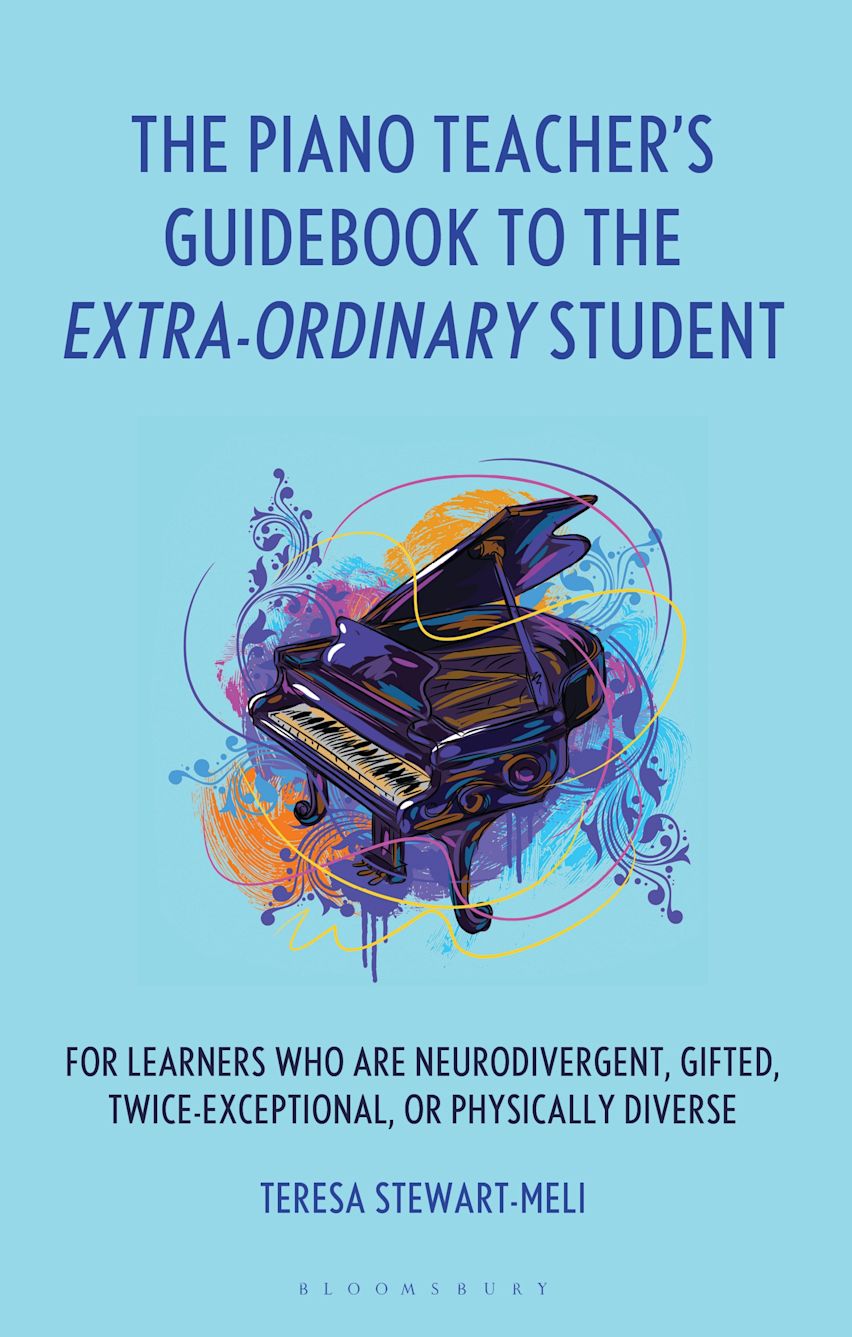
The Piano Teacher’s Guidebook to the Extra-Ordinary Student
For Learners Who Are Neurodivergent, Gifted, Twice-Exceptional, or Physically Diverse
Buying pre-order items
Ebooks and Audiobook
You will receive an email with a download link for the ebook or audiobook on the publication date.
Payment
You will not be charged for pre-ordered books until they are available to be shipped. Pre-ordered ebooks will not be charged for until they are available for download.
Amending or cancelling your order
For orders that have not been shipped you can usually make changes to pre-orders up to 72 hours before the publishing date.
Payment for this pre-order will be taken when the item becomes available
Description
Research-based pedagogical tools and practical information for piano educators teaching neurodiverse, gifted, and twice-exceptional students.
Extraordinary minds have always existed in the studio music setting, and these are, in many instances, minds which have produced important music: from Mozart and Satie to Billie Eilish and Florence Welch. This book illustrates the stark duality between the current, accepted piano pedagogical methods and the researched neurological, physiological, and developmental needs of the increasingly growing neurodiverse, gifted, and twice-exceptional student populations. The first part explores the historically rich world of keyboard pedagogy and where and why that world falls short for a large sector of the population that seeks training in the modern day. The middle section is divided by neurodiverse, gifted, and twice-exceptional learners. Each chapter contains examples of poignant student stories with research-based pedagogical solutions for class application. The last section addresses larger scale studio goals such as festivals and recital adaptations. Finally, a resource guide filled with links for supplies, musical examples, teaching resources, forms, and a recital checklist are included.
Accessibility Information
Additional accessibility information
- PDF/UA-2, 1.4
- accessibility@bloomsbury.com
Hazards
The publication contains no hazards
Support for non-visual reading
Has alternative text descriptions for images
Navigation
- Page list to go to pages from the print source version
- Elements such as headings, tables, etc for structured navigation
- All or substantially all textual matter is arranged in a single logical reading order
Table of Contents
Foreword by Oscar Macchioni
Note to Piano Teachers
Terminology and Language Use
Section I: Foundations: Why Adaptation Matters
1. Why This Book Exists: Reframing Piano Pedagogy for the Extra-Ordinary Student
2. Defining the Extra-Ordinary Student
3. Why Re-Invent the Wheel?
Section II: Conditions for Learning: Environment, Cognition, Relationship
4. Setting the Stage: The Piano Studio as Learning Environment
5. Establishing Rapport in Piano Teaching the Extra-Ordinary
Section III: Learner Profiles: Teaching the Extra-Ordinary
6. Neurodiversity and Music Theoretical Foundations
7. Extending Adaptive Pedagogy to the Gifted Extra-Ordinary Learner
8. Engaging and Challenging Twice-Exceptional (2e) Piano Students
9. Teaching Piano Students with Physical Variations
Section IV: Practice, Performance, and Professional Identity
10. The Piano Teacher as Mentor
11. Inclusive Festivals
12. Adaptive Piano Recitals
Section V: Sustainability, Ethics, and Boundaries
13. The “Extra” Demands of Working with the "Extra-Ordinary"
14. Staying in Your Lane
Section VI: Voices and Synthesis
15. Voices from the Studio
16. Conclusion: From Method to Meaning
Final Note to Piano Teachers
Epilogue: Listening Forward
Appendices
Bibliography
Glossary
Index
About the Author
Product details

| Published | Jan 07 2027 |
|---|---|
| Format | Ebook (PDF) |
| Edition | 1st |
| Pages | 224 |
| ISBN | 9798216446385 |
| Imprint | Bloomsbury Academic |
| Illustrations | 1 line illus; 30 tables |
| Publisher | Bloomsbury Publishing |

Reviews
Related Titles