The Poet, the Linguist and the Translator
Personal Union, Cognitive Processing, Cognitive Grammar
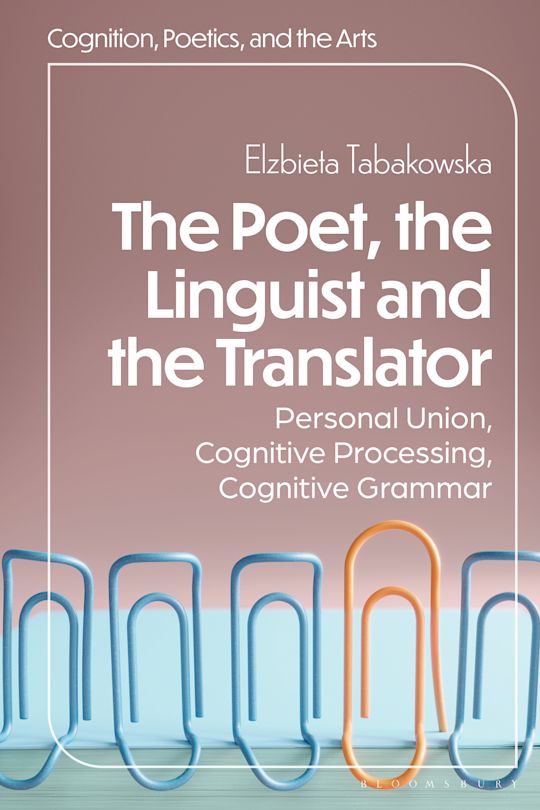

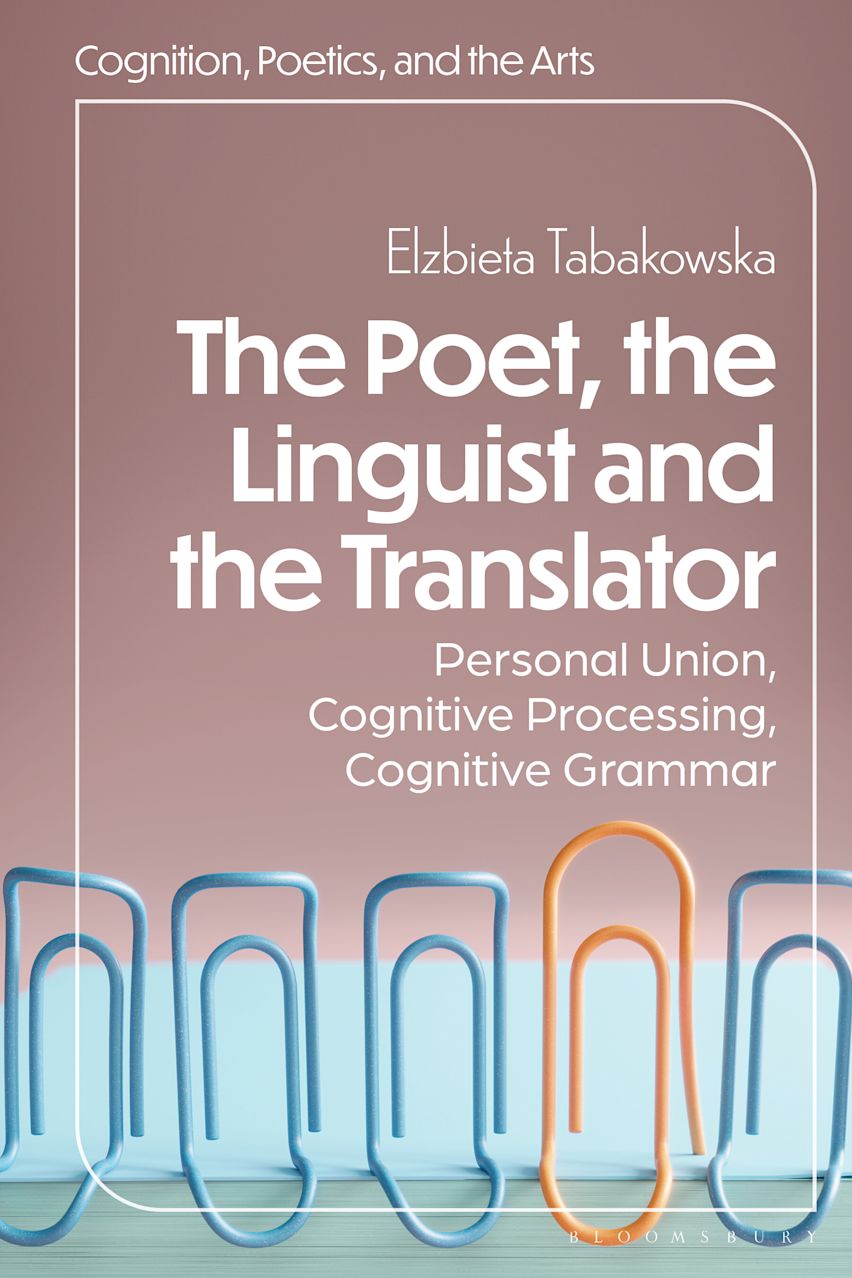
The Poet, the Linguist and the Translator
Personal Union, Cognitive Processing, Cognitive Grammar
Buying pre-order items
Ebooks and Audiobook
You will receive an email with a download link for the ebook or audiobook on the publication date.
Payment
You will not be charged for pre-ordered books until they are available to be shipped. Pre-ordered ebooks will not be charged for until they are available for download.
Amending or cancelling your order
For orders that have not been shipped you can usually make changes to pre-orders up to 72 hours before the publishing date.
Payment for this pre-order will be taken when the item becomes available
Description
Shows that principles of cognitive linguistics can be applied to poetry writing, interpretation, and translation, as the author demonstrates by interpreting her own poems and translating them from Polish to English, both with the perspective of a cognitive linguist.
Elzbieta Tabakowska is The Poet, the Linguist and the Translator: She argues that cognitive linguistics are the semantic backbone and structural principle of her own poetry, then she uses these concepts as the basis for her own interpretation and translation of a number of her poems. She shows cognitive linguistics to be a toolbox that provides instruments to explain the writing process, as well as the reading and translation of the production of literary creation.
Based in cognitive theory of natural language and grammar but avoiding excessive technicality, this study presents rudiments of linguistic cognitivism from three different points of view: by considering a poem as instantiation of a schematic image, by interpreting the meaning of the poem in terms of Cognitive Grammar, and by its interlingual Polish (into English) self-translation, with all three processes seen as cognitive mental activities.
In addition to its contribution to a cognitive understanding of poetic creativity for poets, The Poet, the Linguist and the Translator is intended for literary scholars interested in the potential of language seen as raw material of poetry, for linguists interested in applications of their field to interpretation of poetry, as well as for scholars specializing in translation studies and to translators practicing interlingual translation.
Accessibility Information
Additional accessibility information
- EPUB 3.0
- Conforms with the requirements of EPUB Accessibility Spec v1.1
- WCAG level AA
- WCAG v2.2 compliant
- accessibility@bloomsbury.com
Hazards
The publication contains no hazards
Support for non-visual reading
- No accessibility features offered by the reading system, device or reading software are disabled or otherwise unusable with the product
- Has alternative text descriptions for images
Visual adjustments
Appearance of the text and page layout can be modified according to the capabilities of the reading system (font family and size, spaces, as well as color of background and text)
Navigation
- Page list to go to pages from the print source version
- Elements such as headings, tables, etc for structured navigation
- All or substantially all textual matter is arranged in a single logical reading order
- Content is enhanced with ARIA roles to optimize organization and facilitate navigation
- Purposes of all links are made clear
Rich content
Language tagging provided
Table of Contents
List of Abbreviations
Preface
Acknowledgments
1. Theoretical Background
2. Is This a Poem or Is It not?
3.The Figure-Ground Organization
4. Subjectification
5. Scope and Scale
6. Interpretation
7. Conceptual Integration
8. Iconicity
9. Czeslaw Milosz as a Self-Translator
10. Conclusion: Questions and Answers
Coda
Index
Product details

| Published | May 13 2027 |
|---|---|
| Format | Ebook (Epub & Mobi) |
| Edition | 1st |
| Pages | 224 |
| ISBN | 9798765157909 |
| Imprint | Bloomsbury Academic |
| Illustrations | 15 b/w illus |
| Series | Cognition, Poetics, and the Arts |
| Publisher | Bloomsbury Publishing |
Related Titles