Political Economy of Power Sharing in Developing Countries
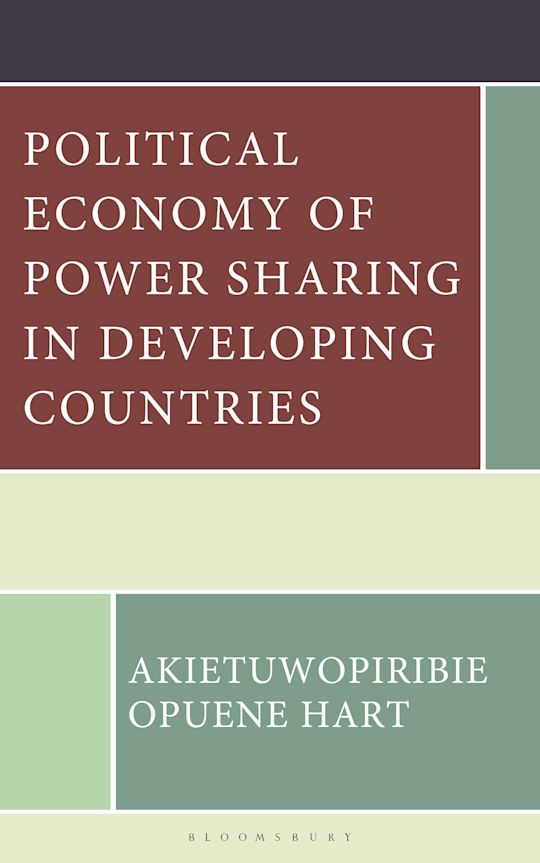

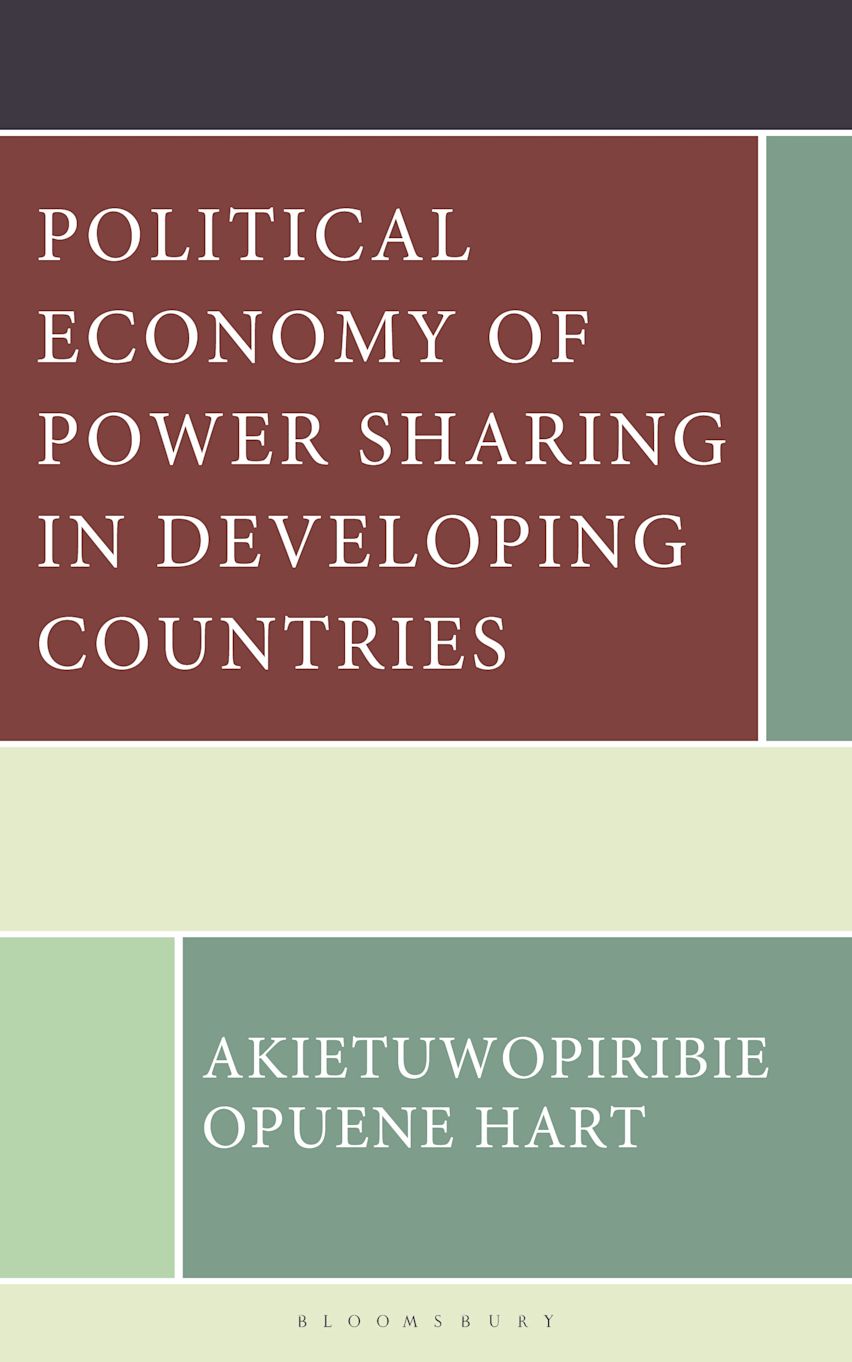
Political Economy of Power Sharing in Developing Countries
Buying pre-order items
Ebooks and Audiobook
You will receive an email with a download link for the ebook or audiobook on the publication date.
Payment
You will not be charged for pre-ordered books until they are available to be shipped. Pre-ordered ebooks will not be charged for until they are available for download.
Amending or cancelling your order
For orders that have not been shipped you can usually make changes to pre-orders up to 72 hours before the publishing date.
Payment for this pre-order will be taken when the item becomes available
- Delivery and returns info
-
Free US delivery on orders $35 or over
Description
Political Economy of Power Sharing in Developing Countries is an in-depth examination of factors that trigger the clamor for power sharing, zoning and rotation in mostly developing countries. These provocations include geographical, ethnic, and religious identity factors that can influence the political process in varying degrees from country to country. The impact goes a long way in determining the stability and instability of the political process in various countries. The reasons for these differences and the impacts are a combination of the endogenous variables in the first instance, which are the primary prompters. Other elements, which are the exogenous factors, are secondary prompters. When these converge, they produce a peculiar impact in a given society based on the characteristic variables and the resulting outcome. The new paradigm shifts in the agitation in developing countries is demonstrated by an elitist instrument of marginalization and self-aggrandizement. The masses are hoodwinked, sensitized, and manipulated through primal sentiment to support the elites in acquiring political power, which in turn enables the acquisition of economic power.
Table of Contents
Foreword
Preface
Acknowledgments
Introduction
Chapter One: Political Economy and Class Structure in Developing Countries
Chapter Two: Ethnic and Religion Politics: The Case of Rwanda and Nigeria
Chapter Three: Power Sharing and the Manipulation of the Masses by the Elites in Developing Countries through Ethnicity
Chapter Four: Political Economy of Power Sharing
Chapter Five: Political Economy of Location and Localisation of Industries in Nigeria
Chapter Six: Religion as a Trigger in Zoning of Public Offices in Developing Countries
Chapter Seven: Identity Politics: Political Economy of Power Sharing
Chapter Eight: Identity Politics and Political Economy of Power Sharing in the Middle East: Israel, Lebanon, Syria, Jordan, Kuwait, Bahrian, Qatar, United Arab Emirates, Oman, and Yemen
Chapter Nine: Identity Politics and Political Economy of Power Sharing in the Middle East: Iraq, Iran, Saudi Arabia, Turkey, Cyprus, Egypt, Libya and Azerbajan
Chapter Ten: Identity Politics and Power Sharing in Latin America: Argentina, Bolivia, Brazil, Chile, Colombia, Costa Rica, Cuba, Dominican Republic, Ecuador, El Salvador, Guatemala, Haiti and Honduras
Chapter Eleven: Identity Politics and Power Sharing in Latin America: Jamaica, Mexico, Nicargua, Panama, Paraguay, Peru, Puerto Rico, Uruguay, and Venezuela.
Conclusion
References
About the Author
Product details

| Published | Feb 18 2027 |
|---|---|
| Format | Paperback |
| Edition | 1st |
| Pages | 344 |
| ISBN | 9781666967036 |
| Imprint | Bloomsbury Academic |
| Illustrations | 2 figures (b/w), and 1 author headshot (b/w) |
| Dimensions | 9 x 6 inches |
| Publisher | Bloomsbury Publishing |
Reviews

ONLINE RESOURCES
Bloomsbury Collections
This book is available on Bloomsbury Collections where your library has access.
Related Titles