Problems in Modern Latin American History
Sources and Interpretations
- Textbook
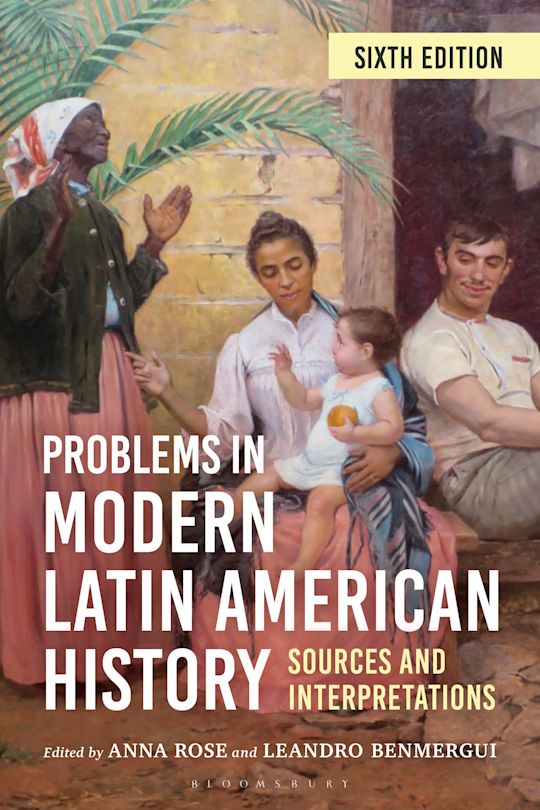

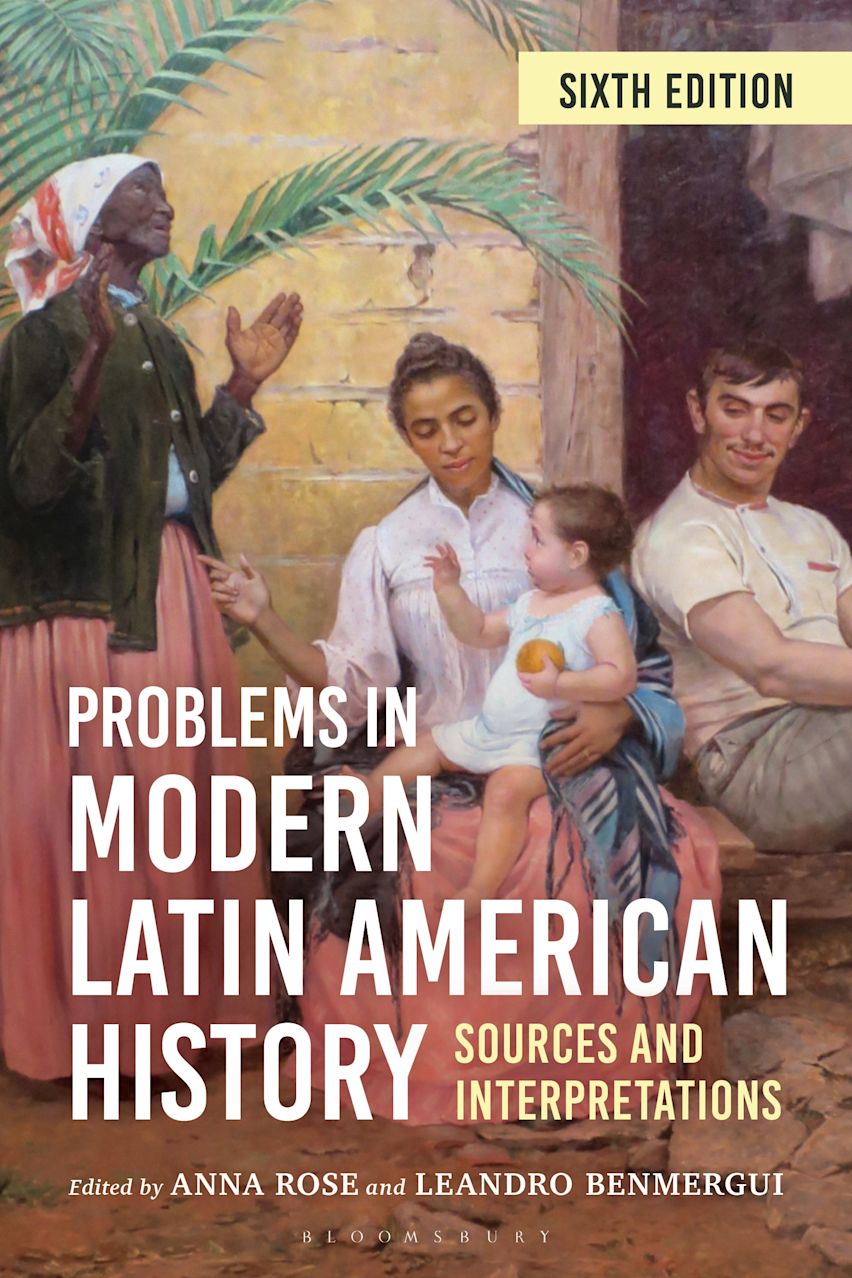
Problems in Modern Latin American History
Sources and Interpretations
- Textbook
Description
An innovative combination of diverse primary and secondary sources and analysis, this leading reader will get students thinking critically about modern Latin American history.
Now in its 6th edition, this leading reader is revitalized for greater relevancy to the study of Latin America since independence. New to this edition:
- New chapters on military dictatorships and Latin American diasporas address regimes of the 1960s-1980s and recent trends in migration.
- Expanded and revised introductions provide comprehensive context reflect recent historical developments.
- Issues of race, ethnicity, and gender are also incorporated in every chapter, interweaving marginalized voices into larger narratives.
- Visual sources are now featured in every chapter, inviting students to engage with the historical record in new and more critical ways.
With its innovative combination of sources and editorial analysis, this edition builds on the successful "problems" approach, organizing content around critical historical questions that stimulate critical thinking in a variety of courses on Latin American history.
Accessibility Information
Additional accessibility information
- EPUB 3.0
- Conforms with the requirements of EPUB Accessibility Spec v1.1
- WCAG level AA
- WCAG v2.2 compliant
- accessibility@bloomsbury.com
Hazards
The publication contains no hazards
Support for non-visual reading
- No accessibility features offered by the reading system, device or reading software are disabled or otherwise unusable with the product
- Has alternative text descriptions for images
Visual adjustments
Appearance of the text and page layout can be modified according to the capabilities of the reading system (font family and size, spaces, as well as color of background and text)
Navigation
- Page list to go to pages from the print source version
- Elements such as headings, tables, etc for structured navigation
- All or substantially all textual matter is arranged in a single logical reading order
- Content is enhanced with ARIA roles to optimize organization and facilitate navigation
- Purposes of all links are made clear
Rich content
Language tagging provided
Table of Contents
Preface to the Sixth Edition
Introduction
Chapter 1. Independence
1. The Political Constitution of the Spanish Monarchy: Cortes of Cádiz (1812)
2. War to the Death: Simón Bolívar (1813)
3. The Vision of Father Morelos: Enrique Krauze (1994)
4. Families in War and Peace: Sarah C. Chambers (2015)
5. Brazil's Constitutional Monarchy: Emília Viotti da Costa (2000)
6. Visual Source: Native Americans and the Spanish Monarchy (1809)
Chapter 2. Slavery and Freedom
1. Slavery in Latin America and the United States: Frank Tannenbaum (1946)
2. Black Wet Nurses: Robert Edgar Conrad (1821–1863)
3. Gradual Emancipation: Yesenia Barragan (2021)
4. Letters in Favor of Brazilian Slavery: José de Alencar (1867–1868)
5. Abolitionism in Brazil: Joaquim Nabuco (1883)
6. Visual Source: Homage to Princess Isabel (1888)
Chapter 3. Caudillos
1. Caudillos as Scourge: Charles E. Chapman (1932)
2. Caudillos as Profit Maximizers: Eric R. Wolf and Edward C. Hansen (1967)
3. Caudillos as Culture Heroes: Ariel de la Fuente (2000)
4. The Ribbons and Rituals of Rosismo: Domingo Faustino Sarmiento (1845)
5. Women in the Age of Caudillos: Frances Calderón de la Barca (1843)
6. Visual Source: Defeat of the Caudillos (1863)
Chapter 4. Liberalism and Citizenship
1. Good Catholic Reading for Ladies: Carolina Cherniavsky Bozzolo (2014)
2. Generational Warrior: Francisco Bilbao (1844)
3. The Triumph of Reform: Justo Sierra (1900–1902)
4. Indigenous People and the Liberal Project: Brooke Larson (2004)
5. Afro-Nicaraguan Soldiers and Statesmen: Justin Wolfe (2010)
6. Visual Source: Portrait of Benito Juárez (1865)
7. Visual Source: The Balance of Power in Imperial Brazil (1865)
Chapter 5. Race and Nation Building
1. Neocolonial Ideologies: E. Bradford Burns (1980)
2. Civilization versus Barbarism: Domingo Faustino Sarmiento (1845)
3. Brazilianization: Aluísio Azevedo (1890)
4. A Raceless Nation: Ada Ferrer (1999)
5. Big Brother, Little Nation: Lorgia García-Peña (2016)
6. Visual Source: Ham's Redemption (1895)
7. Visual Source: Benevolent Paternalism (1898)
Chapter 6. Nationalism
1. Our America:José Martí (1891)
2. Education and the Mexican Revolution: Octavio Paz (1950)
3. Mestizo Pride: Gilberto Freyre (1933)
4. Carmen Miranda and Brasilidade: Darién J. Davis (2012)
5. Panama in Black: Kaysha Corinealdi (2022)
6. Visual Source: Peru of the Incas (c. 1938)
Chapter 7. Populism
1. The Peronist Political Vision: Daniel James (1988)
2. The First Lady's Peronist Feminism: Eva Perón (1953)
3. “I Gave You My Life, Now I Offer You My Death”: Getúlio Vargas (1954)
4. Cardenismo and Women's Organizing: Jocelyn Olcott (2005)
5. Trujillo, the Benefactor: Lauren Derby (2009)
6. Visual Source: Haya de La Torre Speaks to the Peasants (1931)
Chapter 8. Social Revolution
1. Essence of Guerrilla Warfare: Che Guevara (1961)
2. Cuba's Revolutionary Literacy Campaign: Devyn Spence Benson's (2016)
3. The Chilean Road to Socialism: Salvador Allende (1973)
4. Christianity and Revolution: Margaret Randall (1983)
5. Reflections on Life as a Colombian Revolutionary: María Eugenia Vásquez Perdomo (2005)
6. Visual Source: Mafalda, the Inquisitive Girl (1968)
Chapter 9. The Cold War
1. Statements of U.S. Foreign Policy Doctrine: Presidents James Monroe, Theodore Roosevelt, and Harry Truman (1823, 1904, 1946)
2. The Shark and the Sardines: Juan José Arévalo (1956)
3. The 1964 Scare Campaign: Margaret Power (2008)
4. Alleged Assassination Plots Involving Foreign Leaders: Church Committee (1975)
5. A Search and Destroy Operation in El Salvador: Mark Danner (1994)
6. Visual Source: Alliance for Progress and Barrio Kennedy (1961)
Chapter 10. Dictatorships
1. Conservative Women Celebrate the Chilean Coup: María Correa Morandé (1974)
2. Testimony of a Perpetrator: Rodolfo Peregrino Fernández (1983)
3. Corporate Complicities: Victoria Basualdo (2006)
4. Operation Cleansing: Henrique Cintra Santos (2023)
5. Morality Broadcast: José Efraín Ríos Montt (1982)
6. Visual Source: Human Rights Abuses and the World Cup (1978)
Chapter 11. Historical Memory
1. Nunca Más: Ernesto Sabato (1984)
2. Opening Chile's Memory Box: Steve J. Stern (2010)
3. Testimony of Atrocity: Rigoberta Menchú (1984)
4. Memory of Silence: Guatemalan Commission for Historical Clarification (1999)
5. Milk of Sorrows: Kimberly Theidon (2004)
6. Visual Source: Motherhood and Mexico's Dirty War (1981)
Chapter 12. Migration
1. The Corrido of the Uprooted Ones: Arnulfo Castillo (1942)
2. Puerto Ricans Since the Failure of Operation Bootstrap: Jorge Duany (2011)
3. Cuban Migration and the Mariel Boatlift: Fidel Castro (1980)
4. The Dominican Diaspora after Trujillo's Assassination: Jesse Hoffnung-Garskof (2008)
5. Central America's Roots of Migration: Aviva Chomsky (2021)
6. Visual Source: Cal Trans Immigration Warning Sign (2017)
About the Authors
Product details

| Published | Jan 08 2026 |
|---|---|
| Format | Ebook (Epub & Mobi) |
| Edition | 6th |
| Pages | 376 |
| ISBN | 9781538193969 |
| Imprint | Bloomsbury Academic |
| Illustrations | 15 bw photos |
| Series | Latin American Silhouettes |
| Publisher | Bloomsbury Publishing |


Reviews

Related Titles