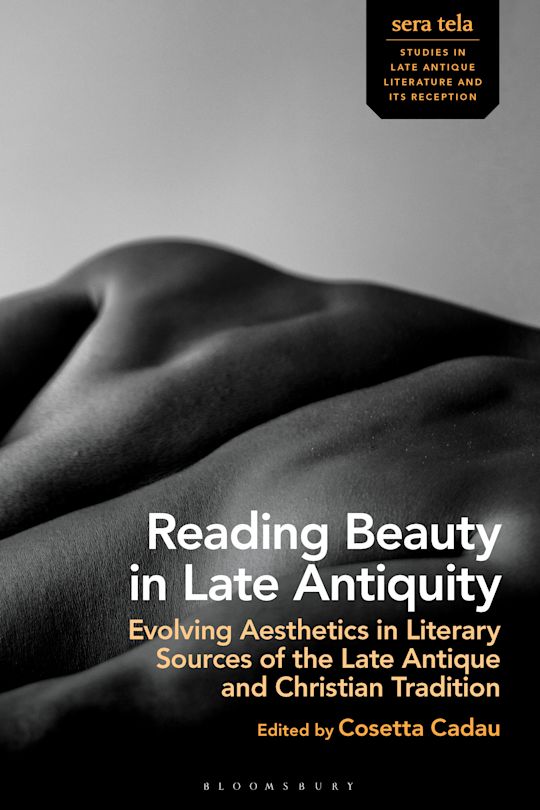
Reading Beauty in Late Antiquity
Evolving Aesthetics in Literary Sources of the Late Antique and Christian Tradition

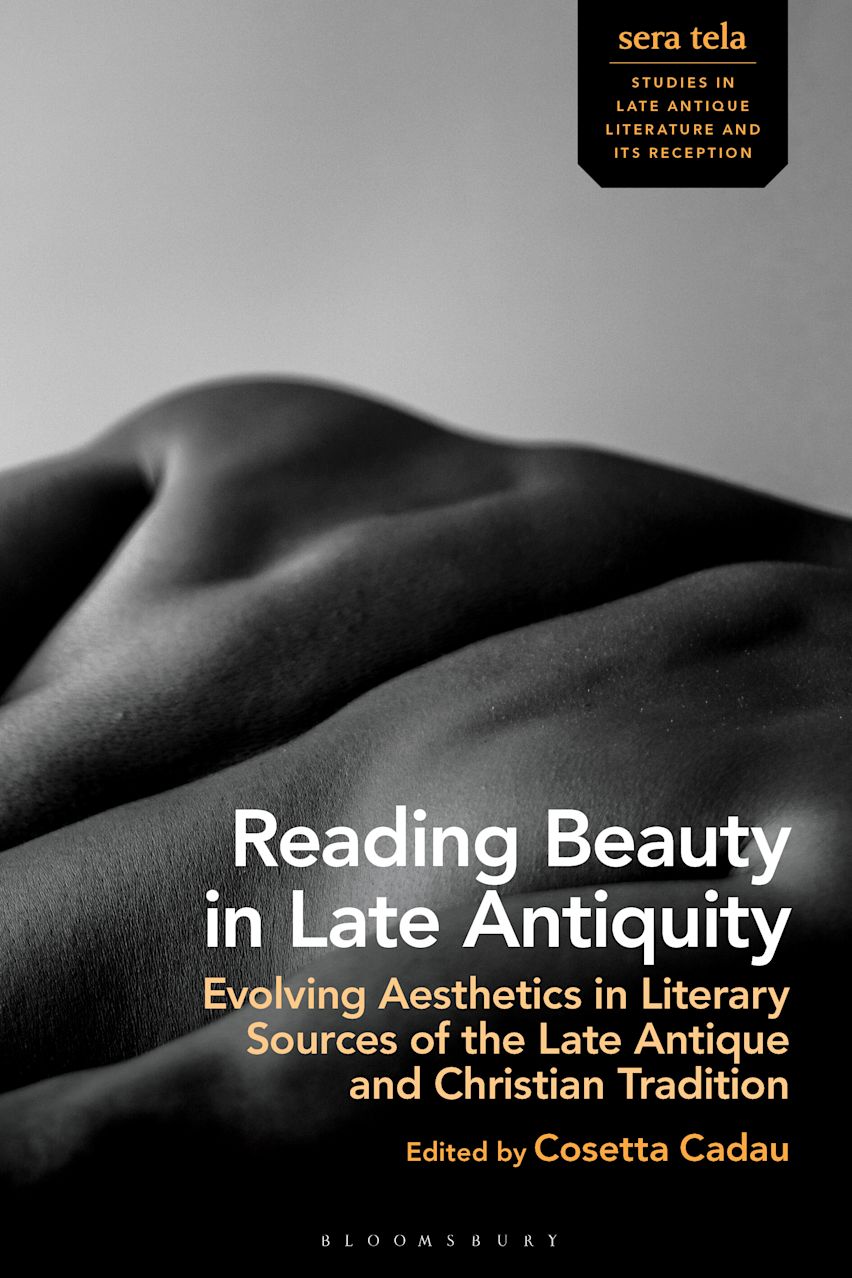
Reading Beauty in Late Antiquity
Evolving Aesthetics in Literary Sources of the Late Antique and Christian Tradition
Buying pre-order items
Ebooks and Audiobook
You will receive an email with a download link for the ebook or audiobook on the publication date.
Payment
You will not be charged for pre-ordered books until they are available to be shipped. Pre-ordered ebooks will not be charged for until they are available for download.
Amending or cancelling your order
For orders that have not been shipped you can usually make changes to pre-orders up to 72 hours before the publishing date.
Payment for this pre-order will be taken when the item becomes available
Description
How was beauty understood in Late Antiquity, and how did this perception shift as the Classical world gave way to the Christian era? This book explores the concept of beauty in literary sources from the third to the sixth century AD. Through case studies, it examines different approaches to the changing and diverse aesthetic standards of Late Antique texts, focusing on how beauty was visualized, evaluated, conceptualized and used by authors from Greek, Roman and Christian traditions.
This volume examines the varied responses to beauty in Late Antiquity, focusing on why individuals were glorified, vilified or belittled for their appearance. It addresses the evaluation, use and exploitation of beauty during this period, particularly with the rise of Christianity. The book also considers how aesthetics and moral qualities were viewed in relation to both Classical traditions and emerging Christian thought. Topics include representations of 'holy bodies,' body shaming, and the changing ideas of virginity and asceticism within Christian discussions of physical and spiritual purity. Through the works of writers such as Nonnus of Panopolis, St. Augustine, Prudentius and Ammianus Marcellinus, this book reveals a rich landscape of diverse social and cultural views on beauty.
Accessibility Information
Additional accessibility information
- EPUB 3.0
- Conforms with the requirements of EPUB Accessibility Spec v1.1
- WCAG level AA
- WCAG v2.2 compliant
- accessibility@bloomsbury.com
Hazards
The publication contains no hazards
Support for non-visual reading
- No accessibility features offered by the reading system, device or reading software are disabled or otherwise unusable with the product
- Has alternative text descriptions for images
Visual adjustments
Appearance of the text and page layout can be modified according to the capabilities of the reading system (font family and size, spaces, as well as color of background and text)
Navigation
- Page list to go to pages from the print source version
- Elements such as headings, tables, etc for structured navigation
- All or substantially all textual matter is arranged in a single logical reading order
- Content is enhanced with ARIA roles to optimize organization and facilitate navigation
- Purposes of all links are made clear
Rich content
Language tagging provided
Table of Contents
Introduction (Cosetta Cadau, Maynooth University, Ireland)
1. Visualizing Beauty
1. In the Eye of the Beholder: The Role of the Internal Viewer in Late-Antique Poetry, Sophie Schoess (University of St Andrews, Scotland)
2. Look at this (Fe)male: Descriptive Strategies for Naked Bodies in the Dionysiaca of Nonnus of Panopolis, Laura Miguélez-Cavero (Complutense University Madrid, Spain)
3. Presence and Absence of Beauty in the Main Late Antique Ekphrastic Poems, Arianna Magnolo (University of Genoa, Italy)
4. Paulus Silentiarius Between Painting and Poetry, Stamatia Dova (Hellenic College, Brookline Massachusetts, USA)
2. Evaluating Beauty
5. Kind Eyes and Pretty Feet: Evolving Evaluation Criteria in Late Antique Epic Beauty Contests, Cosetta Cadau (Maynooth University, Ireland)
6. As Beautiful as a Flowery Meadow: Aesthetic Principles in Late Antique Descriptions of Body, Cristiano Minuto (University of Naples Federico II, Italy)
7. Classical Canons of Beauty and the Body of the Barbarians in Late Antique Latin Literature, Valerio Neri (University of Bologna, Italy)
3. Conceptualizing Beauty
8. Changing Beauty: From kallos to horaion, David Hernández de la Fuente and Haris Papoulias (Universidad Complutense de Madrid)
9. Augustine on the Created Realm as a Reflection of Divine Beauty, Carl O'Brien (Maynooth University, Ireland)
10. The Positive Evaluation of Natural and Artistic Beauty in Plotinus, Andrew Smith (University College Dublin, Ireland)
4. Paradigmatic Beauty
11. “Age-value”: The Beauty of Elderly Bodies in Late Ancient Christian Texts, Virginia Burrus (Syracuse University, USA)
12. A Partly Pagan Passion: The Representation of Perpetua's Beauty in the Passio Sanctarum Perpetuae et Felicitatis, Marguerite Johnson (University of Newcastle, Australia)
12. “Their Adornment Was the Lack of Adornment, Which Is the Beauty for Women”: Oxymoronic Beauty in Gregory of Nazianzus (and others), Matteo Agnosini (Scuola Normale Superiore, Pisa)
13. Whose Pleasure Should It Be? Some Observations on M. Valerius' privata voluptas, Giovanni Trovato (University of Genoa, Italy)
5. Politicizing Beauty
14. The Uses of Human Beauty at the End of Late Antiquity, Ecaterina Lung (University of Bucharest, Romania)
15. In the Image of God as a Metaphor of the Church: The Human Body in Conciliar Documents of the Christological Controversy, Luise Marion Frenkel (University of São Paulo, Brazil)
Epilogue, Caroline Vout (University of Cambridge, UK)
Notes
Bibliography
Index locorum
General index
Product details

| Published | May 13 2027 |
|---|---|
| Format | Ebook (Epub & Mobi) |
| Edition | 1st |
| Pages | 336 |
| ISBN | 9781350545199 |
| Imprint | Bloomsbury Academic |
| Series | sera tela: Studies in Late Antique Literature and Its Reception |
| Publisher | Bloomsbury Publishing |
Related Titles