Redeeming Autonomy
Theology, Relationality, Tradition
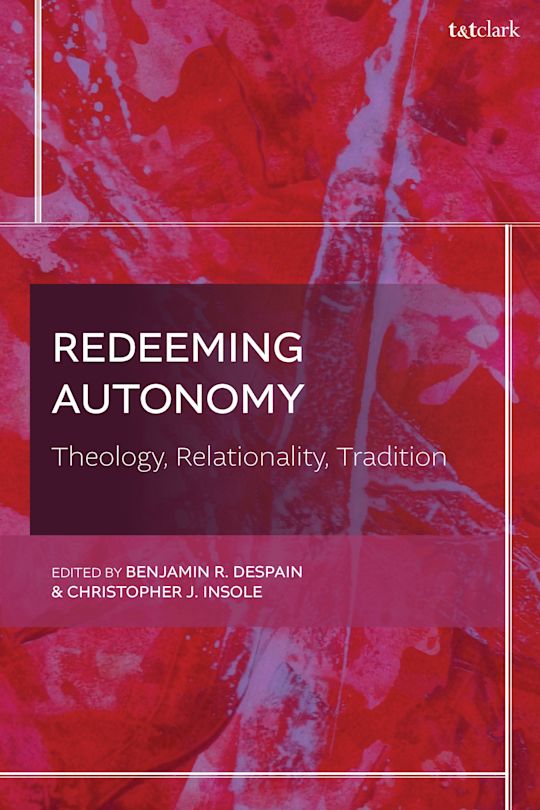

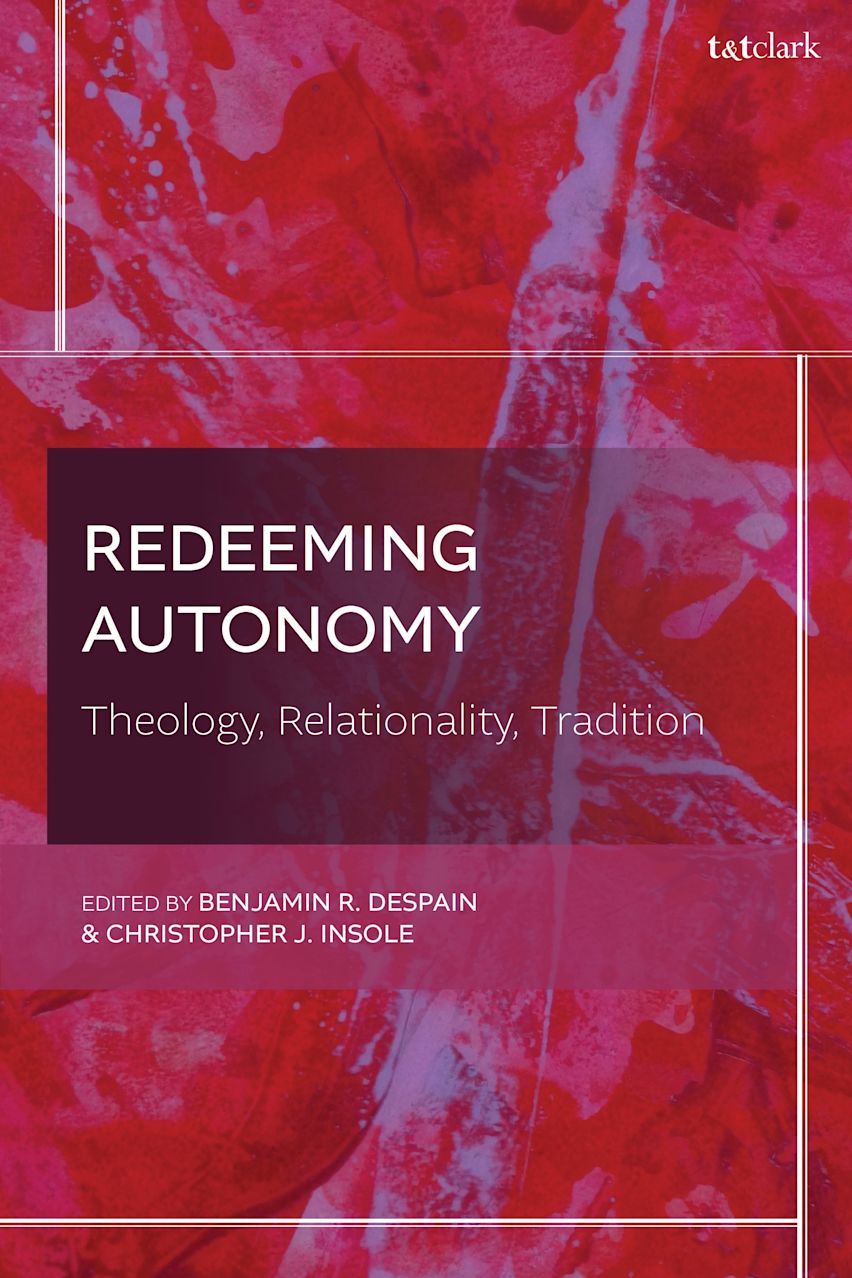
Redeeming Autonomy
Theology, Relationality, Tradition
Buying pre-order items
Ebooks and Audiobook
You will receive an email with a download link for the ebook or audiobook on the publication date.
Payment
You will not be charged for pre-ordered books until they are available to be shipped. Pre-ordered ebooks will not be charged for until they are available for download.
Amending or cancelling your order
For orders that have not been shipped you can usually make changes to pre-orders up to 72 hours before the publishing date.
Payment for this pre-order will be taken when the item becomes available
- Delivery and returns info
-
Free US delivery on orders $35 or over
Description
In their second volume, DeSpain and Insole invite readers to consider the differences that a theological perspective can make to the concept of autonomy. They consider what a renewed appreciation for the concept's multivalence could mean for theology moving forward. Leading philosophical theologians and scholars of religion marshal insights from philosophy, early Christianity, systematic theology, and art history to fulfil the need in theology for a new way of thinking about the many uses of autonomy.
The chapters within challenge theological and philosophical efforts to reduce the varied uses of autonomy to a particular and narrow sense of the concept's meaning: that it promotes unhelpful connotations of self-creation, individualism, and illusory control. The essays and reflections offered in this volume encourage readers to reconsider the subtleties and nuances present in appeals to the language of autonomy.
From philosophy to psychoanalysis to the experienced of enslaved peoples in North America, the contributors explore myriad avenues to establish a new trajectory for theorizing autonomy in theology. Together, these essays examine autonomy's conceptual and historical roots, exploring alternative philosophical contexts and 'Enlightenment' narratives, to offer a constructive outlook on a range of ways the concept of autonomy can used to express the conditions necessary for agency to thrive.
Table of Contents
Introduction
Benjamin R. DeSpain (Australian Catholic University, Australia) and Christopher J. Insole (Durham University, UK)
I. Is Autonomy Worth Redeeming?
1. Cryptonormativity, Aesthetics, and Redeeming Autonomy: Reflections on Clements and Eikelboom (Charles Mathewes, University of Virginia, USA)
2. Autonomy and the Foucauldian Subject (Niki Kasumi Clements, Rice University, USA)
3. Aesthetic Autonomy: Eavesdropping on another Conversation (Lexi Eikelboom, Australian Catholic University, Australia)
II. Are There Alternative 'Enlightenment' Narratives of Autonomy?
4. Alternative 'Enlightenment' Conceptions of Autonomy: Reflections on Insole and Carlisle (Karen Kilby, Durham University, UK)
5. Kant and Autonomy (and Jung) (Christopher J. Insole, Durham University, UK)
6. Autonomy and Religion: A Spinozist Perspective (Clare Carlisle, King's College London, UK)
III. Is Autonomy Intrinsic to Theology?
7. Genealogy and/or Task?: Reflections on Zecher and DeSpain (Judith Wolfe, University of St. Andrews, UK)
8. Autonomy in Early Christian Theology (Jonathan Zecher, Australian Catholic University, Australia)
9. An All Too Human Task: Theological Engagement with Autonomy (Benjamin R. DeSpain, Australian Catholic University, Australia)
IV. What Might Theology Contribute?
10. The Darkness Has Not Overcome It: Reflections on Long and Lloyd (Jennifer Herdt, Yale Divinity School, USA)
11. A Theological Redemption of Autonomy? (D. Stephen Long, Southern Methodist University's Perkins School of Theology, USA)
12. Slavery and Autonomy: On Harriet Jacobs (Vincent Lloyd, Villanova University, USA)
Index
Product details
| Published | Mar 18 2027 |
|---|---|
| Format | Hardback |
| Edition | 1st |
| Pages | 240 |
| ISBN | 9780567726513 |
| Imprint | T&T Clark |
| Dimensions | 9 x 6 inches |
| Publisher | Bloomsbury Publishing |
Related Titles