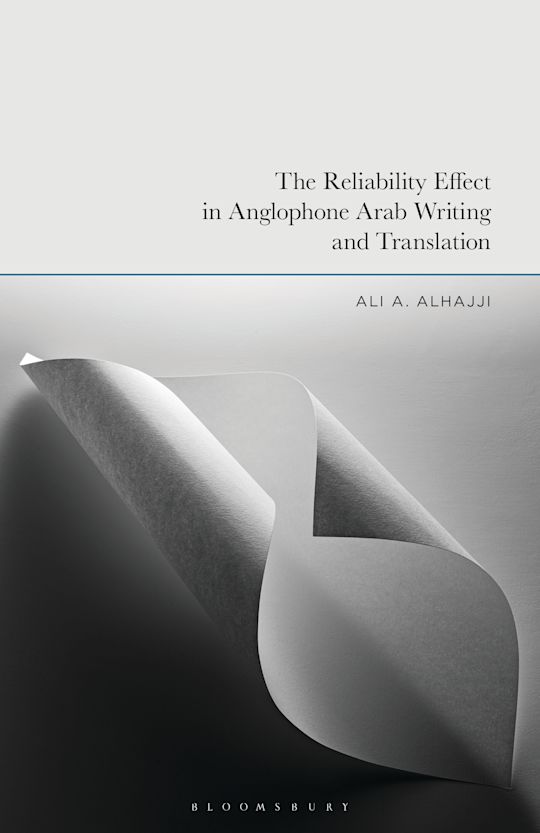

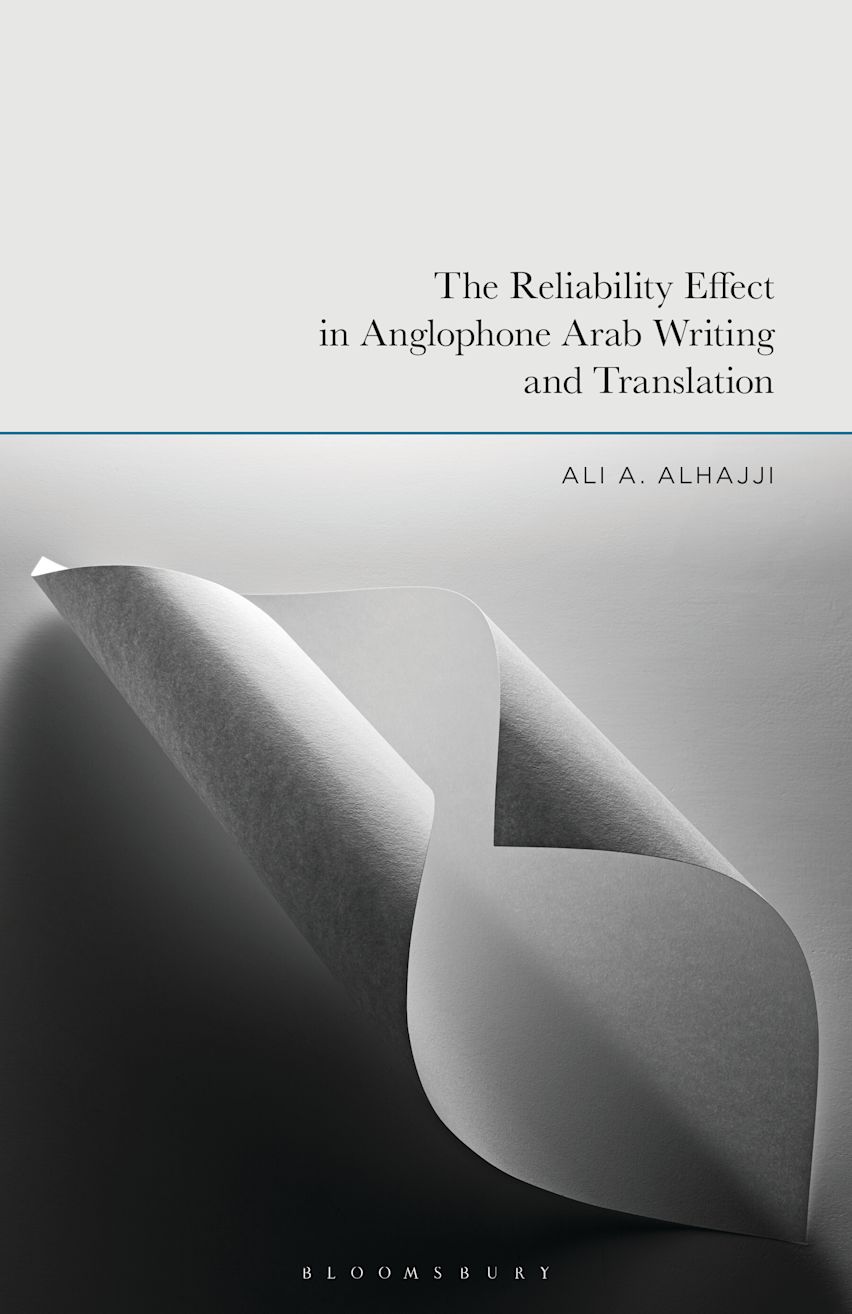
The Reliability Effect in Anglophone Arab Writing and Translation
Buying pre-order items
Ebooks and Audiobook
You will receive an email with a download link for the ebook or audiobook on the publication date.
Payment
You will not be charged for pre-ordered books until they are available to be shipped. Pre-ordered ebooks will not be charged for until they are available for download.
Amending or cancelling your order
For orders that have not been shipped you can usually make changes to pre-orders up to 72 hours before the publishing date.
Payment for this pre-order will be taken when the item becomes available
- Delivery and returns info
-
Free US delivery on orders $35 or over
Description
Ali A. Alhajji argues that world Anglophone Arab writing presents cross-cultural communication as a matter of form and credibility before it is a matter of cultural content.
Routinely read as cultural translation, through which “Arab worlds” become accessible to Anglophone publics, these narratives do not simply perform the translator's role; they interrogate and destabilize it, staging mediation as an aesthetic and political problem. Integrating postcolonial studies, world literature, narratology, and translation studies into a single analytic frame, this book treats reliability not as a narratorial trait but as a system, produced across an ensemble of mediations (narrative voice, paratext, literary prizes, and translation practice) that allocate trust before and beyond the page.
The Reliability Effect in Anglophone Arab Writing and Translation reads paratexts and prize circuits as interpretive infrastructures that pre-script how texts should be trusted; examine unreliable narration, fragmentation, and multivocal design as strategies that refuse testimonial transparency; theorize reverse translation (English ? Arabic) as re-appropriation rather than neutral homecoming; and develop overwriting (Arabic ? English) as the conversion of culturally situated narration into ethnographic legibility within translation economies of funding, prizes, and censorship. Case studies range from Fadia Faqir, Rabih Alameddine, and Rawi Hage to Tayeb Salih, Jokha Alharthi, and Elias Khoury. Across these sites, Alhajji advances his central claim: “worldliness” is an institutional demand that reshapes literary form and reception, and the “reliability effect” names the mechanism by which Arabness becomes readable, and contestable, in global English.
Table of Contents
Acknowledgments
Note on Transliteration and Translation
Introduction: Reliability Across the Ecology of Literary Mediation
1. From Arabic to English: “The Anglo-Arab Encounter”
2. Worlding Arabness: Paratexts, Prizes, and the Marketplace of Legibility
3. Possible Readings of the Anglophone Arab Novel
4. The Re-Appropriation of Cultural Translations
5. Translation Economies and Epistemic Authority
Conclusion: Cross-cultural Communication Vis-à-Vis Reliability
References
Appendices
Product details

| Published | May 13 2027 |
|---|---|
| Format | Hardback |
| Edition | 1st |
| Pages | 248 |
| ISBN | 9798216276227 |
| Imprint | Bloomsbury Academic |
| Dimensions | 9 x 6 inches |
| Publisher | Bloomsbury Publishing |
Related Titles