Shakespeare and Textual Failure
New Histories, Methods and Practices
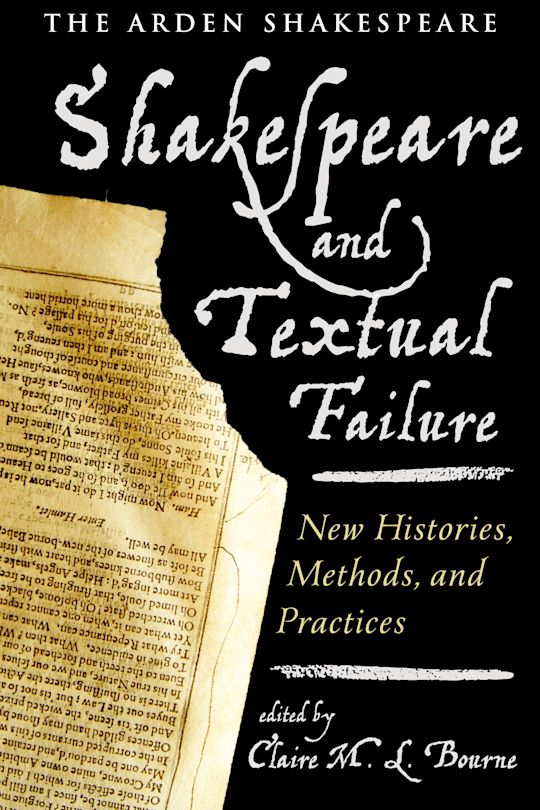

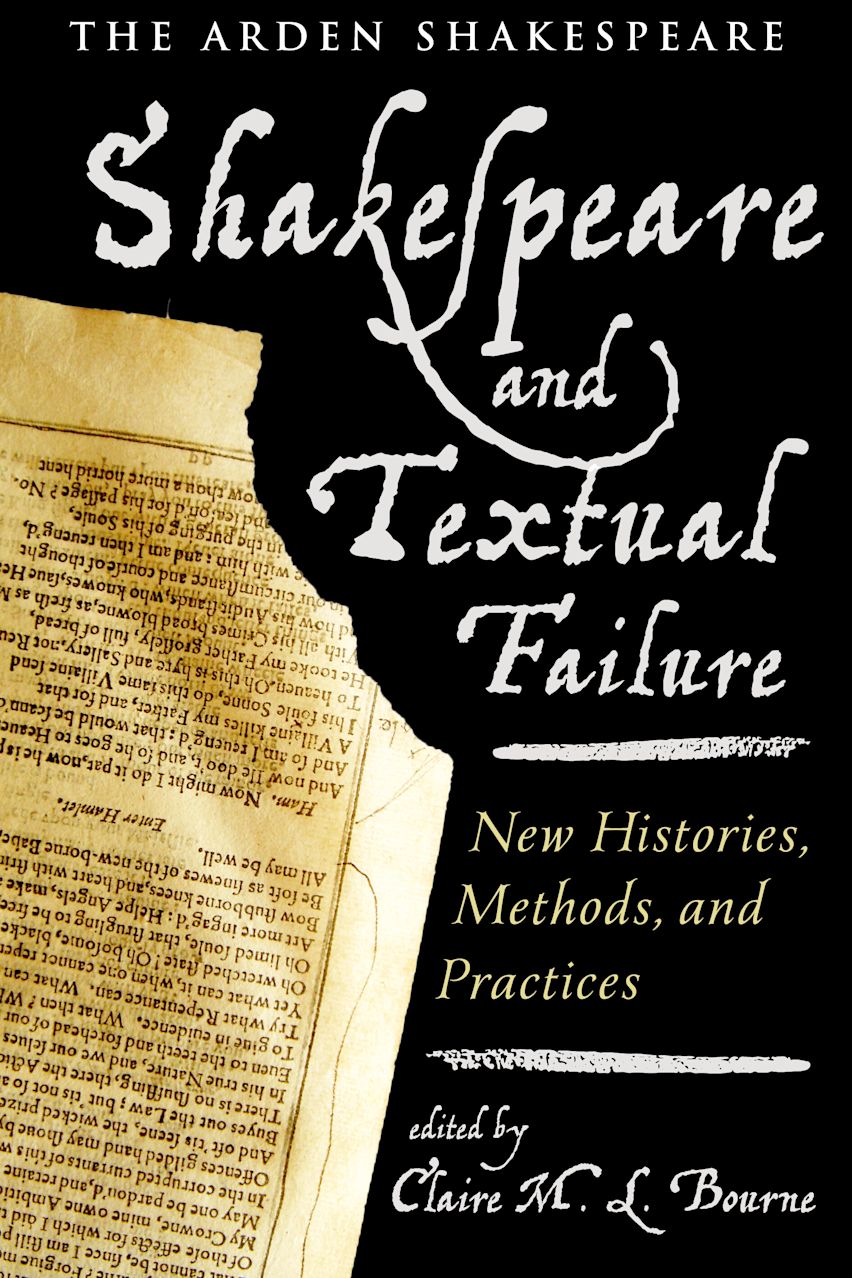
Shakespeare and Textual Failure
New Histories, Methods and Practices
Buying pre-order items
Ebooks and Audiobook
You will receive an email with a download link for the ebook or audiobook on the publication date.
Payment
You will not be charged for pre-ordered books until they are available to be shipped. Pre-ordered ebooks will not be charged for until they are available for download.
Amending or cancelling your order
For orders that have not been shipped you can usually make changes to pre-orders up to 72 hours before the publishing date.
Payment for this pre-order will be taken when the item becomes available
Description
Histories of the Shakespearean text have tended to focus on success stories so as to craft narratives of achievement, completion, discovery and restoration from an admittedly messy, incomplete textual past. Investigating how textual phenomena around and adjacent to Shakespeare come to be named failures, this book shows that these so-called failures offer new frameworks for recuperating, reimagining and treating them as sites of new knowledge about textual making, history and historiography.
Shakespeare and Textual Failure collects stories of textual failure related to the Shakespearean text and other early modern texts from the sixteenth century through the present. The essays take up diverse instances of textual failure, both granular (e.g., misprints and typos) and systemic (e.g., institutional biases).
The eighteen contributed chapters together expand our understanding of how cases of actual and supposed failure - failure of textual transmission, of text technologies, of interpretation, of editorial decision-making, of preservation, of remediation, of funding, of human health, of the environment, of performance, of institutions - have shaped the textual record around Shakespeare and other early modern texts as well as the range of possible approaches to them. They show that revisiting textual phenomena labeled as 'failures' either in their own moment or subsequently can generate new methods of assessing the textual past and result in more nuanced and inclusive - as well as less teleological, or triumphalist - material, cultural and political histories of early modern texts.
Accessibility Information
Additional accessibility information
- EPUB 3.0
- Conforms with the requirements of EPUB Accessibility Spec v1.1
- WCAG level AA
- WCAG v2.2 compliant
- accessibility@bloomsbury.com
Hazards
The publication contains no hazards
Support for non-visual reading
- No accessibility features offered by the reading system, device or reading software are disabled or otherwise unusable with the product
- Has alternative text descriptions for images
Visual adjustments
Appearance of the text and page layout can be modified according to the capabilities of the reading system (font family and size, spaces, as well as color of background and text)
Navigation
- Page list to go to pages from the print source version
- Elements such as headings, tables, etc for structured navigation
- All or substantially all textual matter is arranged in a single logical reading order
- Content is enhanced with ARIA roles to optimize organization and facilitate navigation
- Purposes of all links are made clear
Rich content
Language tagging provided
Table of Contents
List of Tables
Notes on Contributors
Introduction, Reading the unreadable: Towards a revised history of textual failure, Claire M. L. Bourne (The Pennsylvania State University, USA)
Part 1: ERROR
1. How to fail at printing, Helen Smith (University of York, UK)
2. Uncorrected: Stop-press corrections and the Shakespeare first folio, Lara Hansen-Morse (University of Nevada, USA)
3. “Sir sayd s/he”: Trans error and emendation in Mary Wroth's Urania, Spencer Grayson (University of Virginia, USA)
Part 2: CRUX
4. Potential Forms, or holding space in Sonnet 126, Diane Mitchell (University of Colorado, USA)
5. Lost in transliteration: Editing the Frenchman in Marlowe's Edward II, Jeffrey Masten (Northwestern University, USA)
6. Astrophil's broken song, Thomas Ward (United States Naval Academy, USA)
7. On making mistakes: Distributed intention, scholarly work, textual failure, Patrick Durdel (University of Lausanne, Germany)
Part 3: IMPERFECTION
8. The defaulter: Rith Raworth, textual failure and the Beaumont and Fletcher folio, Molly G. Yarn (Independent Scholar)
9. Revisiting Shakespeare's Imagery: Publication, archival labour and Caroline Spurgeon's unfinished trilogy, Devani Singh (University of Geneva, Switzerland)
10. On ~Off~ book, Peter Kirwan (May Baldiwn University, USA) and Susan Anderson (Mary Baldwin University, USA)
Part 4: DAMAGE
11. Scrappy knowledge: Shakespeare and printed waste, Tamara Atkin (University of Oxford, UK)
12. Pricking Beatrice, Denise Walen (Vassar College, USA)
13. In witness and remembrance: Textual loss and editing the probate documents of London's early stationers, Breanne Weber (James Madison University, USA)
Part 5: BREAKDOWN
14. Making the headlines: Systems failure and Shakespearean commonplaces of the opinion pages, Philip Gilreath (Tulane University, USA)
15. Failure and the future of digital Shakespeare editions, Janelle Jenstad (University of Victoria, Canada) and Brett Greatley-Hirsch (University of Leeds, UK)
16. Is a non-read book a failed book?, Alice Leonard (Coventry University, UK) and Adam Smyth (University of Oxford, UK)
CODA
Brandi K. Adams (Arizona State University, USA) and Kim F. Hall (Barnard College, USA)
Index
Product details

| Published | Apr 15 2027 |
|---|---|
| Format | Ebook (Epub & Mobi) |
| Edition | 1st |
| Pages | 384 |
| ISBN | 9781350568334 |
| Imprint | The Arden Shakespeare |
| Illustrations | 36 bw illus |
| Publisher | Bloomsbury Publishing |
Related Titles