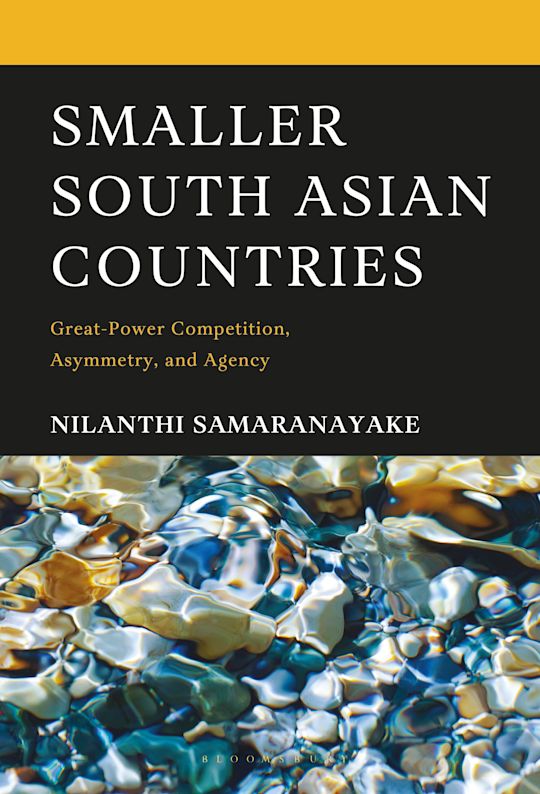
Smaller South Asian Countries
Great-Power Competition, Asymmetry, and Agency

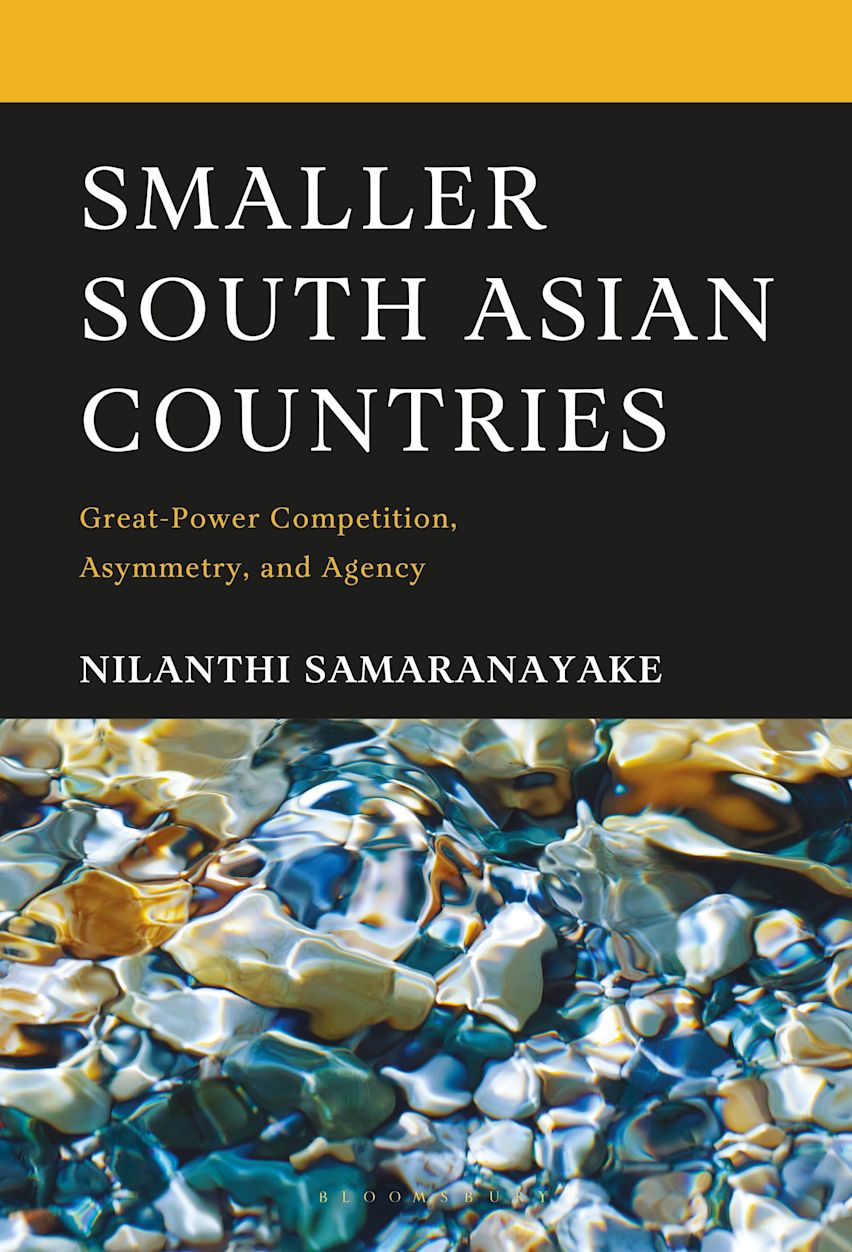
Smaller South Asian Countries
Great-Power Competition, Asymmetry, and Agency
Buying pre-order items
Ebooks and Audiobook
You will receive an email with a download link for the ebook or audiobook on the publication date.
Payment
You will not be charged for pre-ordered books until they are available to be shipped. Pre-ordered ebooks will not be charged for until they are available for download.
Amending or cancelling your order
For orders that have not been shipped you can usually make changes to pre-orders up to 72 hours before the publishing date.
Payment for this pre-order will be taken when the item becomes available
Description
Highlighting smaller South Asian countries, this book examines how these countries navigate great-power competition, confront domestic challenges, and demonstrate surprising strengths.
Why are smaller South Asian countries' relations with China deepening? What are the indicators of these ties that observers should be monitoring in the coming decade?
Nilanthi Samaranayake examines an understudied set of actors in an increasingly important region for geopolitics. By conducting in-country research, engaging with innovative International Relations theory, and developing an accessible policy framework, she analyzes these countries through the lens of their smaller size relative to the large powers they navigate. She unpacks the challenges they face including both traditional security dynamics, such as asymmetric power relationships with India and China, and nontraditional security hazards, such as natural disasters. While managing external concerns, the countries tackle national development goals and confront domestic threats which the book further examines. Importantly, this work identifies surprising strengths exhibited by the five countries despite their smaller size.
Chapters focus on Bangladesh, Bhutan, Maldives, Nepal, and Sri Lanka and use a comparative lens to explore the future of Indo-Pacific security. From this foundational contribution, policymakers, scholars, and students will take away insights into the histories, outlooks, and priorities of this dynamic group of countries.
Accessibility Information
Additional accessibility information
- EPUB 3.0
- Conforms with the requirements of EPUB Accessibility Spec v1.1
- WCAG level AA
- WCAG v2.2 compliant
- accessibility@bloomsbury.com
Hazards
The publication contains no hazards
Support for non-visual reading
- No accessibility features offered by the reading system, device or reading software are disabled or otherwise unusable with the product
- Has alternative text descriptions for images
Visual adjustments
Appearance of the text and page layout can be modified according to the capabilities of the reading system (font family and size, spaces, as well as color of background and text)
Navigation
- Page list to go to pages from the print source version
- Elements such as headings, tables, etc for structured navigation
- All or substantially all textual matter is arranged in a single logical reading order
- Content is enhanced with ARIA roles to optimize organization and facilitate navigation
- Purposes of all links are made clear
Rich content
Language tagging provided
Table of Contents
Acknowledgments
List of Abbreviations
Introduction
1. Theoretical Framework for Understanding Smaller South Asian Countries
2. Maldives: Small Island State, Large Ocean State
3. Sri Lanka: Along the Sealanes of Strategic Competition
4. Bangladesh: Aspiring Middle Power
5. Bhutan: Growth and Engagement within Limits
6. Nepal: Himalayan Heights of Great-Power Competition
Conclusion. Comparisons and Implications
Notes
Bibliography
Index
Product details

| Published | Apr 15 2027 |
|---|---|
| Format | Ebook (Epub & Mobi) |
| Edition | 1st |
| Pages | 256 |
| ISBN | 9798216453871 |
| Imprint | Bloomsbury Academic |
| Illustrations | 1 bw illus & 8 tables |
| Publisher | Bloomsbury Publishing |
Reviews
Related Titles