Somali Refugees in America
Community Gardens as Spaces of Refuge


Somali Refugees in America
Community Gardens as Spaces of Refuge
Description
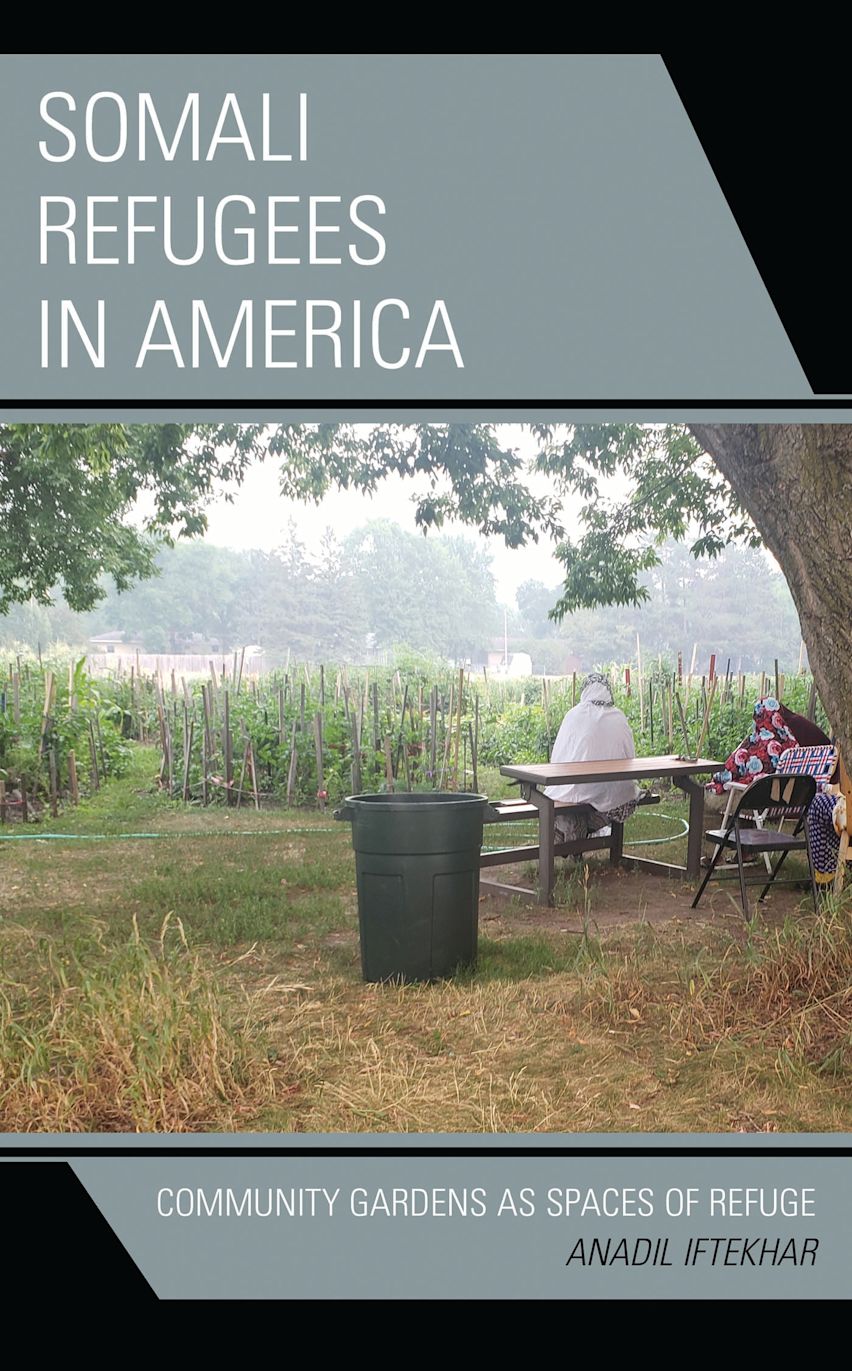
This study looks at the acculturation and social capital of twenty Somali refugee women participating in a community garden in a small town in Minnesota. The women had all been refugees at some point, even if they did not enter the US as a refugee. Using phenomenological interviews to gather the data, the author draws on Berry's framework and juxtaposes it against two other models of acculturation. Doing so allows the exploration of the pros and cons of each model and then offer suggestions for more holistic approaches to understanding and measuring acculturation. There are many aspects of life in the U.S. that were new to the Somali women such as driving, adult education, employment opportunities, and maintaining culture. Through many support systems, and efforts at keeping Somali culture intact through food and religion, along with the language barrier, the women adjusted to life in America. Participation at the community garden was an important part of their daily routine (even if only during the short growing season), giving the women agency, independence and the ability to create something and be on their own. In essence, the garden functioned as a mini-Somalia for them, providing not only a means of acculturation and accumulation of social capital, but a place of bonding.
Accessibility Information
Additional accessibility information
- EPUB 3.0
- Conforms with the requirements of EPUB Accessibility Spec v1.1
- WCAG level AA
- WCAG v2.2 compliant
- accessibility@bloomsbury.com
Hazards
The publication contains no hazards
Support for non-visual reading
- No accessibility features offered by the reading system, device or reading software are disabled or otherwise unusable with the product
- Has alternative text descriptions for images
Visual adjustments
Appearance of the text and page layout can be modified according to the capabilities of the reading system (font family and size, spaces, as well as color of background and text)
Navigation
- Page list to go to pages from the print source version
- Elements such as headings, tables, etc for structured navigation
- All or substantially all textual matter is arranged in a single logical reading order
- Content is enhanced with ARIA roles to optimize organization and facilitate navigation
- Purposes of all links are made clear
Rich content
Language tagging provided
Table of Contents
Introduction
Chapter 1: Somali Life in America
Chapter 2: Putting the Community in the Garden
Chapter 3: To Become American or Not?
Conclusion: How to Talk about the Displaced
Appendix: Questionnaire for the Interviews
Bibliography
Index
About the Author
Product details
| Published | Mar 04 2025 |
|---|---|
| Format | Ebook (Epub & Mobi) |
| Edition | 1st |
| Pages | 124 |
| ISBN | 9781666963564 |
| Imprint | Lexington Books |
| Illustrations | 2 tables |
| Publisher | Bloomsbury Publishing |

ONLINE RESOURCES
Bloomsbury Collections
This book is available on Bloomsbury Collections where your library has access.
Related Titles