Spirit and Culture in German Christian Theology
The Spiritual Awakening of a Nation
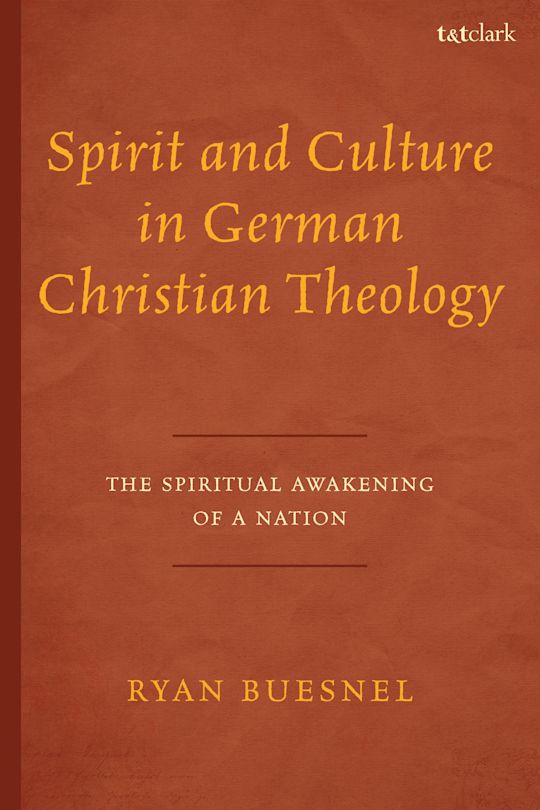

Spirit and Culture in German Christian Theology
The Spiritual Awakening of a Nation
Buying pre-order items
Ebooks and Audiobook
You will receive an email with a download link for the ebook or audiobook on the publication date.
Payment
You will not be charged for pre-ordered books until they are available to be shipped. Pre-ordered ebooks will not be charged for until they are available for download.
Amending or cancelling your order
For orders that have not been shipped you can usually make changes to pre-orders up to 72 hours before the publishing date.
Payment for this pre-order will be taken when the item becomes available
- Delivery and returns info
-
Free US delivery on orders $35 or over
Description
This book reveals the function of Spirit within the theological self-understanding of German Christian theologians within the Third Reich period.
Historians and theologians have discussed how the life and works of Jesus Christ was apprehended and distorted by Nazi-sympathizing theologians within the German Evangelical Church throughout the National Socialist period. Ryan Buesnel adds to these critical conversations, demonstrating how the influences of German idealism, theological liberalism, and Völkisch philosophy provided the groundwork for a new concept of Spirit that transformed how many German Protestants understood the pneumatological content of Christian doctrine. Across nine chapters, Buesnel reveals that this warping of Christian doctrine for pro-Nazi ends resulted in a largely de-sacralized understanding of Spirit which symbolized a new era in German Christianity. By turning to the original German Völkisch and National Socialist Weltanschauung texts, Buesnel grounds his analysis in trinitarian theology, offering fresh insights not only of German Christianity and pneumatology, but Nazi-sympathizing rhetoric's use of Christian doctrine.
Table of Contents
Introduction
1: The Radicalization of Context: The Distortion of a Method
2: Prophets of Spiritual Rebirth in German History
3: Spirit and Volk: Toward a Cultural Theology
4: Spirit and Theology in the German Christian Imagination
5: The Eisenach Institute: Theology, Spirit, and Cultural Accommodation
6: Jesus Christ: The Triumphant Spirit of the Volkstestament
7: From Tarsus to Thuringia: Recasting Paul for the German Soul
Conclusion: A Historical Anomaly?
Bibliography
Product details
| Published | Dec 10 2026 |
|---|---|
| Format | Hardback |
| Edition | 1st |
| Pages | 256 |
| ISBN | 9781978717251 |
| Imprint | T&T Clark |
| Dimensions | 9 x 6 inches |
| Publisher | Bloomsbury Publishing |
Reviews
Related Titles