Tibetan Culture in China
Between Revival and Survival
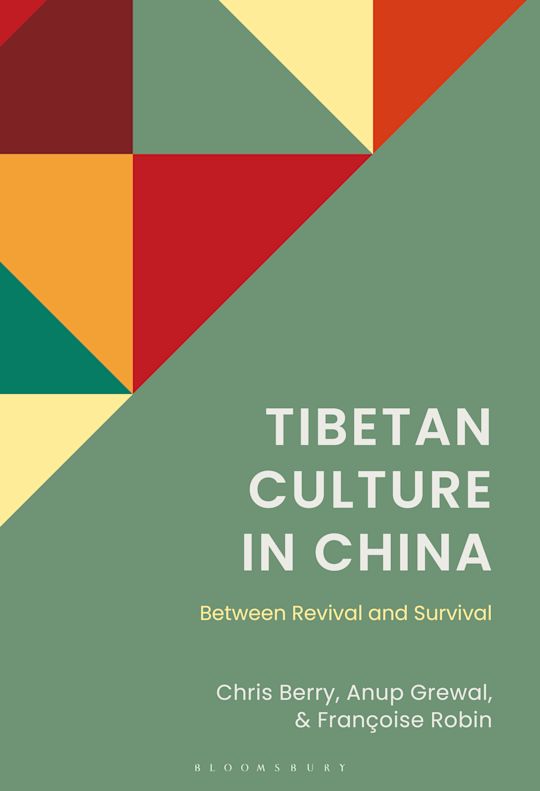

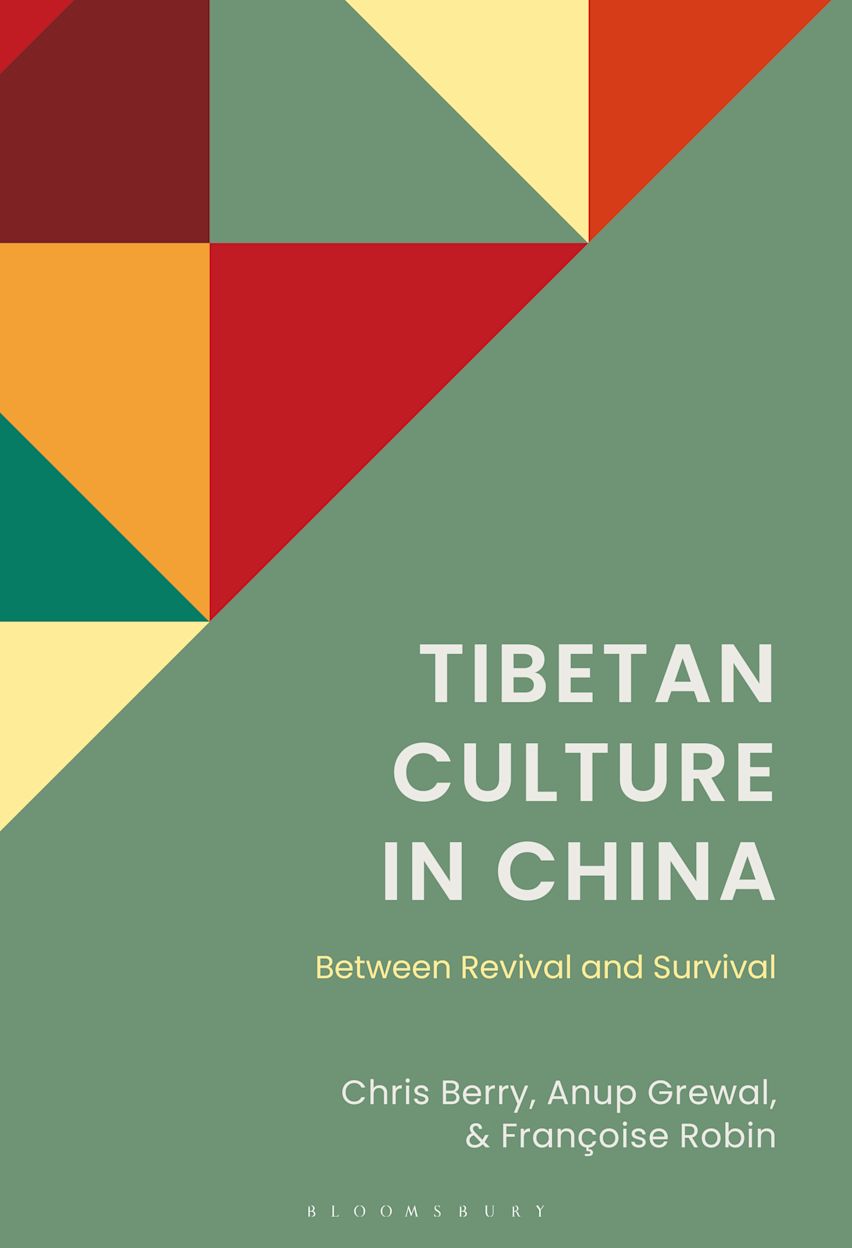
Tibetan Culture in China
Between Revival and Survival
Buying pre-order items
Ebooks and Audiobook
You will receive an email with a download link for the ebook or audiobook on the publication date.
Payment
You will not be charged for pre-ordered books until they are available to be shipped. Pre-ordered ebooks will not be charged for until they are available for download.
Amending or cancelling your order
For orders that have not been shipped you can usually make changes to pre-orders up to 72 hours before the publishing date.
Payment for this pre-order will be taken when the item becomes available
Description
Is Tibetan culture in China in a revival, surviving under pressure, or both?
This book responds to a seeming paradox: Tibetan culture has been growing, diversifying, sometimes hybridizing, and gaining popularity in Tibet, throughout China, and internationally while at the same time the Chinese authorities keep Tibet under tight control. Each chapter focuses on a different cultural phenomenon and how it is shaped by complex negotiations between the one-party state, the market economy, and unequal ethnic relations.
Part I spotlights the overlooked historical presence of Tibetans in Chengdu long before the current renewal, the all-pervasive presence of Chinese state culture inside Tibet today, and the Chinese imagination of Tibet in recent films about Tibet by non-Tibetan directors. Part II examines transformations such as the commodification of Tibetan thangka painting and carpet production, the Gesar epic's intangible heritage status, and cultural festivals. Part III examines new cultural developments from the exponential boom of contemporary Tibetan literature via the website Chömé to expansion of Tibetan filmmaking. Part IV highlights place, ecology, and identity in Tibetan audio-visual culture in China today.
Tibetan Culture in China is essential for scholars and researchers of contemporary Tibet and ethnic politics in China.
Accessibility Information
Additional accessibility information
- EPUB 3.0
- Conforms with the requirements of EPUB Accessibility Spec v1.1
- WCAG level AA
- WCAG v2.2 compliant
- accessibility@bloomsbury.com
Hazards
The publication contains no hazards
Support for non-visual reading
- No accessibility features offered by the reading system, device or reading software are disabled or otherwise unusable with the product
- Has alternative text descriptions for images
Visual adjustments
Appearance of the text and page layout can be modified according to the capabilities of the reading system (font family and size, spaces, as well as color of background and text)
Navigation
- Page list to go to pages from the print source version
- Elements such as headings, tables, etc for structured navigation
- All or substantially all textual matter is arranged in a single logical reading order
- Content is enhanced with ARIA roles to optimize organization and facilitate navigation
- Purposes of all links are made clear
Rich content
Language tagging provided
Table of Contents
Note on Language
Introduction
Chris Berry (King's College London, UK), Anup Grewal (University of Toronto, Canada), and Françoise Robin (Institut National des Langues et Civilisations Orientales, France)
Part I. Tibet in Chinese Culture, China in Tibetan Culture
1. Tibetan Presence and Remembrance in Chengdu
Scott Relyea (Appalachian State University, USA)
2. The Unseen Everywhere: State-Praising Culture in Tibet
Robert Barnett (SOAS University of London, UK)
3. 'China's Tibet' in Contemporary Chinese Films by Non-Tibetan Directors
Chris Berry (King's College London, UK)
Part II. Tibetan Cultures Transformed in Marketized China
4. Culture Festivals in the Era of Xi Jinping: Spectacular Display and Silent Remodeling of Tibetan Popular Culture
Isabelle Henrion-Dourcy (Université Laval, Canada)
5. From Persecution to Promotion to Position to Publicity: Repgong Arts at the Beginning of the Twenty-First-Century
Mark Stevenson (University of Hong Kong, Hong Kong)
6. Heritage With and Without the State-Observations on the Gesar Epic in Yushu
Timothy Thurston (University of Leeds, UK)
7. Reviving Tibetan Carpets: Buddhist Entrepreneurialism and Gendered Cultural Production in Lhasa
Tracy Ying Zhang (York University, Canada)
Part III. Developing New Tibetan Cultural Genres and Media and Their Development
8. Archives All the Way Down: The Third Generation's Making of the Tibetan Literature Website Chömé
Susan Su (Independent Scholar of Tibetan studies, USA)
9. Contemporary Tibetan Art as a Way of Seeing for Tibetan Artists Inside and Outside China
Jessica Ingham-Yeung (Independent Scholar of Cultural Studies, Hong Kong) and Enoch Cheung (Independent Scholar of the Arts, UK)
10. The Impact of the “Tibetan Film World” on the People's Republic of China Film Scene
Françoise Robin (Institut National des Langues et Civilisations Orientales, France)
Part IV. Place, Ecology, Identity
11. Tibetan Music Videos and Reframing the Politics of Culture
Anna Morcom (University of California, Los Angeles, USA)
12. Tibetan Films as Indigenous Cinema? Similarities, Divergences, and Challenges
Vanessa Frangville (Université Libre de Bruxelles, Belgium)
13. Contested Tibetan Landscapes in the Works of Pema Tseden
Anup Grewal (University of Toronto, Canada)
14. Screening Ecological Changes across Cultural Tibet at the Threshold of the Invisible
Kwai-Cheung Lo (Hong Kong Baptist University, Hong Kong)
Chinese Glossary
Tibetan Glossary
Index
Notes on Contributors
Product details

| Published | May 13 2027 |
|---|---|
| Format | Ebook (Epub & Mobi) |
| Edition | 1st |
| Pages | 336 |
| ISBN | 9781978760141 |
| Imprint | Bloomsbury Academic |
| Illustrations | 6 bw illus, 22 bw photos & 3 tables |
| Series | Studies in Modern Tibetan Culture |
| Publisher | Bloomsbury Publishing |
Reviews
Related Titles