AI Evidence and Criminal Proceedings
- Open Access
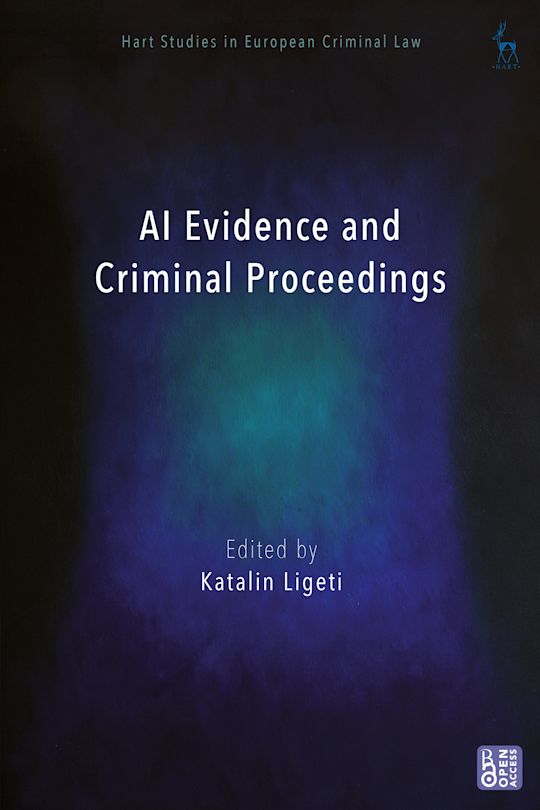

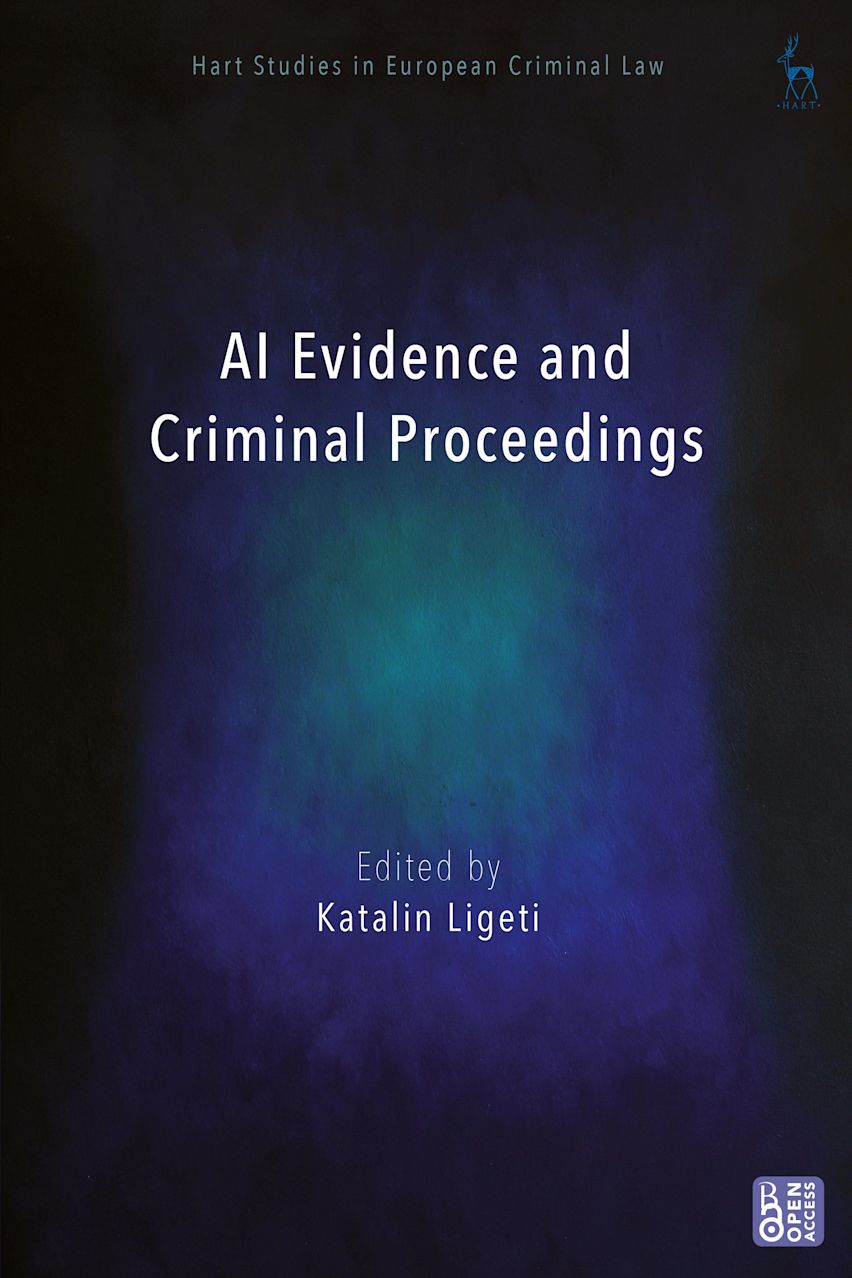
AI Evidence and Criminal Proceedings
- Open Access
Buying pre-order items
Ebooks and Audiobook
You will receive an email with a download link for the ebook or audiobook on the publication date.
Payment
You will not be charged for pre-ordered books until they are available to be shipped. Pre-ordered ebooks will not be charged for until they are available for download.
Amending or cancelling your order
For orders that have not been shipped you can usually make changes to pre-orders up to 72 hours before the publishing date.
Payment for this pre-order will be taken when the item becomes available
- Delivery and returns info
-
Free CA delivery on orders $40 or over
Description
This open-access volume examines the evidentiary use of AI in criminal proceedings, questioning whether existing criminal procedure rules are sufficient to address its unique challenges.
The widespread use of devices that collect, store, and process data about citizens' behaviour has created new opportunities for criminal justice systems to detect, investigate, and prosecute crime. Law enforcement authorities are no longer limited to searching for information or clues related to reported offences; they increasingly rely on digital investigative techniques to identify individuals, patterns, or data points that may indicate an offence. The shift from retrospective investigations toward more predictive and preventive approaches has been amplified by AI technologies using machine learning and deep neural networks.
Within AI's wide presence in the criminal justice system, this volume investigates only the evidentiary use of AI: when law enforcement authorities rely on AI for investigating and prosecuting offences and offer AI's output as evidence to tie the accused to a crime. The focus is on six countries – Germany, France, Luxembourg, the Netherlands, the UK, and the US – offering a comparative look at how each legal system handles AI evidence in criminal proceedings. Can evidence generated or processed by AI be trusted? What protections exist for the accused? The volume provides practical suggestions for law enforcement authorities and lawyers, including safeguards and limits to the use of AI in criminal cases. With the advent of regional and global efforts to regulate AI, this volume also offers solutions for supranational and national policy choices.
The ebook editions of this book are available open access under a CC BY-NC-ND 4.0 licence on bloomsburycollections.com. Open access was funded by the University of Luxembourg.
Table of Contents
1. Unpacking AI Evidence and (Re-)Defining Procedural Safeguards in Digital Investigations, Katalin Ligeti
2. European Approaches to AI-Generated Evidence in Criminal Proceedings, Sabine Gless
3. Evidence Law, Data Protection Standards and the Use of AI for Investigation and Prosecution, Paul De Hert, Andreas Kanakakis and Juraj Sajfert
Part II: National Approaches
4. AI-Tainted and AI-Generated Evidence in the German Criminal Process, Dominik Brodowski
5. AI Output as a Lead to Evidence in the French Criminal Justice System, Juliette Lelieur
6. AI Evidence in Luxembourgish Criminal Proceedings: Between Freedom of Proof and Technical Neutrality, Nicole Visco Comandini
7. Algorithmic Criminal Procedure in the Netherlands, Pieter Liefrink, Rick Robroek and Tess Veldhoven
8. AI and Criminal Justice in the United States, Brandon L Garrett
9. AI Evidence in Criminal Proceedings in England and Wales : Issues and Challenges, Rudi Fortson KC, Valsamis Mitsilegas and Clementina Salvi
Product details
| Published | Jul 22 2027 |
|---|---|
| Format | Paperback |
| Edition | 1st |
| Pages | 304 |
| ISBN | 9781509976652 |
| Imprint | Hart Publishing |
| Dimensions | 234 x 156 mm |
| Series | Hart Studies in European Criminal Law |
| Publisher | Bloomsbury Publishing |


OPEN ACCESS
Bloomsbury Open Access
Read and download this book free of charge from Bloomsbury Collections.
Related Titles