Anansegoro
Ghana’s National Theatre


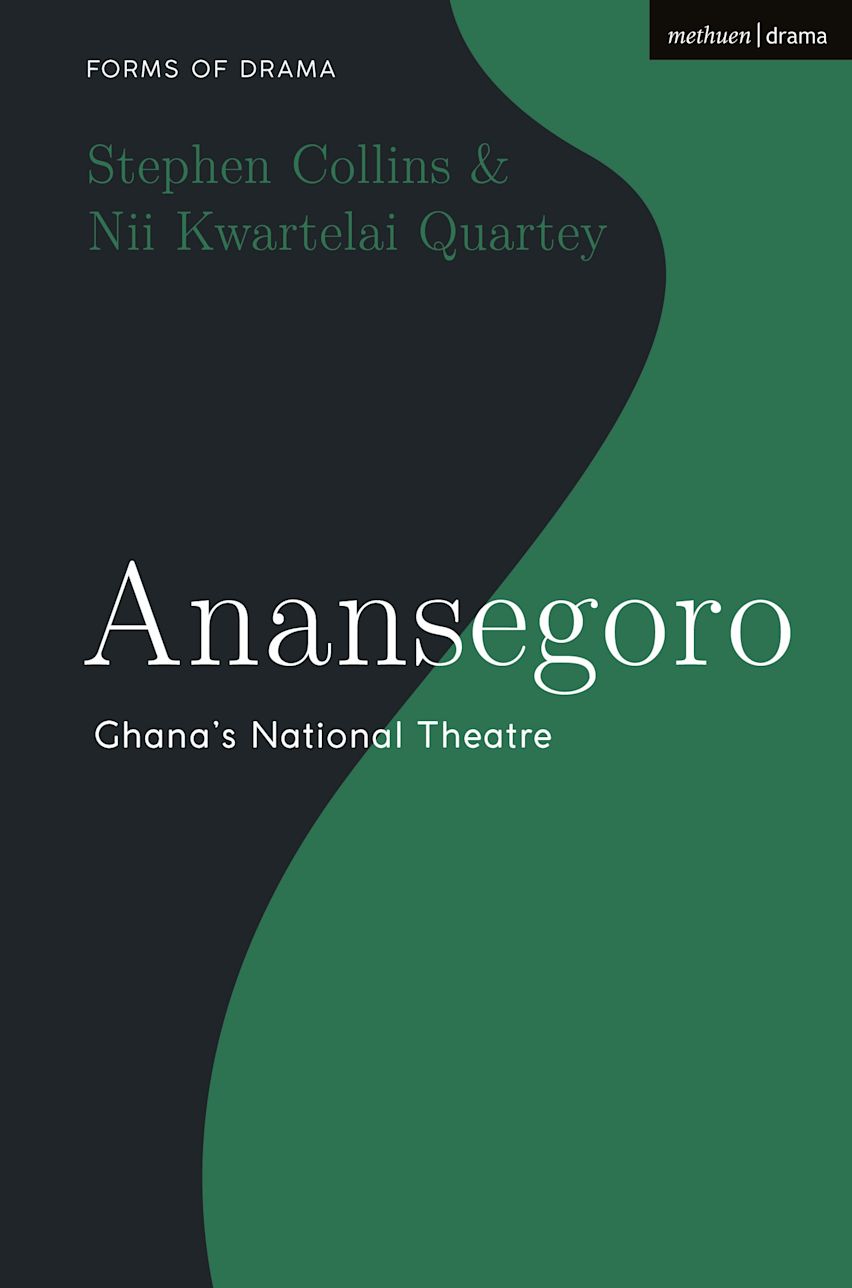
Anansegoro
Ghana’s National Theatre
Buying pre-order items
Ebooks and Audiobook
You will receive an email with a download link for the ebook or audiobook on the publication date.
Payment
You will not be charged for pre-ordered books until they are available to be shipped. Pre-ordered ebooks will not be charged for until they are available for download.
Amending or cancelling your order
For orders that have not been shipped you can usually make changes to pre-orders up to 72 hours before the publishing date.
Payment for this pre-order will be taken when the item becomes available
Description
This volume examines the unique form of postcolonial Ghanaian theatre Anansegoro, ranging from its 1960s origins to its new significance as an example of the intersection between performance, intangible cultural heritage and copyright law.
Developed in the 1960s by Efua Sutherland and her collaborators as a new theatre for a newly independent nation, Anansegoro draws directly from the precolonial form of village storytelling, Anansesem(stories about Ananse, the spider god). Sutherland merged these village storytelling traditions with Western theatrical practices, resulting in a distinctly Ghanaian performance style and a canon of play texts for the modern stage.
Supplemented by an historical overview of playwrighting in Ghana from 1916, this volume explores the impact of Anansegoro and how successive figures including Ama Ata Aidoo and Yaw Asare continued, stretched and developed the form. A comparison study of Abibigoro, a theatrical form established by Mohammed ben Abdallah in the 1980s is also provided to deepen the reader's holistic understanding of the contemporary Ghanaian dramaturgical landscape. Uniquely, the authors analyze how the introduction of the 2005 Ghana Copyright Act, which protects Ghana's folklore from commercial use, has jeopardised the continuation of Anansegoro in the 21st century.
Accessibility Information
Additional accessibility information
- PDF/UA-2, 1.4
- accessibility@bloomsbury.com
Hazards
The publication contains no hazards
Support for non-visual reading
Has alternative text descriptions for images
Navigation
- Page list to go to pages from the print source version
- Elements such as headings, tables, etc for structured navigation
- All or substantially all textual matter is arranged in a single logical reading order
Table of Contents
Introduction: Anansegoro: a national form of theatre?
1: Before Anansegoro: colonial era theatre in Ghana
2: Anansegoro, Anansesem and the National Theatre Movement
3: Anansegoro, Abibigoro, the National Theatre of Ghana
4: Legacies of Anansegoro.
Conclusion: Copyrighting folklore: Anansegoro today
Notes
Bibliography
Index
Product details

| Published | Oct 29 2026 |
|---|---|
| Format | Ebook (PDF) |
| Edition | 1st |
| Pages | 192 |
| ISBN | 9781350558281 |
| Imprint | Methuen Drama |
| Illustrations | 0 |
| Series | Forms of Drama |
| Publisher | Bloomsbury Publishing |

Related Titles