China's Cultural Soft Power
The Rise and Fall of Confucius Institutes in the United States
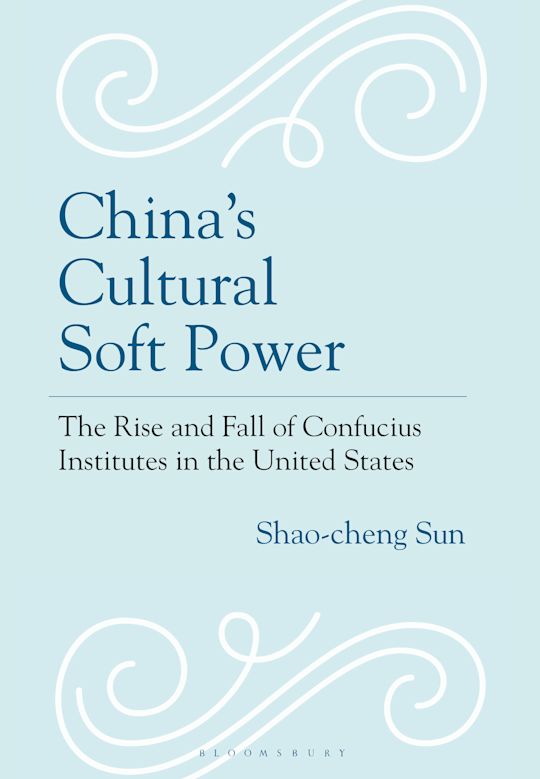

China's Cultural Soft Power
The Rise and Fall of Confucius Institutes in the United States
Buying pre-order items
Ebooks and Audiobook
You will receive an email with a download link for the ebook or audiobook on the publication date.
Payment
You will not be charged for pre-ordered books until they are available to be shipped. Pre-ordered ebooks will not be charged for until they are available for download.
Amending or cancelling your order
For orders that have not been shipped you can usually make changes to pre-orders up to 72 hours before the publishing date.
Payment for this pre-order will be taken when the item becomes available
- Delivery and returns info
-
Free CA delivery on orders $40 or over
Description
Explores China's cultural soft power by examining the rise and fall of Confucius Institutes in the United States.
Through interviews with Confucius Institute personnel, Shao-cheng Sun analyzes the reasons these institutes succeeded or failed, their effectiveness at improving China's image in the United States, and the results of their closure.
These institutes acted as a cultural ambassador: seeking foreign partners, enhancing China's status, and increasing its human capital. The U.S. government, mass media, and scholars have kept a watchful eye on the proliferation of the institutes. While the institutes highlighted the positive aspects of China, Sun explores why they were ultimately not effective.
This book provides a complete picture of the institutes' collapse amid tension between the U.S. and China. It offers a full-cycle analysis of their enterprise in the U.S., from its origins in the early 2000s through 2026.
Table of Contents
Introduction
1. Confucius Institutes and Their Use of Soft Power
2. The Journey of China's Cultural Policy
3. Confucius Institute Formation and Projects in the United States
4. The Global Expansion of Confucius Institutes
5. Eight Representative Confucius Institutes in the United States
6. Criticism of Confucius Institutes in the United States
7. Confucius Institutes Defending Their Academic Freedom
8. The Effectiveness of Confucius Institutes in Promoting Soft Power
Conclusion
Appendix: List of Interviews Conducted by the Author
Bibliography
Index
Product details

| Published | May 13 2027 |
|---|---|
| Format | Hardback |
| Edition | 1st |
| Pages | 176 |
| ISBN | 9781666956658 |
| Imprint | Bloomsbury Academic |
| Dimensions | 229 x 152 mm |
| Publisher | Bloomsbury Publishing |
Reviews
Related Titles