The Disabled Gaze
Multi-Sensory Perspectives on Art, Bodies, and Objects
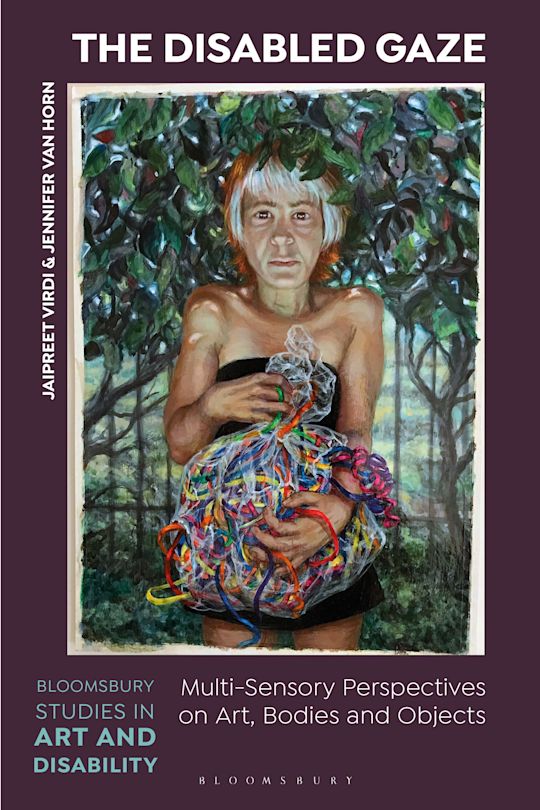

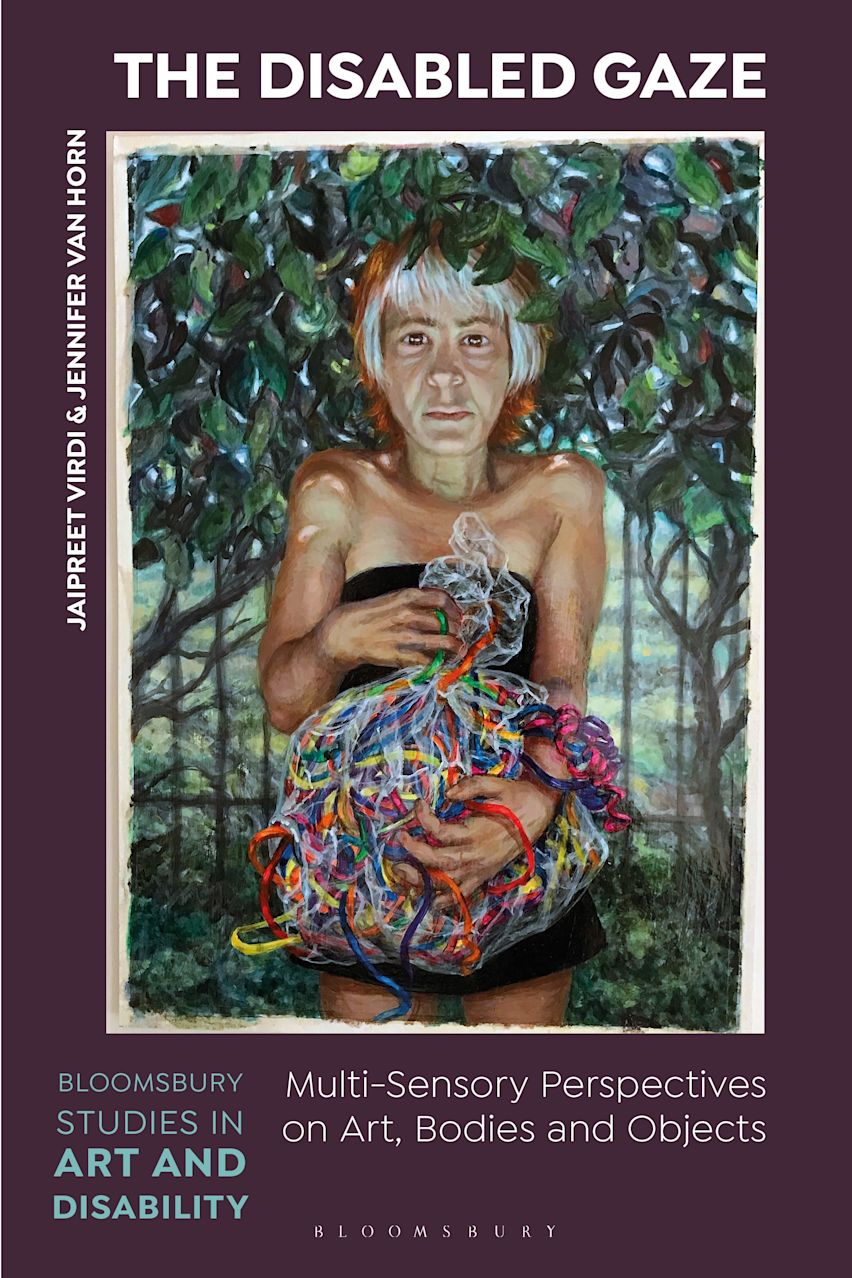
The Disabled Gaze
Multi-Sensory Perspectives on Art, Bodies, and Objects
Buying pre-order items
Ebooks and Audiobook
You will receive an email with a download link for the ebook or audiobook on the publication date.
Payment
You will not be charged for pre-ordered books until they are available to be shipped. Pre-ordered ebooks will not be charged for until they are available for download.
Amending or cancelling your order
For orders that have not been shipped you can usually make changes to pre-orders up to 72 hours before the publishing date.
Payment for this pre-order will be taken when the item becomes available
Description
How does being disabled change the ways people experience the world and the things they create? This agenda-setting collection brings material, visual, artistic, and literary perspectives together to examine how disabled people have shaped representations of themselves in images, objects, and literature.
Engaging with themes of cripping, resistance, and rethinking, the chapters unpack the creative, generative, and transformative approaches by which disabled people have aimed to capture power by controlling how they are perceived. Collectively the volume introduces the “disabled gaze”-an autonomous claiming of identity that disabled people use through making-as a guard against and redressing of ableism and stigma. The essays present a range of highly-illustrated case studies that center disabled people's broader material worlds and resituate artefacts of all sorts, not just specialized design objects, as incubators for disability justice. These range from 19th-century ceramics depicting the British Sign Language manual alphabet, Claud Monet's cataracts and their impact on his painting of the Water Lilies series, and the confraternities of artists with disabilities in early-modern Venice. Positioning the disabled gaze as both a theoretical model and an investigative lens, the collection affirms disabled people as subjects and the power of their gazes as they claim and assert their own performances, identity, and citizenship.
Cutting edge in its interdisciplinary approach, the volume moves beyond the disabled gaze as a tactic limited to visual or optical acts of perception, with authors considering how the disabled gaze can be enacted through acts of touch-the “graze”-or even sound. Across the volume, disability itself comes to encompass multiple acts of making, shaping, sensing, and perceiving, and provides a vital perspective on how subjectivity is created through visual and material artefacts.
Accessibility Information
Additional accessibility information
- EPUB 3.0
- Conforms with the requirements of EPUB Accessibility Spec v1.1
- WCAG level AA
- WCAG v2.2 compliant
- accessibility@bloomsbury.com
Hazards
The publication contains no hazards
Support for non-visual reading
- No accessibility features offered by the reading system, device or reading software are disabled or otherwise unusable with the product
- Has alternative text descriptions for images
Visual adjustments
Appearance of the text and page layout can be modified according to the capabilities of the reading system (font family and size, spaces, as well as color of background and text)
Navigation
- Page list to go to pages from the print source version
- Elements such as headings, tables, etc for structured navigation
- All or substantially all textual matter is arranged in a single logical reading order
- Content is enhanced with ARIA roles to optimize organization and facilitate navigation
- Purposes of all links are made clear
Rich content
Language tagging provided
Table of Contents
Notes on Contributors
Foreword: Facing the Disabled Gaze: Intimacy and Vulnerability Between Artist, Subject, and Friends, Riva Lehrer (Art Institute of Chicago, USA) and Sharonna Pearl (Texas Christian University, USA)
1. Introducing the Disabled Gaze, Jaipreet Virdi and Jennifer Van Horn (University of Victoria, Canada & University of Delaware, USA)
Part One: Materializing
2. 'compelled to pad and wad': Spinal Curvatures and Dress in Mid-19th-Century America, Emily Bach (National Museum of African American History and Culture, USA)
3. The Unperfected Frame: Orthopedic Fitness Devices and the Making of the Modern Healthy Woman in Britain and the United States, Madeleine Ware (Yale University, USA)
4. People of the Eye, Ann Hewitt (Detroit Institute of Arts, USA)
Part Two: Gaining
5. 'Without the Help of a Perfect Limb': Investigating Martha Ann Honeywell's Material Legacy, Rebecca Lo Presti (University of Massachusetts, Amherst, USA )
6. Pictorial Evocations: Deafness and Multisensory Reception of Early Modern Art, Barbara A. Kaminska (Sam Houston State University, USA)
7. Performing the Disability Gaze: The Case of Auguste Renoir, Elizabeth Guffey (Purchase College, USA)
Part Three: Resisting
8. Blind Venetians Gaze Back: Confraternity, Neighborhood, and Disability in Early Modern Venice, Julia A. DeLancey (University of Mary Washington, USA)
9. Telegraphic Mesmerism, John J. Garcia (American Antiquarian Society, USA)
10. The 'Tactile Gaze' and 19th-Century Print Materials for the Blind, Amanda Stuckey (Central Penn College, USA)
Part Four: Engaging
11. Gazing Back: Photographic Histories of Disability, Cath Cartman (Photographer and independent scholar, UK)
12. The Disabled Graze: A Tactile Approach to Tchotchkes, Hallie Ableman (University of Iowa, USA)
13. Phenomenal Bodies: Exploring Disability in Scottish Academic Collections, Emily J. Hanson & Billy Rough (University of St Andrews, UK)
14. The FM Unit: A Deaf Musical Response to Hearing Exams, Frank Mondelli (University of Delaware, USA)
Index
Product details
| Published | Jan 07 2027 |
|---|---|
| Format | Ebook (Epub & Mobi) |
| Edition | 1st |
| Pages | 245 |
| ISBN | 9781350591851 |
| Imprint | Bloomsbury Visual Arts |
| Illustrations | 44 color illus. |
| Series | Bloomsbury Studies in Disability, Art and Design |
| Publisher | Bloomsbury Publishing |
Related Titles