Edward W. Said on Music
Multivocal Readings of a Critical Legacy
- Open Access
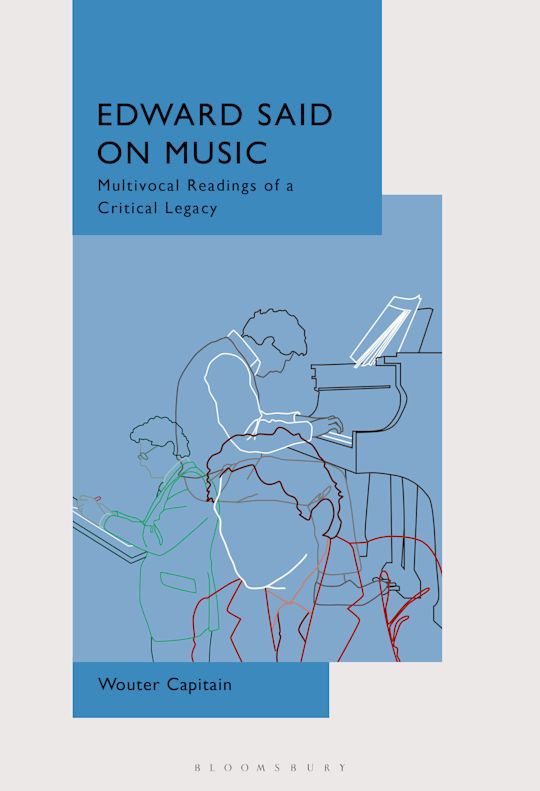

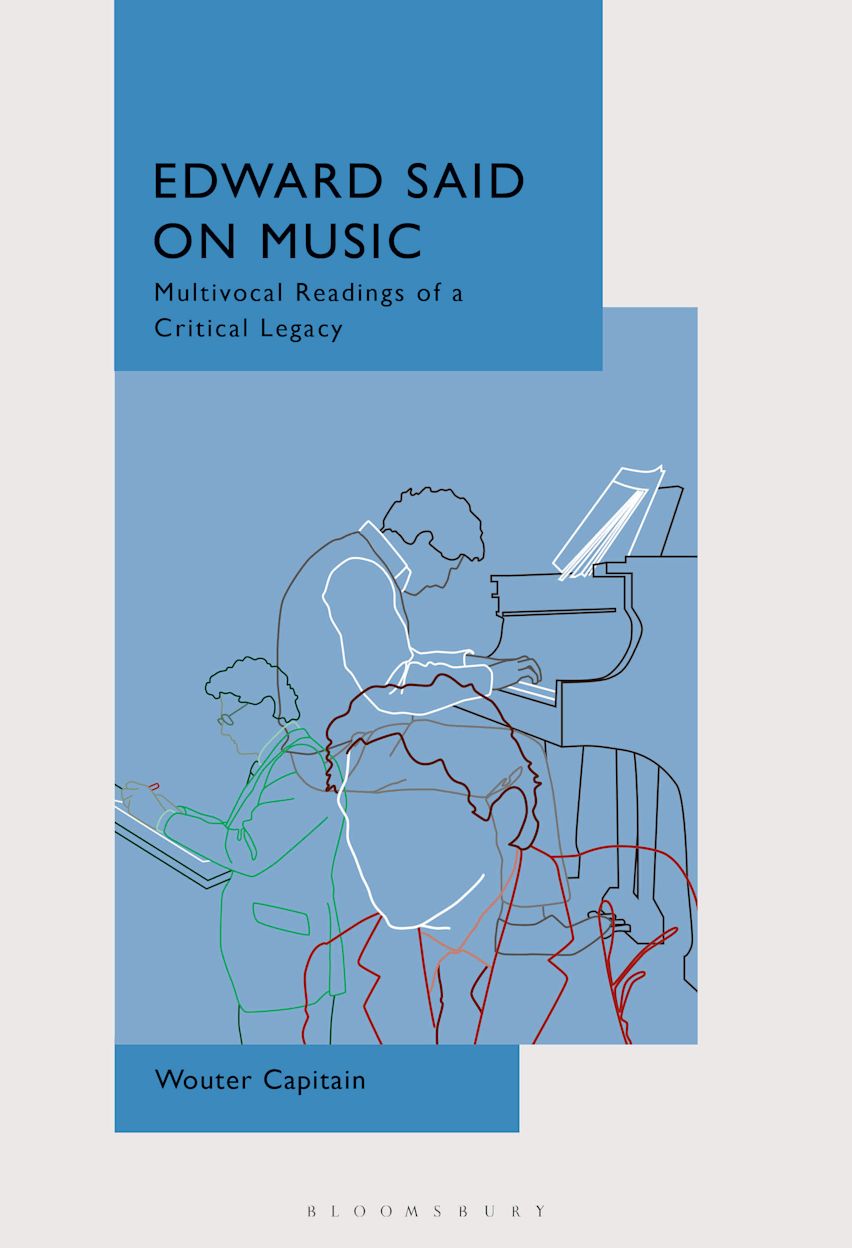
Edward W. Said on Music
Multivocal Readings of a Critical Legacy
- Open Access
Buying pre-order items
Ebooks and Audiobook
You will receive an email with a download link for the ebook or audiobook on the publication date.
Payment
You will not be charged for pre-ordered books until they are available to be shipped. Pre-ordered ebooks will not be charged for until they are available for download.
Amending or cancelling your order
For orders that have not been shipped you can usually make changes to pre-orders up to 72 hours before the publishing date.
Payment for this pre-order will be taken when the item becomes available
- Delivery and returns info
-
Free CA delivery on orders $40 or over
Description
This open access book considers Edward Said's work on music as a site of debate between musicology and postcolonial studies.
According to Edward Said, thinking musically can challenge the normative and colonial principles of knowledge formation in the humanities, which conventionally manifests as written text. He therefore proposed to read the cultural archive “contrapuntally” to articulate alternative voices that are silenced by the dominating discourse. In this book, Wouter Capitain presents a multivocal reading of Said's work itself, interpreting his texts as dynamic performances that tell multiple stories simultaneously.
Drawing on unpublished and previously unexamined drafts and letters, preserved in Columbia University's Edward W. Said Papers, Capitain demonstrates how Said's writing on music performs several voices that interact in his oeuvre and its reception. Positioned as a musicological intervention in postcolonial studies, Edward W. Said on Music delineates interdisciplinary connections and dissonances in Said's work that resonate far beyond his influential legacy.
The ebook editions of this book are available open access under a CC BY-NC-ND 4.0 licence on bloomsburycollections.com. Open access was funded by Niedersachsen Fund, University of Gottingen, Germany.
Table of Contents
1. Musical Concepts in Interdisciplinary Exchange
1.1 The Multivocality of Counterpoint
1.2 Heterophonic Interference
1.3 Reading Said Heterophonically
2. The Cultural Criticism of Operatic Performance
2.1 Contrapuntal Criticism of Verdi's Aida
2.2 Authority and Transgression in Interdisciplinarity
2.3 Wagner and Said in Counterpoint
3. (Un)Popular Interventions
3.1 Popular Music at the Intellectual Limits
3.2 Orientalist Representations of Arab Popular Music
3.3 Musical Relationality, Universalism, and the Risk of Exclusivity
4. The Intellectual and the Pianist
4.1 Parallels and Paradoxes between Academia and Music
4.2 The Public Intellectual as Musical Amateur
4.3 Edward Said as Concert Pianist
5. The Conflicting Voices of the West-Eastern Divan Orchestra
5.1 A One-State Solution as Musical Utopia
5.2 The Musical Eurocentrism of Cultural Diversity
5.3 A Political Stage
Index
Product details

| Published | Apr 01 2027 |
|---|---|
| Format | Hardback |
| Edition | 1st |
| Pages | 192 |
| ISBN | 9798765134535 |
| Imprint | Bloomsbury Academic |
| Dimensions | 229 x 152 mm |
| Publisher | Bloomsbury Publishing |
Reviews
Related Titles