Ethnic Belonging and Deaf Identity in Romania
Living in Multiple Minorities
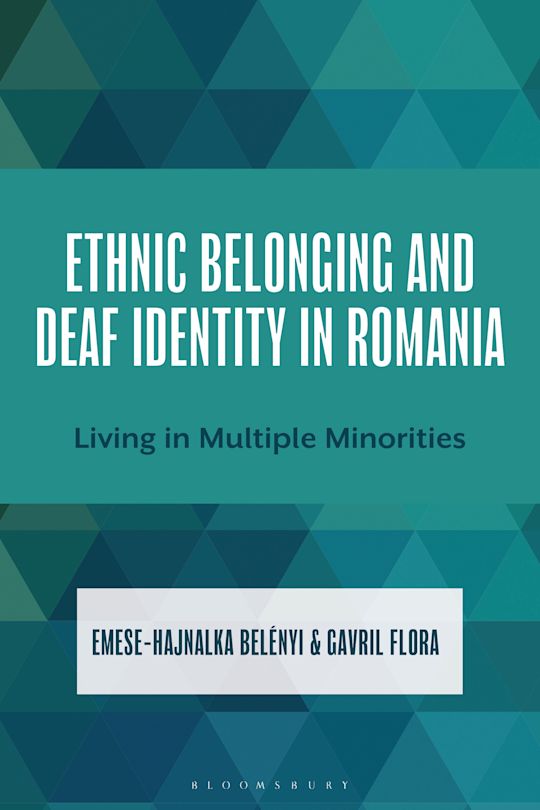

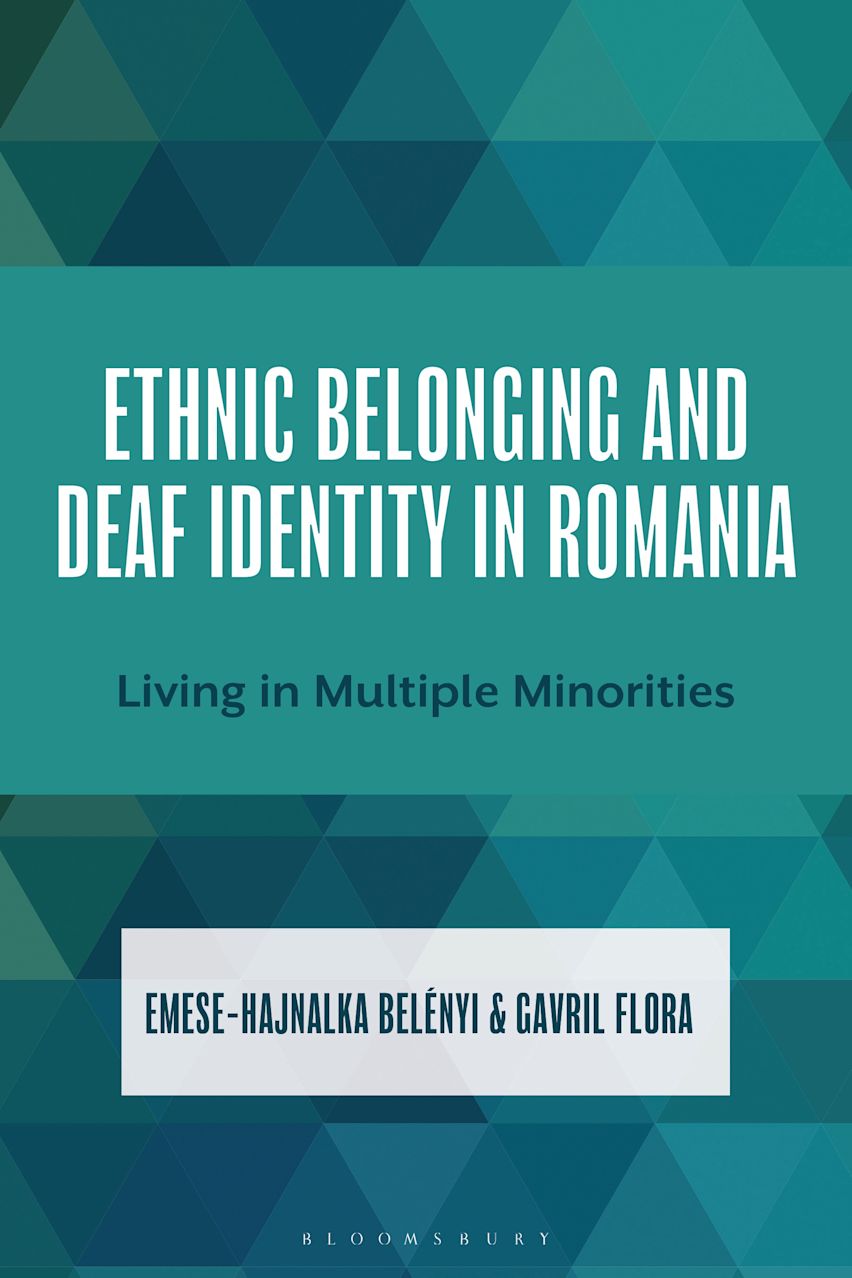
Ethnic Belonging and Deaf Identity in Romania
Living in Multiple Minorities
Description
While Deafness can function as a cultural–linguistic identity with its own language and community norms, Deaf individuals may belong simultaneously to other social groups while sharing a Deaf identity.
Throughout this work, Belenyi and Flora interpret Deafness and ethnicity through the lens of Social Identity Theory (SIT), which posits that individuals derive part of their self-concept from membership in social groups and predicts that group memberships shape self-concept and self-esteem. While SIT has its limitations, newer adaptations, such as self-categorization theory and identity process theory, allow for more nuanced interpretations. With a focus on Hungarian ethnic-minority Deaf people in Romania-and their partners and communities-the authors examine these insights to understand how Deaf people in Romania balance their ethnic and Deaf identities.
Deaf people in East-Central Europe, especially in the multi-ethnic context of Romania, inhabit overlapping minority worlds. Although nation-building policies often emphasize linguistic and ethnic homogeneity, in practice Hungarian–Romanian relations within Deaf families and communities can reveal unexpected cultural bridges. This book combines a theoretical synthesis of Deaf identity, culture, and ethnicity with empirical life-course research to shed new light on how Deaf and ethnic identities intersect.
Accessibility Information
Additional accessibility information
- EPUB 3.0
- Conforms with the requirements of EPUB Accessibility Spec v1.1
- WCAG level AA
- WCAG v2.2 compliant
- accessibility@bloomsbury.com
Hazards
The publication contains no hazards
Support for non-visual reading
- No accessibility features offered by the reading system, device or reading software are disabled or otherwise unusable with the product
- Has alternative text descriptions for images
Visual adjustments
Appearance of the text and page layout can be modified according to the capabilities of the reading system (font family and size, spaces, as well as color of background and text)
Navigation
- Page list to go to pages from the print source version
- Elements such as headings, tables, etc for structured navigation
- All or substantially all textual matter is arranged in a single logical reading order
- Content is enhanced with ARIA roles to optimize organization and facilitate navigation
- Purposes of all links are made clear
Rich content
Language tagging provided
Table of Contents
List of Tables
Acknowledgements
Introduction
1. Interpretation models of Deafness
2. Deaf identities and cultures
3. Deafness and ethnicity
4. Deaf cultures and ethnic identities in Romania
5. Research methodology
6. Early childhood socialization
7. School Socialization
8. Deaf family language use and identity
9. Multigenerational ethnic minority/ethnically heterogeneous Deaf families
10. Community life, language use, and identity
Final remarks
References
Index
Product details

| Published | Feb 19 2026 |
|---|---|
| Format | Ebook (Epub & Mobi) |
| Edition | 1st |
| Pages | 208 |
| ISBN | 9781978771680 |
| Imprint | Bloomsbury Academic |
| Illustrations | 25 bw illus |
| Publisher | Bloomsbury Publishing |


ONLINE RESOURCES
Bloomsbury Collections
This book is available on Bloomsbury Collections where your library has access.
Related Titles