
Buying pre-order items
Ebooks and Audiobook
You will receive an email with a download link for the ebook or audiobook on the publication date.
Payment
You will not be charged for pre-ordered books until they are available to be shipped. Pre-ordered ebooks will not be charged for until they are available for download.
Amending or cancelling your order
For orders that have not been shipped you can usually make changes to pre-orders up to 72 hours before the publishing date.
Get 40% on two or more titles from T&T Clark
Payment for this pre-order will be taken when the item becomes available
- Delivery and returns info
-
Free CA delivery on orders $40 or over
Description
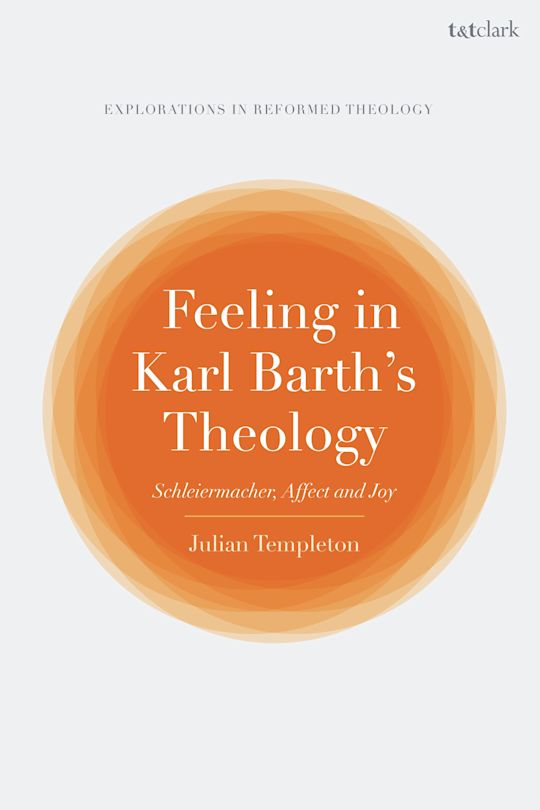
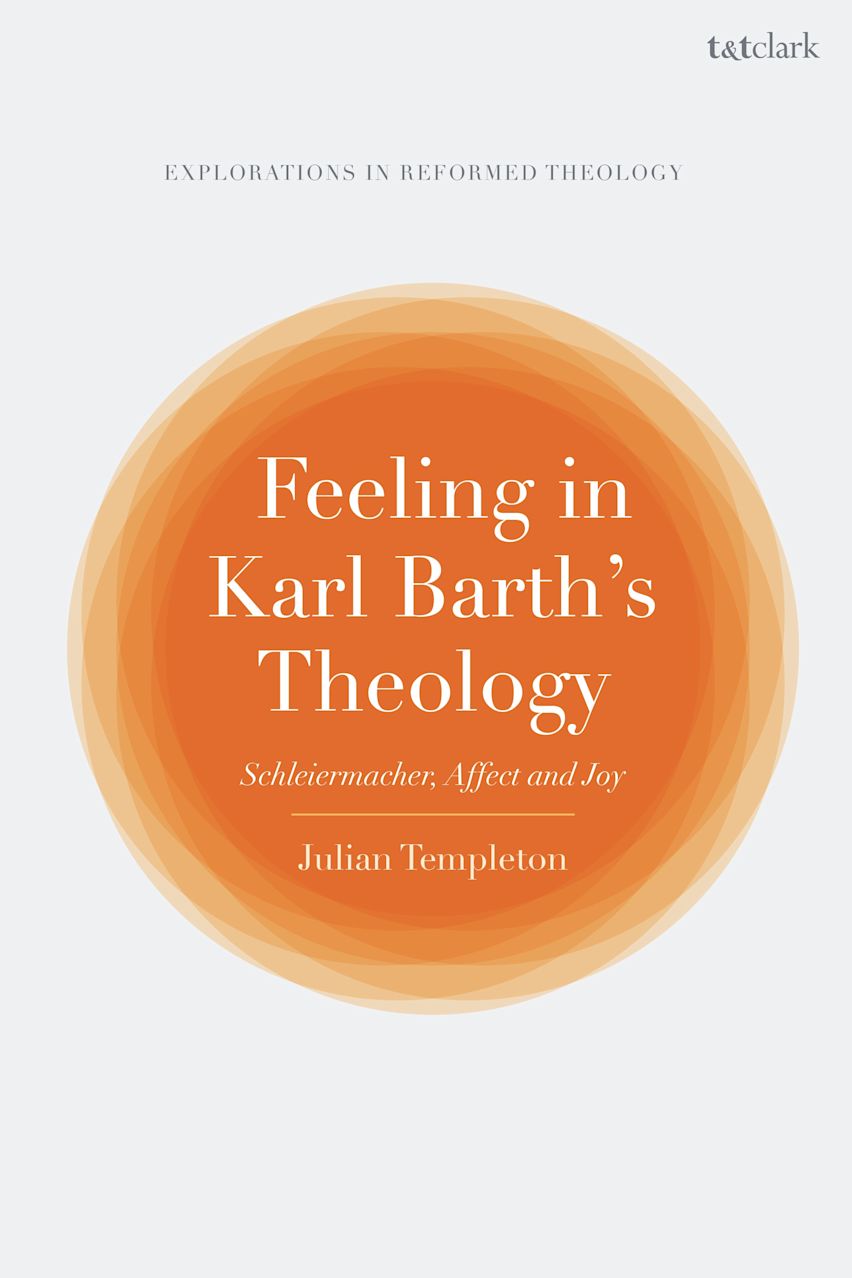
This book is a close reading of Karl Barth's shifting treatment of feeling in conversation with Friedrich Schleiermacher's 'feeling (Gefühl) of absolute dependence'. Affect, defined as changeable disposition and environmental attunement, provides an initial orientation and periodic parallel for this study.
Templeton argues that Barth had four different theological responses to feeling. First, as a student of modern theology influenced by Schleiermacher, Barth embraced human feeling as the indicator of Christian truth. Second, as a pastor faced with the demands of preaching and the First World War, Barth critiqued feeling, along with experience, as liable to mislead. Instead, he sought a dynamic objectivity in the wholly other God revealed in Jesus Christ. Third, as a professor of theology, Barth repurposed feeling as a self-determination, alongside knowing and willing, by which a person corresponds to the determining Word of God. Fourth, as a theologian influenced by Anselm's combining of apologetic proof with affective response and aesthetic form, Barth reorientated feeling by centring it in God's triune being.
The Church's self-determination of joy is the agency that corresponds to God's determining perfection of glory. However, the Church that holds itself in readiness for joy also opens itself to be affected by suffering.
Table of Contents
a. Feeling and affect
b. Introduction to Karl Barth's life and work
c. Summary of argument
1. Feeling, affect, and a crisis of confidence
a. Kant, Schleiermacher, Gefühl, and Affect
b. The affective dimension of Barth's early development, crisis, and reaction
c. Der Römerbrief 1919 and contemporaneous lectures
2. Interruption, dialectical witness, and the quality of grace
a. Romans II
b. The move to Göttingen and the Elgersburg Lecture
c. The Göttingen Lectures on Schleiermacher
3. The Word of God and human contradiction
a. The Göttingen–Münster Dogmatics 1924–26
b. Christian Dogmatics in Outline: Prolegomena 1927
c. Anselm: Fides Quaerens Intellectum 1931
4. The repurposing of feeling
a. The inclusion of feeling as a self-determination in Church Dogmatics I/1
b. Feeling as an affective self-determination by which God is acknowledged
c. The First Commandment as an Axiom of Theology; Theological Existence Today, 1933
d. The repurposing of feeling in Church Dogmatics I/2
5. God's glory and the creature's joy
a. The context and themes of Church Dogmatics II/1
b. Self-determination and the middle voice
c. God's perfection of glory and the creature's feeling of joy
d. Beauty as the form of God's glory and the feeling of delight
e. Readiness for joy that also acknowledges suffering in Church Dogmatics III/4
Conclusion
Product details
| Published | Jan 07 2027 |
|---|---|
| Format | Hardback |
| Edition | 1st |
| Pages | 224 |
| ISBN | 9780567717306 |
| Imprint | T&T Clark |
| Dimensions | 234 x 156 mm |
| Series | T&T Clark Explorations in Reformed Theology |
| Publisher | Bloomsbury Publishing |
Related Titles