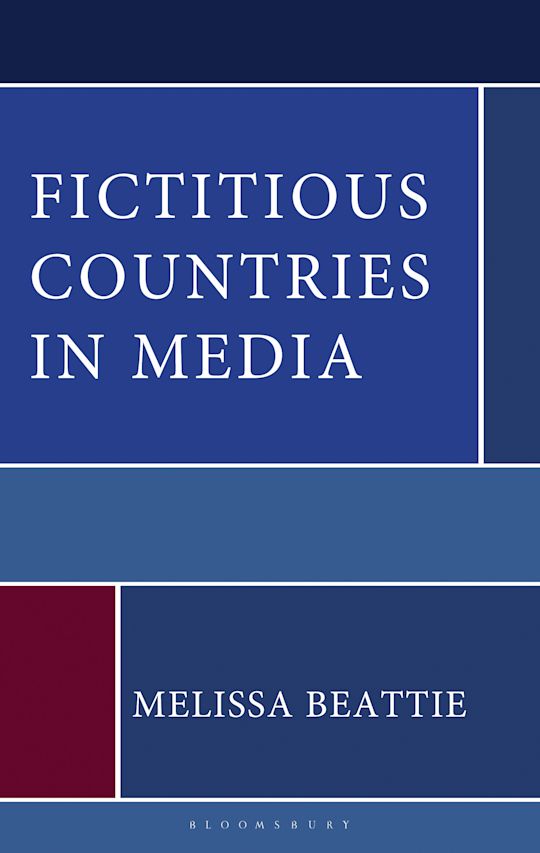

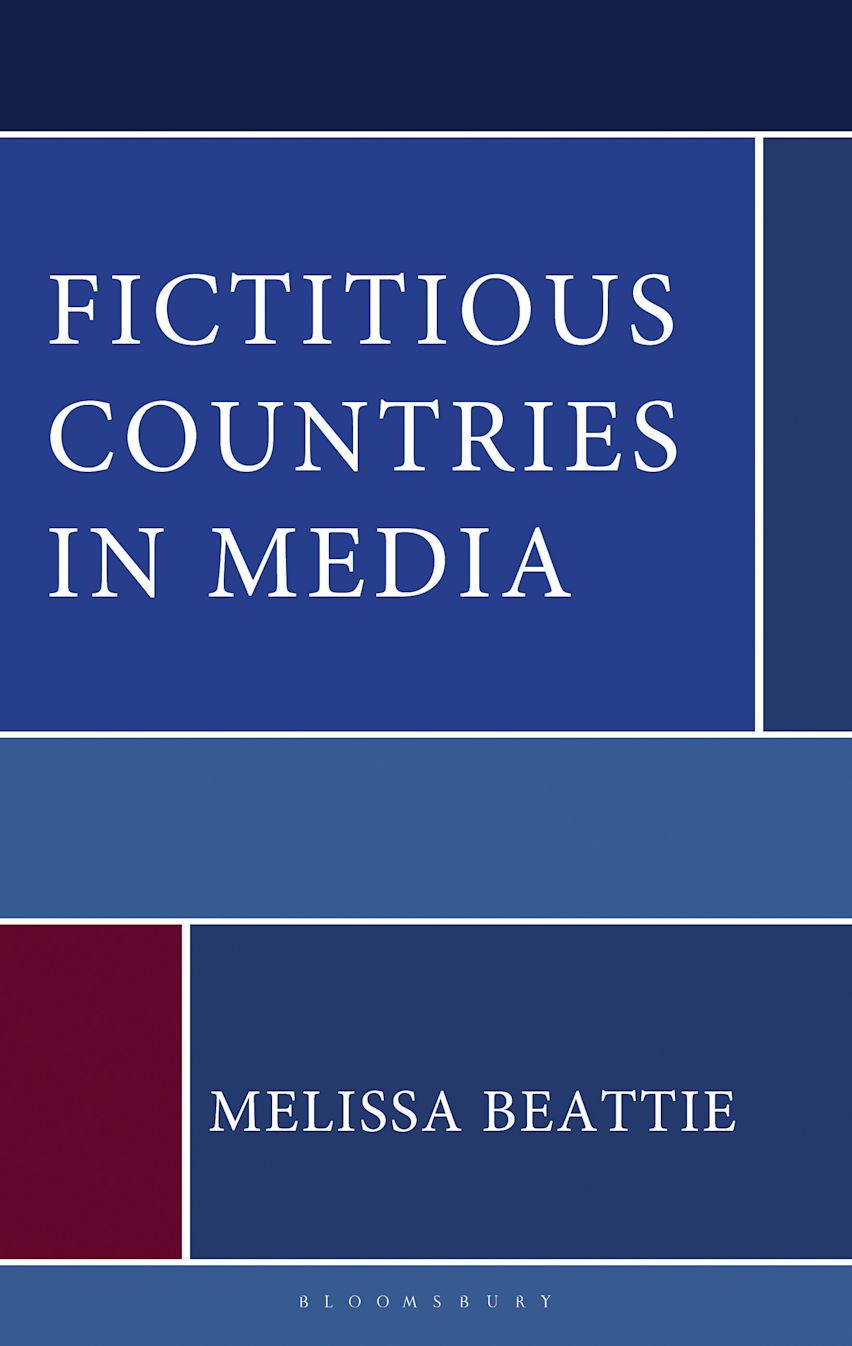
Fictitious Countries in Media
Description
Melissa Beattie explores the promises and pitfalls of fabricated nations as a setting and subject of fictional narratives, interrogating the methods and motivations of their creation and, more importantly, who they purport to represent.
Drawing upon aesthetics, industrial analyses, and postcolonial theory, Beattie argues that in (re)combining elements of real nations into constructed ones, we introduce the opportunity for existing perceived-stereotypes to be either subverted or reinforced. As the resulting narratives tend to repackage real discourses about the regions being synthesized, she contends, these media texts often prioritize characters from “real” countries and dominant groups, ultimately replicating existing geopolitical and sociocultural power imbalances.
As Beattie examines portrayals of “nations” that are fictitiously located across the globe as case studies – including “African” nations like “Equatorial Kundu” from The West Wing, “Latin American” countries like “Parador” from Moon Over Parador (1988), “Eastern European” nations like “Sokovia” in the Marvel Cinematic Universe, and “post-Soviet” states like “Karastan” in Lost in Karastan (2014) – she highlights how the cultural specificity of each region being “represented” is utilized in Othering that same region.
Ultimately, this book emphasizes the importance of critique and reflection from media theorists, practitioners, students and audiences alike to work toward more ethical representation of the societies and (sub)cultures in which these texts are produced and consumed.
Accessibility Information
Additional accessibility information
- EPUB 3.0
- Conforms with the requirements of EPUB Accessibility Spec v1.1
- WCAG level AA
- WCAG v2.2 compliant
- accessibility@bloomsbury.com
Hazards
The publication contains no hazards
Support for non-visual reading
- No accessibility features offered by the reading system, device or reading software are disabled or otherwise unusable with the product
- Has alternative text descriptions for images
Visual adjustments
Appearance of the text and page layout can be modified according to the capabilities of the reading system (font family and size, spaces, as well as color of background and text)
Navigation
- Page list to go to pages from the print source version
- Elements such as headings, tables, etc for structured navigation
- All or substantially all textual matter is arranged in a single logical reading order
- Content is enhanced with ARIA roles to optimize organization and facilitate navigation
- Purposes of all links are made clear
Rich content
Language tagging provided
Table of Contents
Introduction
1. Fictitious African Countries
2. Fictitious Latin American and Caribbean Countries and Overseas Territories
3. Fictitious Eastern European Countries
4. Fictitious Post-Soviet Countries
Conclusion
Bibliography
Index
About the Author
Product details

| Published | Oct 15 2026 |
|---|---|
| Format | Ebook (Epub & Mobi) |
| Edition | 1st |
| Pages | 192 |
| ISBN | 9781978759398 |
| Imprint | Bloomsbury Academic |
| Illustrations | 7 bw illus |
| Publisher | Bloomsbury Publishing |
Reviews
Related Titles