
Buying pre-order items
Ebooks and Audiobook
You will receive an email with a download link for the ebook or audiobook on the publication date.
Payment
You will not be charged for pre-ordered books until they are available to be shipped. Pre-ordered ebooks will not be charged for until they are available for download.
Amending or cancelling your order
For orders that have not been shipped you can usually make changes to pre-orders up to 72 hours before the publishing date.
Payment for this pre-order will be taken when the item becomes available
Description
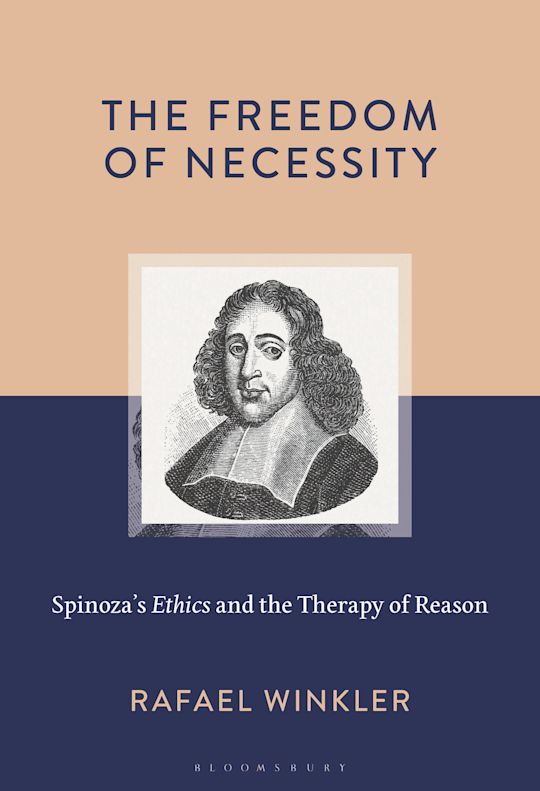
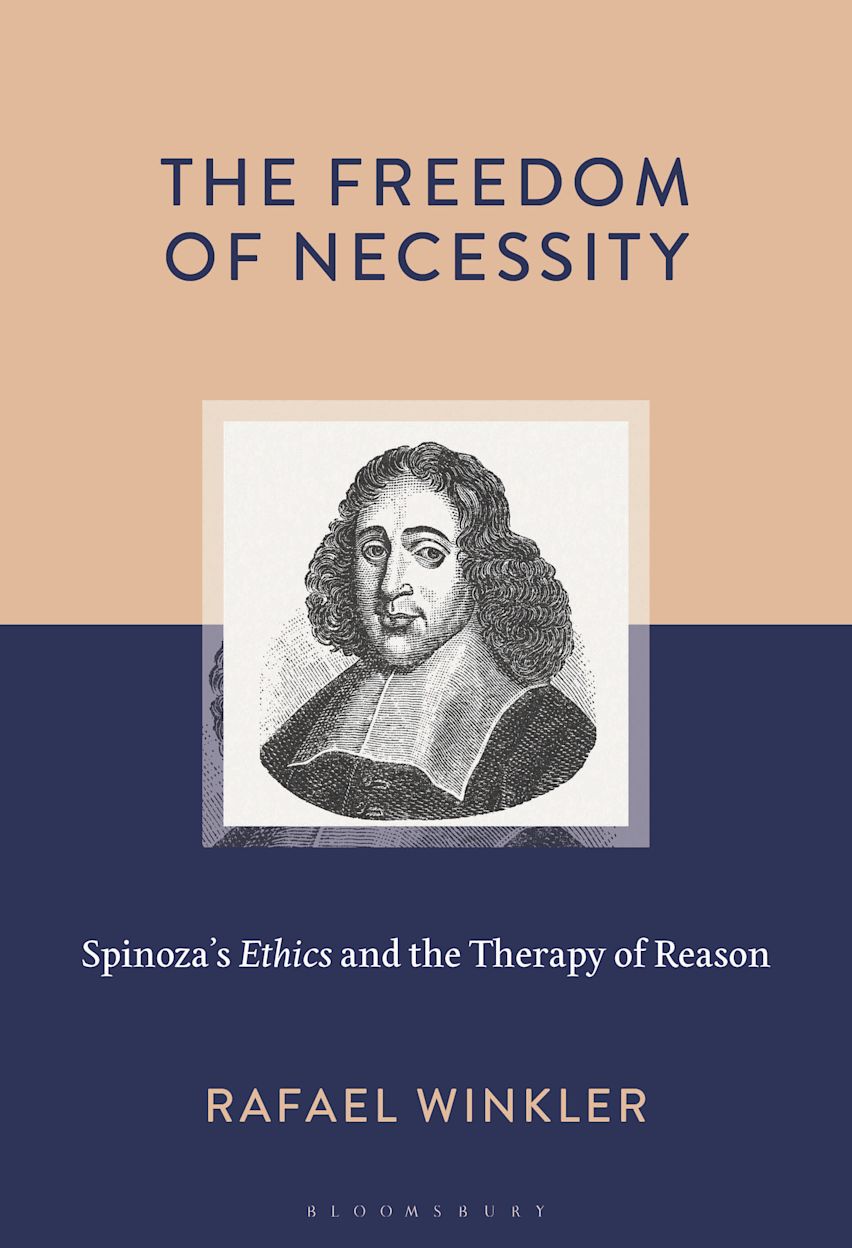
What would it mean for philosophy to liberate its reader rather than merely persuade them?
In The Freedom of Necessity, Rafael Winkler argues that Spinoza's metaphysics and his therapeutics are inseparable: the liberation promised in the closing parts of the Ethics becomes intelligible only if the strict necessitarianism of Part 1 is true. Far from abolishing freedom, necessity is its condition. To understand why things could not have been otherwise is to be freed from the hope and fear, regret and anxiety bred by the illusion of contingency.
Reading the Ethics alongside the Treatise on the Emendation of the Intellect, Winkler reconstructs Spinoza's system from its geometric method to its ethics of liberation. He defends the principle of sufficient reason and substance monism, re-examines the proofs of God's existence and power, and shows that the identity of mind and body-one finite mode expressed under two attributes-is the hinge on which Spinoza's practical philosophy turns. Engaging analytic literature and continental commentaries alike, and confronting contemporary thought's suspicion of necessity, the book recovers the Ethics as a living practice of freedom.
Accessibility Information
Additional accessibility information
- PDF/UA-2, 1.4
- accessibility@bloomsbury.com
Hazards
The publication contains no hazards
Support for non-visual reading
Has alternative text descriptions for images
Navigation
- Page list to go to pages from the print source version
- Elements such as headings, tables, etc for structured navigation
- All or substantially all textual matter is arranged in a single logical reading order
Table of Contents
Abbreviations
Introduction: Philosophy as Therapy
Part One: The Method of the Ethics: From Emendation to Construction
1. The Treatise on the Emendation of the Intellect: Towards a New Theory of Truth
2. Geometry as Methodological Paradigm: The Construction of the Necessary Being
3. A Quasi-Transcendental Argument
Part Two: Substance, Expression, and the Absolute
4. Substance and Its Discontents: Towards an Explanatory Concept
5. Rationalism or Irrationalism?
6. Modes, Inherence, and the Logic of Expression
7. The Unity of Substance and the Difference Between Attributes
Part Three: The Proofs of God's Existence and Power
8. Three Proofs, One Demonstration: The Unity of Existence, Power, and the Attributes
9. Self-Verifying Existence: Spinoza's Ontological Argument and the Limits of the Kantian Critique
10. From Negation to Affirmation: The PSR, Infinite Power, and God's Necessary Existence
11. Deus sive Potentia: Existence, Power, and the Nature of the Divine Being
12. From Divine Inertia to Finite Striving: Conatus, Expression, and the Self-Comprehension of Substance
Part Four: Knowing and Being: The Identity Thesis and Spinoza's Ethics of Liberation
13. The Expressive Mind: Imagination, Indistinguishability, and the Parity of Ideas
14. Modal Identity and Its Truthmaker: Essence, Conatus, and Therapeutic Transformation
15. Acting Through Understanding: Adequate Ideas, Transformation, and the Path to Blessedness
Conclusion: The Therapy of Necessity
Bibliography
Index
Product details

| Published | Apr 15 2027 |
|---|---|
| Format | Ebook (PDF) |
| Edition | 1st |
| Pages | 256 |
| ISBN | 9798216276951 |
| Imprint | Bloomsbury Academic |
| Publisher | Bloomsbury Publishing |
Related Titles