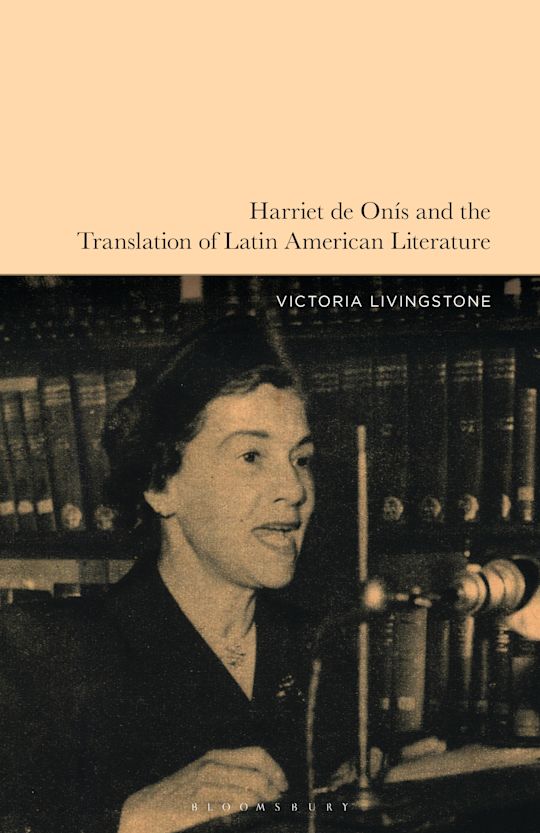

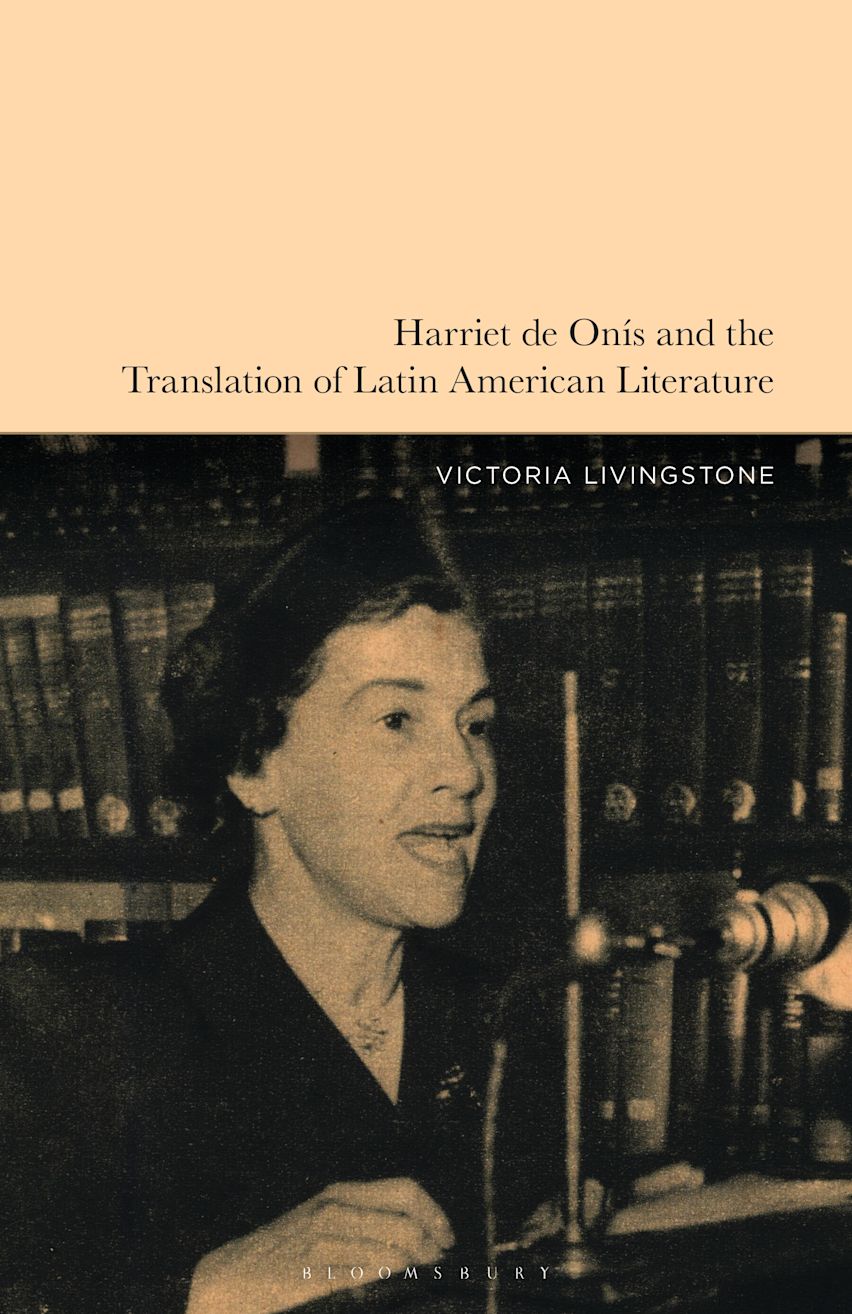
Harriet de Onís and the Translation of Latin American Literature
Buying pre-order items
Ebooks and Audiobook
You will receive an email with a download link for the ebook or audiobook on the publication date.
Payment
You will not be charged for pre-ordered books until they are available to be shipped. Pre-ordered ebooks will not be charged for until they are available for download.
Amending or cancelling your order
For orders that have not been shipped you can usually make changes to pre-orders up to 72 hours before the publishing date.
Payment for this pre-order will be taken when the item becomes available
Description
Uncovers the role of Harriet de Onís (1899-1969), Alfred A. Knopf's principal translator of Spanish and Portuguese into English, in ushering in the Latin American literary boom of the 1960s and 1970s.
The Latin American Boom, which saw the rise of modernist authors like Julio Cortázar, Carlos Fuentes, Mario Vargas Llosa, and Gabriel García Márquez in the global and Anglophone literary market, mainly took place in the second half of the 20th century. However, as this book argues, this movement did not begin in a vacuum.
Harriet de Onís and the Translation of Latin American Literature examines the various literary and socio-political factors that shaped the translation and reception of Latin American literature in the US between 1930-1969. Namely, it traces the editorial project of Alfred A. Knopf, the most influential US publisher of Latin American literature during those years, and Harriet de Onís, Knopf's principal and most prolific translator. This book examines de Onís's critical role in this publishing history, one often overshadowed by the attention given to male scholars, while also demonstrating the editorial role of the translator in navigating the challenges of translation.
Drawing on archival research, each chapter traces the publication history of a different text. The three case studies feature both Spanish and Portuguese source texts from Mexico, Brazil, and Cuba and examine the specific challenges of translation, including translating political context, dialect, and experimental style. Taken together, the case studies nuance current models of global literary circulation and highlight the active role of the translator in shaping and mediating source texts for their target markets.
Accessibility Information
Additional accessibility information
- PDF/UA-2, 1.4
- accessibility@bloomsbury.com
Hazards
The publication contains no hazards
Support for non-visual reading
Has alternative text descriptions for images
Navigation
- Page list to go to pages from the print source version
- Elements such as headings, tables, etc for structured navigation
- All or substantially all textual matter is arranged in a single logical reading order
Table of Contents
Acknowledgements
List of Abbreviations
Introduction: Re-inscribing the Name of Harriet de Onís
1. Translated Latin American Literature Before the Boom
2. Translating the Mexican Revolution: Martín Luis Guzmán's El águila y la serpiente
3. Tobacco, Sugar, and Translation: Fernando Ortiz's Contrapunteo cubano
4. Translating Surregionalism: João Guimarães Rosa's Grande Sertão: Veredas and Sagarana
5. Translation and Retranslation in the Twenty-First Century
Appendix A: Translations by Harriet de Onís
Appendix B: Table of Omissions in the 1930 Translation of El águila y la serpiente
Works Cited
Index
Product details

| Published | Mar 18 2027 |
|---|---|
| Format | Ebook (PDF) |
| Edition | 1st |
| Pages | 208 |
| ISBN | 9798216372325 |
| Imprint | Bloomsbury Academic |
| Illustrations | 11 bw illus |
| Publisher | Bloomsbury Publishing |
Related Titles