Interepistemic Translation
Sense-Making Encounters Between "China" and the "West"
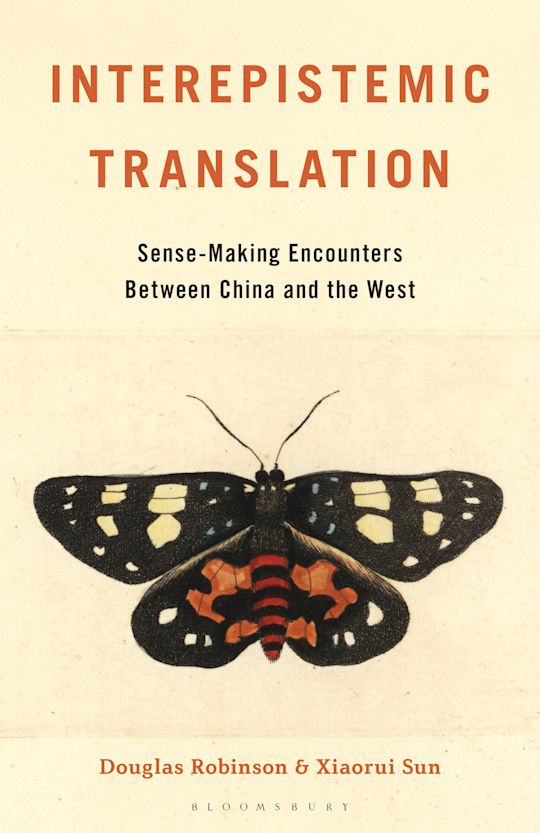

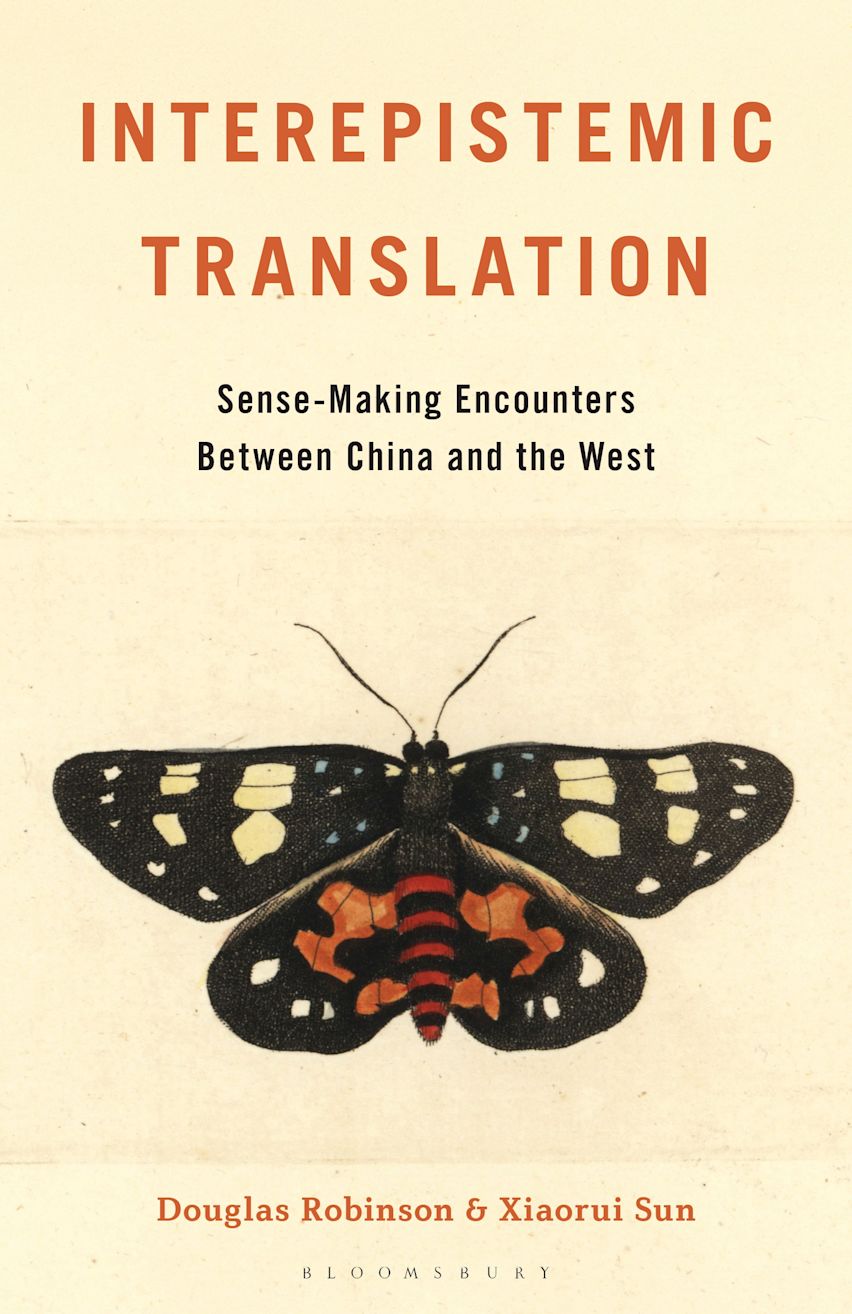
Interepistemic Translation
Sense-Making Encounters Between "China" and the "West"
Buying pre-order items
Ebooks and Audiobook
You will receive an email with a download link for the ebook or audiobook on the publication date.
Payment
You will not be charged for pre-ordered books until they are available to be shipped. Pre-ordered ebooks will not be charged for until they are available for download.
Amending or cancelling your order
For orders that have not been shipped you can usually make changes to pre-orders up to 72 hours before the publishing date.
Payment for this pre-order will be taken when the item becomes available
- Delivery and returns info
-
Free CA delivery on orders $40 or over
Description
Douglas Robinson and Xiaorui Sun present a theory of interepistemic translation, or the encounters between different epistemic regimes of knowledge, as a new way of understanding gaps between knowledge paradigms, such as the historical tension between "East" and "West."
Interepistemic Translation offers a new perspective on understanding how we know, think, and act in the world around us. Robinson and Sun argue that “interepistemic translation," or translating between epistemic regimes, is commonplace. Metaphor and analogy are interepistemic translations. So is almost everything we do.
This book explores interepistemic translation and its foundational tensions through the example of how Chinese and Western culture – and the paradigm gaps between then – have been theorized in histories of science. The co-authors each present case studies from the 20th century. Robinson examines the thought of Thomas S. Kuhn in The Structure of Scientific Revolutions and his later work, and reads Neal Stephenson's future “China,” especially Shanghai, in the 1995 novel The Diamond Age. Sun engages the rhizomatic theory of Gilles Deleuze and Félix Guattari and draws from representations of China vis-à-vis Matteo Ricci, along with reading contemporary Shanghai and Qi theory from traditional Chinese medicine. Taken together, the examples demonstrate the bi-directional, multi-directional, and inter-directional translational work guiding how we perceive then read the world.
Table of Contents
1. Interepistemic Translation and Transfer Theory: An Accommodation Douglas Robinson
Part I. The Kuhnian Legacy
2. Communal Interepistemic Translation: Charles Sanders Peirce and Thomas S. Kuhn on the Interepistemicity of Scientific Communities Douglas Robinson
3. The Past Is Another Country: The Problem of Translation and the Problem of Confucian Justice in a Future Shanghai Douglas Robinson
4. Embodiment as the Guidance System for (Inter)epistemicity: Mostly Kuhn on Aristotle, but with Some Chineseness Mixed In Douglas Robinson
5. The (Il)legal Affordances of Interepistemic Translation in Stephenson's Shanghai Douglas Robinson
Part II The Deleuzean Legacy
6. Preface to Part II: Rhizomatic Interepistemic Translation Xiaorui Sun
7. Rhizomatic Chineseness and Its Postmodern Implications for Interepistemic Translation Studies Xiaorui Sun
8. The Translational City of Shanghai: Cultural Hybridity or Ideological Incongruity? Xiaorui Sun
9. Hysterical Translation or Translator as Hysteric? Translationality and Rhizomaticity Between Deleuzean Affect Theory and the Qi Theory in TCM Xiaorui Sun
Postface: Möbius Heteronymous Interepistemic Metapseudotranslation Douglas Robinson and Xiaorui Sun
References
Index
Product details

| Published | May 13 2027 |
|---|---|
| Format | Hardback |
| Edition | 1st |
| Pages | 272 |
| ISBN | 9798216548928 |
| Imprint | Bloomsbury Academic |
| Illustrations | 5 bw illus |
| Dimensions | 229 x 152 mm |
| Publisher | Bloomsbury Publishing |
Related Titles