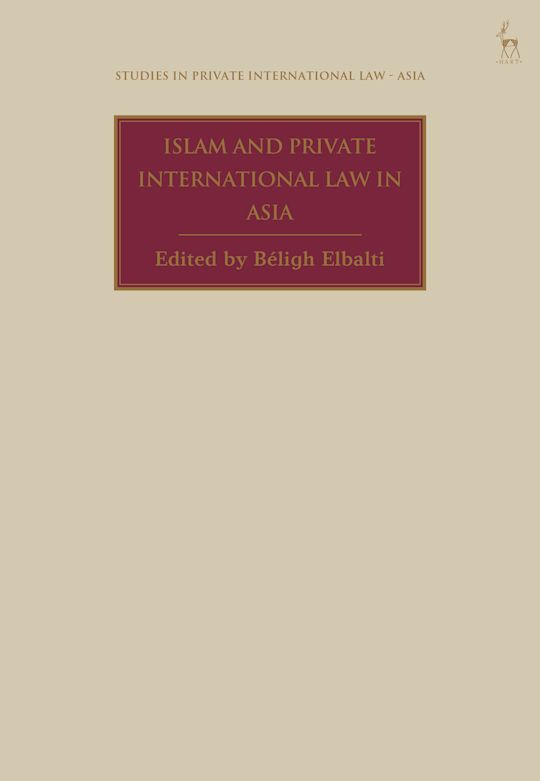

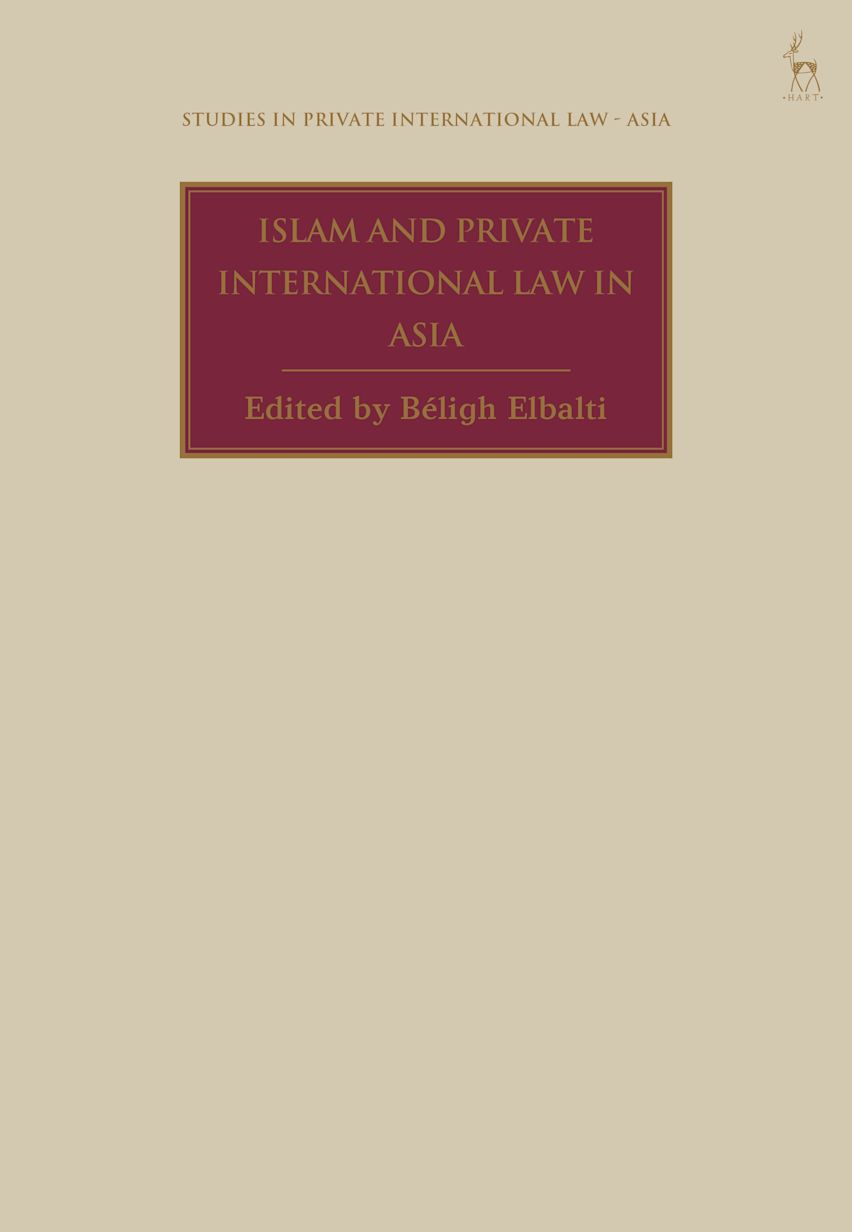
Islam and Private International Law in Asia
Buying pre-order items
Ebooks and Audiobook
You will receive an email with a download link for the ebook or audiobook on the publication date.
Payment
You will not be charged for pre-ordered books until they are available to be shipped. Pre-ordered ebooks will not be charged for until they are available for download.
Amending or cancelling your order
For orders that have not been shipped you can usually make changes to pre-orders up to 72 hours before the publishing date.
Payment for this pre-order will be taken when the item becomes available
Description
This book examines the interaction between Islam and private international law in Asia.
The analysis distinguishes between Muslim-majority and non-Muslim jurisdictions. Among the former, a further distinction can be drawn between Muslim-majority jurisdictions where Islamic law continues to exert a strong influence on both substantive and procedural law (including Pakistan, Bangladesh, Indonesia, and Brunei), and those where the law has been largely secularized (such as Kazakhstan, and Uzbekistan). Among the latter, non-Muslim jurisdictions can likewise be divided into two groups: those with a significant Muslim minority, often granted a certain degree of judicial or legal autonomy (such as India, the Philippines, and Thailand); and those where Muslims constitute only a small minority and where no special legal or judicial framework exists (including Japan, South Korea, Taiwan, and China).
In Muslim-majority jurisdictions, the main question concerns the influence of Islamic law on the private international law treatment of cross-border cases. In non-Muslim jurisdictions, the main question concerns the acceptance of foreign law based on or influenced by Islamic law or judgments rendered in application of such laws.
The chapters put the question of the interrelation between Islam and private international law in its broader theoretical context, examining the differences and similarities between the various approaches and proposing suggestions that bridge the gap between sometimes opposing approaches.
The book sheds light on the multifaceted interrelation between Islam and private international law in Asia from both a theoretical and practical angle. It offers a unique perspective in which cultural and religious diversity meets private international law.
This invaluable book provides judges, practitioners, decision-makers, and scholars with a practical guide and an indispensable reference to understanding this complex issue within the Asian context.
Table of Contents
II. Islam and PIL in Muslim-Majority Asian Jurisdictions
1. Pakistan
2. Bangladesh
3. Indonesia
4. Brunei
5. Uzbekistan
6. Kazakhstan
III. Islam and PIL in Non-Muslim Asian Jurisdictions
A. Jurisdictions with Significant Muslim Minorities
7. Philippines
8. India
9. Thailand
10. Sri Lanka
B. Jurisdictions with Smaller Muslim Minorities
11. Taiwan
12. South Korea
13. Japan
14. China
IV. Conclusion
Product details
| Published | Apr 01 2027 |
|---|---|
| Format | Ebook (Epub & Mobi) |
| Edition | 1st |
| Pages | 480 |
| ISBN | 9781509972609 |
| Imprint | Hart Publishing |
| Series | Studies in Private International Law - Asia |
| Publisher | Bloomsbury Publishing |
Related Titles