Late Ancient Greek Thinkers and Their Renaissance Readers
Philosophy, Mathematics and Medicine in Europe, ca. 1450–1600
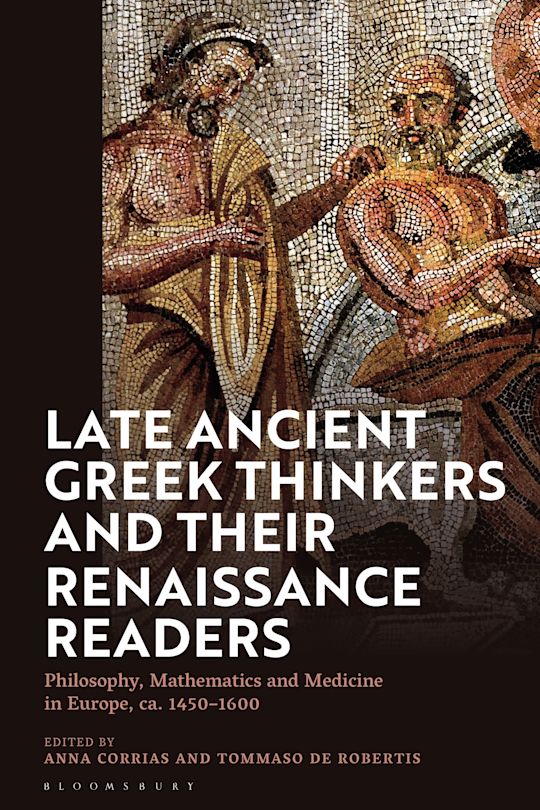

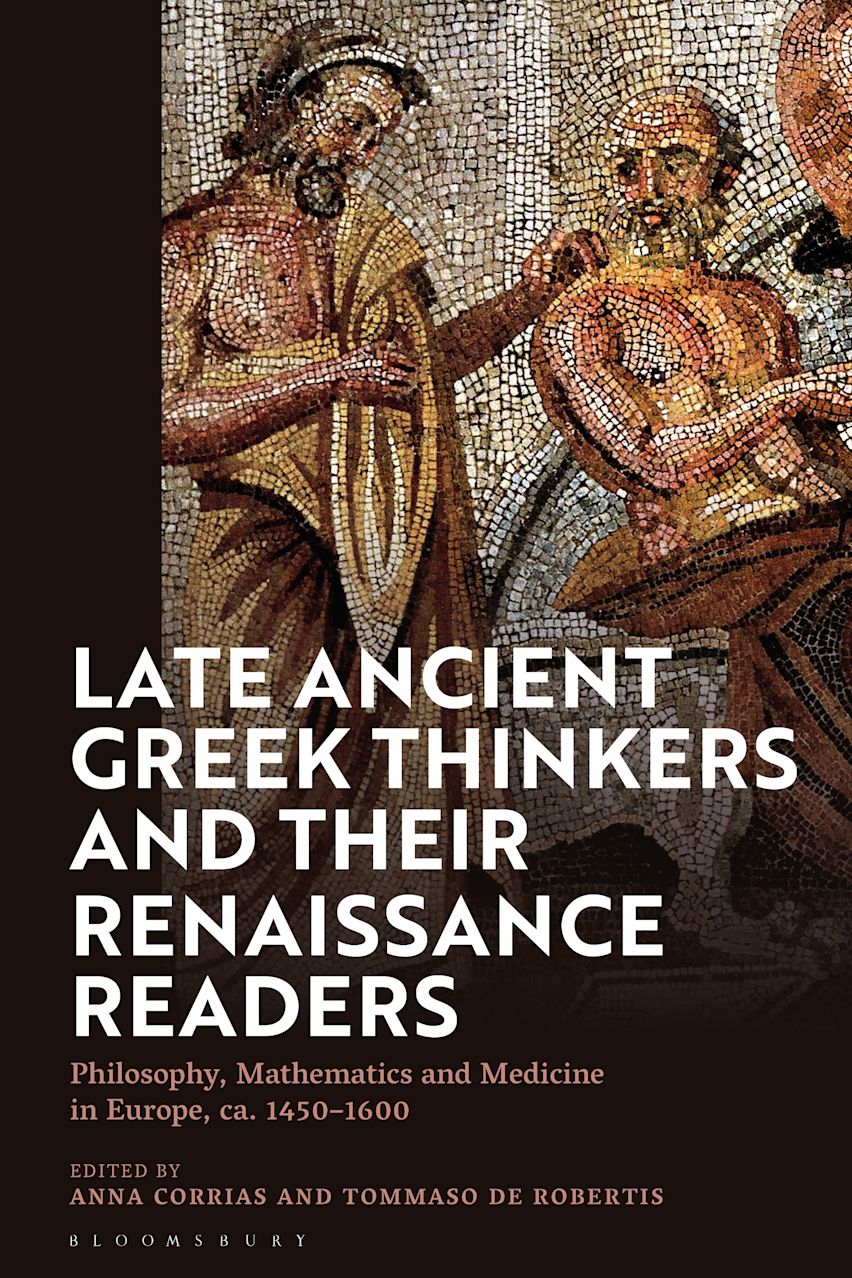
Late Ancient Greek Thinkers and Their Renaissance Readers
Philosophy, Mathematics and Medicine in Europe, ca. 1450–1600
Buying pre-order items
Ebooks and Audiobook
You will receive an email with a download link for the ebook or audiobook on the publication date.
Payment
You will not be charged for pre-ordered books until they are available to be shipped. Pre-ordered ebooks will not be charged for until they are available for download.
Amending or cancelling your order
For orders that have not been shipped you can usually make changes to pre-orders up to 72 hours before the publishing date.
Payment for this pre-order will be taken when the item becomes available
Description
This volume provides the first assessment of the powerful, yet largely understudied, influence of late ancient philosophy, mathematics, and medicine in early modern Europe (1450-1650).
The 15th and 16th centuries are rightfully regarded as the period in which classical texts were rediscovered, interrogated, edited, and translated for the contemporary Latin world through the philological and exegetical work of the humanists. However, this new and intensive dialogue with the ancient past was far more complex than scholars have so far imagined. This book breaks new ground in its exploration of the connection between late antiquity and the Renaissance, both materially and intellectually: it provides precise accounts of the transmission of texts and examines how antiquity was reframed through the Renaissance tradition. This book shows how thinkers, such as 15th century theologian Marsilio Ficino, provided a vital link between Platonic philosophy and commonplace theology.
Assuming a transnational perspective, ten contributions discuss the complex ways in which late ancient commentators on Plato and Aristotle, Euclid and Hippocrates, informed the early modern reception history of the texts they commented on. The authors discussed here include renowned authors such as Proclus and John Philoponus and less-known – yet no less important – names such as Damascius and Paul of Aegina. The focus is on long-debated topics such as the immortality of the soul, the knowledge of universals, the structure of the cosmos, the relationship between health and disease, and the use of authority in both philosophical inquiry and medical theory.
Accessibility Information
Additional accessibility information
- PDF/UA-2, 1.4
- accessibility@bloomsbury.com
Hazards
The publication contains no hazards
Support for non-visual reading
Has alternative text descriptions for images
Navigation
- Page list to go to pages from the print source version
- Elements such as headings, tables, etc for structured navigation
- All or substantially all textual matter is arranged in a single logical reading order
Table of Contents
Anna Corrias (University of Cambridge) and Tommaso De Robertis (University of Toronto)
1. Marsilio Ficino as Translator of Greek Philosophical Terminology: Inventory and Examples from Plotinus, Porphyry, Iamblichus, Proclus, and Priscianus Lydus
Stephen Gersh (University of Notre Dame)
2. Plato after Ficino: The Revival of the Didactic Aspects of Neoplatonism in Sixteenth-Century Italy
Maude Vanhaelen (University of Montreal)
3. Alcinous in Paris
Eva Del Soldato (University of Pennsylvania)
4. The Commentaries on the Book of Causes: Scholarly Networks, Literary Genres, Doctrines
Dragos Calma (University College Dublin)
5. Renaissance Receptions of Proclus: Theology, Metaphysics, and the Retrieval of Common Mathematics
A´lvaro Campillo Bo (University College Dublin)
6. Marsilio Ficino's Reception of Iamblichus
Merlin Cox (The Warburg Institute, London)
7. The Platonic Lecturer: Olympiodorus's Commentary on Plato's Phaedo in the Italian Renaissance
Anna Corrias (University of Cambridge)
8. Damascius's Ineffable metaphysics in Patrizi's Nova de universis philosophia
Sara Ahbel-Rappe (University of Michigan)
9. Breaking away from Aristotle: The reception of Philoponus' Physics in Renaissance Italy
Tommaso De Robertis (University of Toronto)
10. The Justinianic Plague according to Renaissance Physicians
Craig Martin (Ca' Foscari University of Venice)
11. Bridging Greek and Arabic Medicine: The Fortunes of Paul of Aegina in Sixteenth-Century Medical Writing
Silvia Marchiori (University of Cambridge)
Conclusion
Index
Product details

| Published | Nov 26 2026 |
|---|---|
| Format | Ebook (PDF) |
| Edition | 1st |
| Pages | 288 |
| ISBN | 9781350530010 |
| Imprint | Bloomsbury Academic |
| Illustrations | 10 bw illus |
| Publisher | Bloomsbury Publishing |
Related Titles