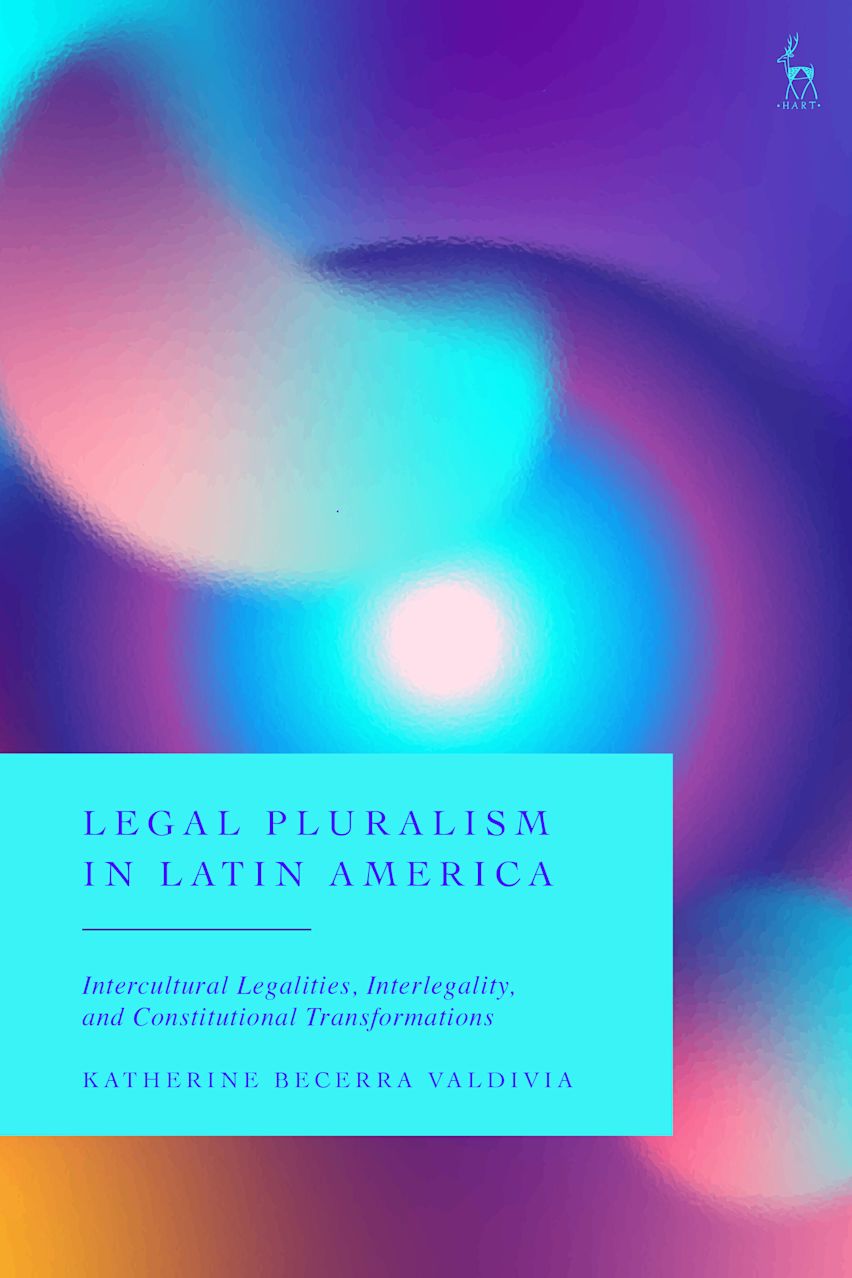
Legal Pluralism in Latin America
Intercultural Legalities, Interlegality, and Constitutional Transformations


Legal Pluralism in Latin America
Intercultural Legalities, Interlegality, and Constitutional Transformations
Buying pre-order items
Ebooks and Audiobook
You will receive an email with a download link for the ebook or audiobook on the publication date.
Payment
You will not be charged for pre-ordered books until they are available to be shipped. Pre-ordered ebooks will not be charged for until they are available for download.
Amending or cancelling your order
For orders that have not been shipped you can usually make changes to pre-orders up to 72 hours before the publishing date.
Payment for this pre-order will be taken when the item becomes available
Description
Legal Pluralism in Latin America: Intercultural/Legalities, Interlegality, and Constitutional Transformations explores how different systems of law, state, indigenous, and community-based, coexist and interact in the region.
Over the past decades, Latin American constitutions have increasingly recognized indigenous peoples, collective rights, and intercultural approaches to justice. Yet these legal innovations have generated distinct configurations of interaction, producing complex overlaps, tensions, and negotiations between diverse normative orders.
This book examines why different forms of legal pluralism emerges, how they evolve, and develops a new framework for understanding their constitutional transformation and implications for democracy and rights in practice. It combines comparative empirical analysis with constitutional reforms, judicial decisions, and everyday practices of justice to show how intercultural/legalities and “interlegality” are constructed, contested, and transformed across different contexts. By comparing experiences from several countries (Brazil, Colombia, Mexico, Peru, Venezuela, Ecuador and Bolivia), it highlights both the promises and challenges of incorporating plural legal orders into modern constitutional frameworks while offering a new explanation of how legal pluralism develops across Latin America.
Accessibility Information
Additional accessibility information
- EPUB 3.0
- Conforms with the requirements of EPUB Accessibility Spec v1.1
- WCAG level AA
- WCAG v2.2 compliant
- accessibility@bloomsbury.com
Hazards
The publication contains no hazards
Support for non-visual reading
- No accessibility features offered by the reading system, device or reading software are disabled or otherwise unusable with the product
- Has alternative text descriptions for images
Visual adjustments
Appearance of the text and page layout can be modified according to the capabilities of the reading system (font family and size, spaces, as well as color of background and text)
Navigation
- Page list to go to pages from the print source version
- Elements such as headings, tables, etc for structured navigation
- All or substantially all textual matter is arranged in a single logical reading order
- Content is enhanced with ARIA roles to optimize organization and facilitate navigation
- Purposes of all links are made clear
Rich content
Language tagging provided
Table of Contents
1. Concepts and Frameworks of Legal Pluralism
2. Political and Constitutional Conditions of Legal Pluralism in Latin America
3. Configurations of Constitutional Legal Pluralism in Latin America
4. Configurational Dynamics of Constitutional Legal Pluralism in Latin America
5. Analysis of National Constituent Assemblies for New a Constitution: ¿What do constituents express?
6. Results and a New Theory for Legal Pluralism in Latin America
Conclusion
Product details

| Published | Mar 18 2027 |
|---|---|
| Format | Ebook (Epub & Mobi) |
| Edition | 1st |
| Pages | 202 |
| ISBN | 9798216549222 |
| Imprint | Bloomsbury Academic |
| Illustrations | 10 b&w illus |
| Publisher | Bloomsbury Publishing |
Related Titles