The Linguistic Carnival of Thought
Comparative Philosophy and the Dynamics of Language
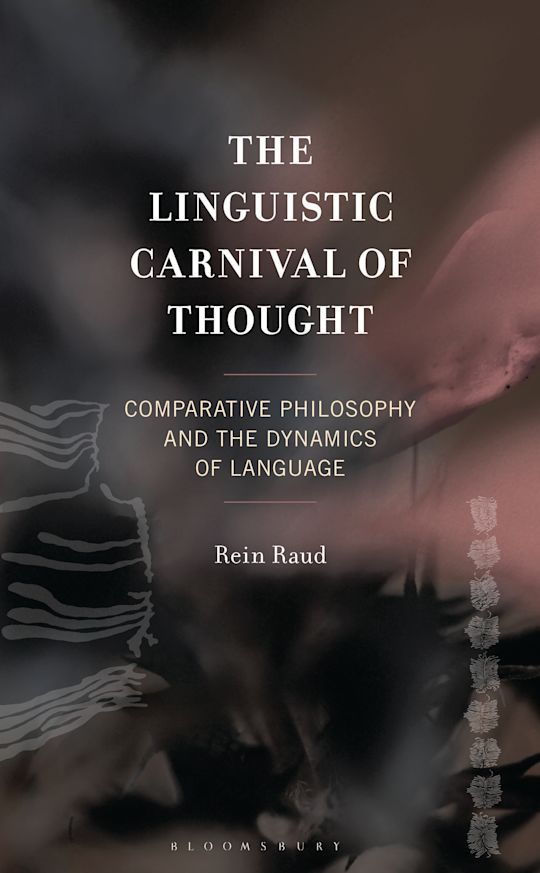

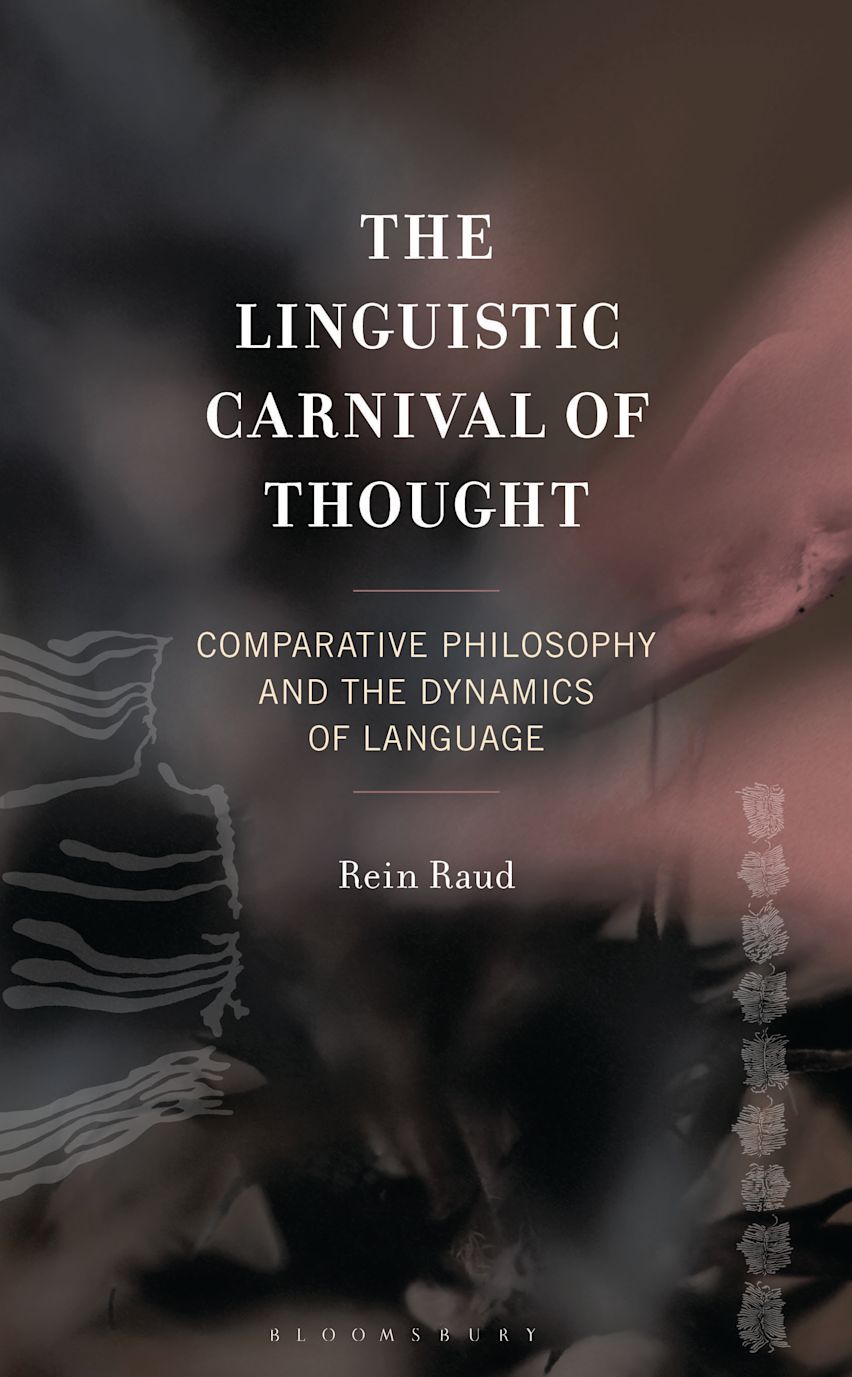
The Linguistic Carnival of Thought
Comparative Philosophy and the Dynamics of Language
Description
The Linguistic Carnival of Thought: Comparative Philosophy and the Dynamics of Language argues that the practice of philosophizing is significantly influenced by linguistic structures. Against the widespread view that all languages are reducible to the same matrix on a deep-structural level, Rein Raud presents ample evidence to the contrary, demonstrating how different strategies of predication, postulation, negation, individuation, and so on vary greatly and present incompatible combinations in natural languages, which are nonetheless suitable for precise and rational argumentation.
This book compares the views of language presented by Plato, Kongzi/Xunzi, and Bhartrhari; discusses “pansemioticism,” or the view that reality itself is significant (addressing Yijing, East Asian Buddhism, the Kabbalah, the philosophies of Peirce, Derrida, and others); juxtaposes the set-theoretical ontology of Badiou and the mereological worldview of Huayan Buddhism; and discusses various critiques of the idea of “truth” (Wittgenstein, Deleuze, Foucault) and a way to accommodate them through the logic of Dignaga, among other topics. With examples from languages and philosophical traditions across the world, the book is an ideal introduction to the problematic for monolingual speakers of English and a scintillating exploration for polyglots.
Accessibility Information
Additional accessibility information
- EPUB 3.0
- Conforms with the requirements of EPUB Accessibility Spec v1.1
- WCAG level AA
- WCAG v2.2 compliant
- accessibility@bloomsbury.com
Hazards
The publication contains no hazards
Support for non-visual reading
- No accessibility features offered by the reading system, device or reading software are disabled or otherwise unusable with the product
- Has alternative text descriptions for images
Visual adjustments
Appearance of the text and page layout can be modified according to the capabilities of the reading system (font family and size, spaces, as well as color of background and text)
Navigation
- Page list to go to pages from the print source version
- Elements such as headings, tables, etc for structured navigation
- All or substantially all textual matter is arranged in a single logical reading order
- Content is enhanced with ARIA roles to optimize organization and facilitate navigation
- Purposes of all links are made clear
Rich content
Language tagging provided
Table of Contents
Introduction
Part I: Language, Languaging, Philosophy, Philosophizing
Chapter 1. Languaging Philosophically
Chapter 2. The Description
Chapter 3. Linguistic Relativity
Coda
Part II: Philosophy as a Cultural Practice
Chapter 4. Cultural Practices
Chapter 5. Philosophy and the Networks of Power
Chapter 6. Philosophizing vs “Philosophy”: In Defense of a Flexible (Re)Definition
Coda
Part III: Language as a Medium of Conceptualization
Chapter 7. Linguistic Strategies of Worldbuilding
Chapter 8. Sets, Members, Wholes, Parts
Chapter 9. Object- And Event-Orientation: Japanese Notions of “Thingness”
Coda
Part IV: Reality, Signification, Truth
Chapter 10. Names and Things: Three Early Views
Chapter 11. Pansemioticism
Chapter 12. Telling the Truth
Coda
Afterword
References
Product details

| Published | Sep 04 2025 |
|---|---|
| Format | Ebook (Epub & Mobi) |
| Edition | 1st |
| Pages | 256 |
| ISBN | 9781793646613 |
| Imprint | Bloomsbury Academic |
| Series | Studies in Comparative Philosophy and Religion |
| Publisher | Bloomsbury Publishing |

ONLINE RESOURCES
Bloomsbury Collections
This book is available on Bloomsbury Collections where your library has access.
Related Titles