
Description
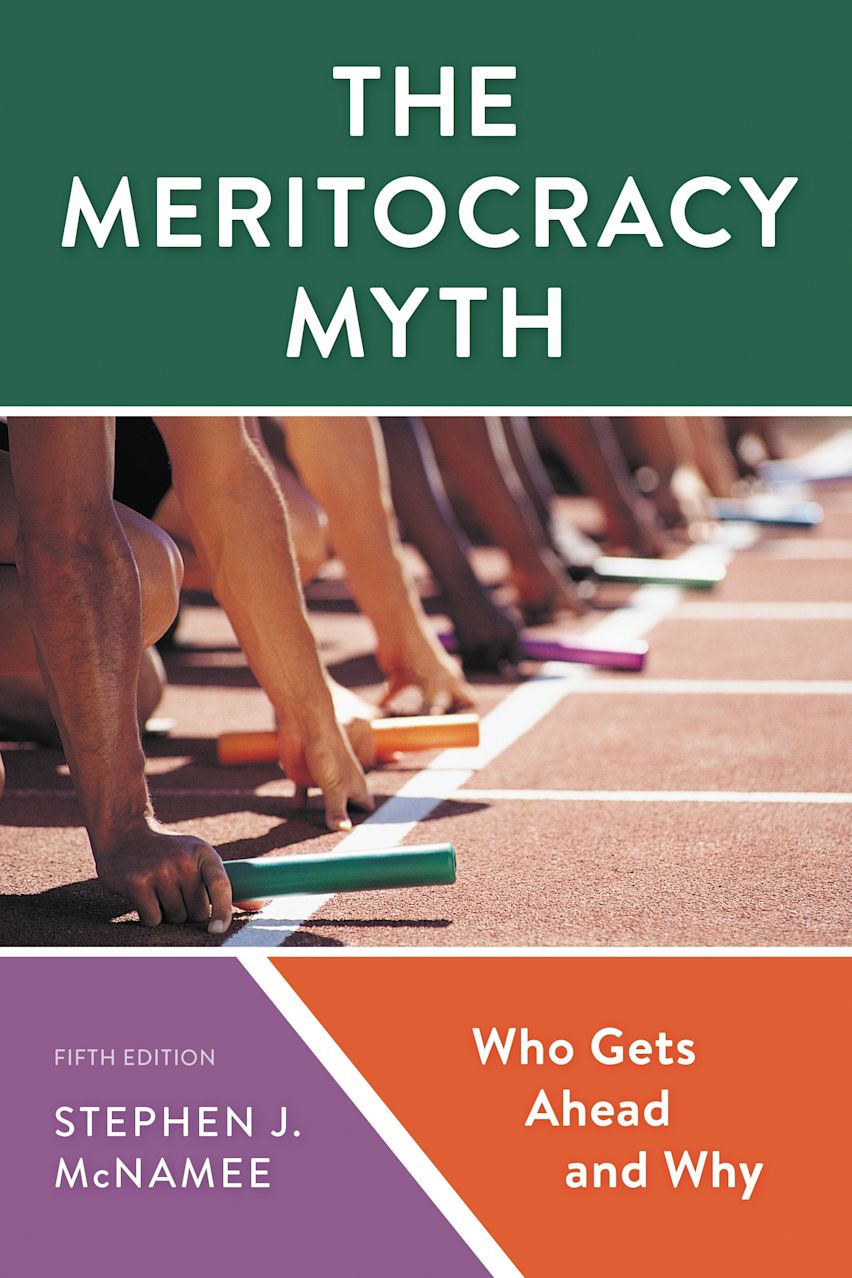
There is a pervasive ideology that claims America is a land of unlimited opportunity, and people get out of the system what they put into it based on talent, attitude, hard work, and character. The Meritocracy Myth: Who Gets Ahead and Why deconstructs this idea by identifying factors that suppress, neutralize, or negate merit-based traits. These include economic inheritance, who you know (social capital) and “fitting in” (cultural capital), being at the right place at the right time, unequal access to educational opportunities, and discrimination based on race, sex, age, sexual orientation, physical disability, religion, and physical appearance. Discussion questions at the end of each chapter encourage students to think critically and develop a deeper understanding of why some people succeed and others fail.
New to the Fifth Edition
New discussion of national college admission scandal highlights how educational opportunities are mediated by social class (Chapter 5)Revised Chapter 7, “The Luck Factor,” includes discussions of how the COVID-19 pandemic, manufacturing of critical goods in the U.S., and the oversupply of college graduates impact the likelihood of intergenerational mobilityNew discussion on reparations as a way to address inequality for historically discriminated against groups reflects current debates (Chapter 10)New discussion of murders of Black suspects by police, Black Lives Matter, and the Dobbs Supreme Court decision illustrate ongoing patterns of discrimination that impact the prospects of Americans (Chapter 9)
Table of Contents
Acknowledgments
1 The American Dream: Origins and Prospects
Individualism and the Origins of the American Dream
Merit and Non-Merit Explanations for Inequality
Downsizing the American Dream
Plan of the Book
References
Discussion Questions
2 On Being Made of the Right Stuff: The Case for Merit
Innate Talents and Abilities
Having the Right Attitude
Working Hard or Hardly Working
Playing by the Rules
A Note on Human Capital
The Myth of the Most Qualified
Summary
References
Discussion Questions
3 The Silver Spoon: Inheritance and the Staggered Start
Income and Wealth Inequality
Intergenerational and Intragenerational Mobility
The Cumulative Advantages of Wealth Inheritance
What is it Like to Be Rich?
Summary
References
Discussion Questions
4 It’s Not What You Know But . . .: Social and Cultural Capital
Social Capital: “Who” You Know
Cultural Capital: Fitting In
Social Climbing
Summary
References
Discussion Questions
5 Making the Grade: Education and Mobility
Functional Views of Education
Conflict Views of Education
Credential Inflation and the Paper Chase
Summary
References
Discussion Questions
6 I Did It My Way: The Decline of Self-Employment and the Ascent of Corporations
Mom and Pop, Where Art Thou? The Decline of Self-Employment
Betwixt and Between: The Contradictory Class Position of the Self-Employed
Characteristics of the Self-Employed
Swimming with the Sharks: The Ascent of the Modern Corporation
Summary
References
Discussion Questions
7 The Luck Factor: Being in the Right Place at the Right Time
The Demand Side
Creative Destruction
All Dressed Up and Nowhere to Go
Baby Boomers and Baby Busters
The Geography of Economic Inequality
Split Labor Markets
The Random Walk Hypothesis
Lottery Lucky
Summary
References
Discussion Questions
8 Mobility through Marriage: The Cinderella Effect
With the Collaboration of Catherine B. McNamee
A Brief History of Mate Selection and the Origin of Class Endogamy
Mate Selection in Contemporary America
Diverging Destinies
Summary
References
Discussion Questions
9 An Unlevel Playing Field: Racism, Sexism, and Other Isms
Discrimination: Individual and Institutionalized
Racial and Ethnic Discrimination in America
Sex Discrimination
Other Isms
Multiple Jeopardy: A Note on Intersectionality and the Matrix of Domination
Summary
References
Discussion Questions
10 Growing Inequality in the Twenty-First Century: What Can Be Done?
Individual Coping Strategies
What Can Be Done?
Would A Meritocracy Society Be a Fair and Just Society?
References
Discussion Questions
Notes
Index
About the Author
Product details
| Published | Jul 17 2023 |
|---|---|
| Format | Ebook (Epub & Mobi) |
| Edition | 5th |
| Pages | 260 |
| ISBN | 9781538173473 |
| Imprint | Rowman & Littlefield |
| Illustrations | 1 b/w photo; 6 tables |
| Publisher | Bloomsbury Publishing |
Reviews
Related Titles