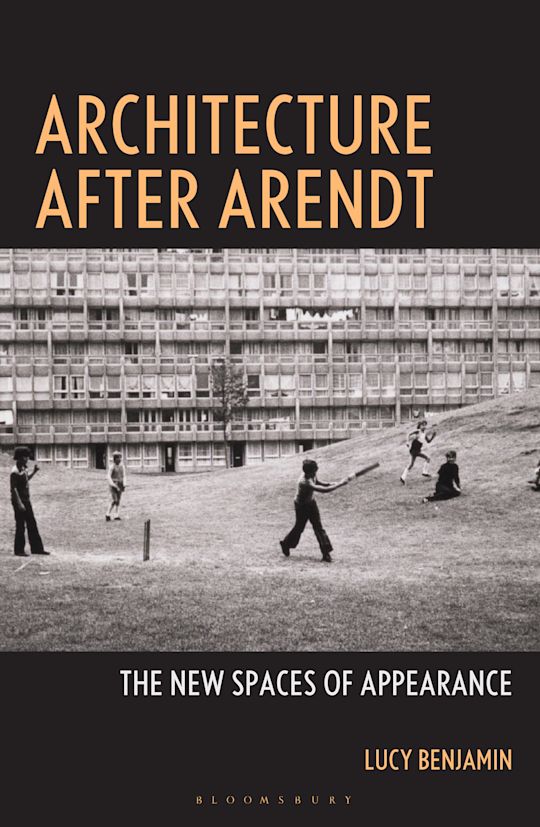

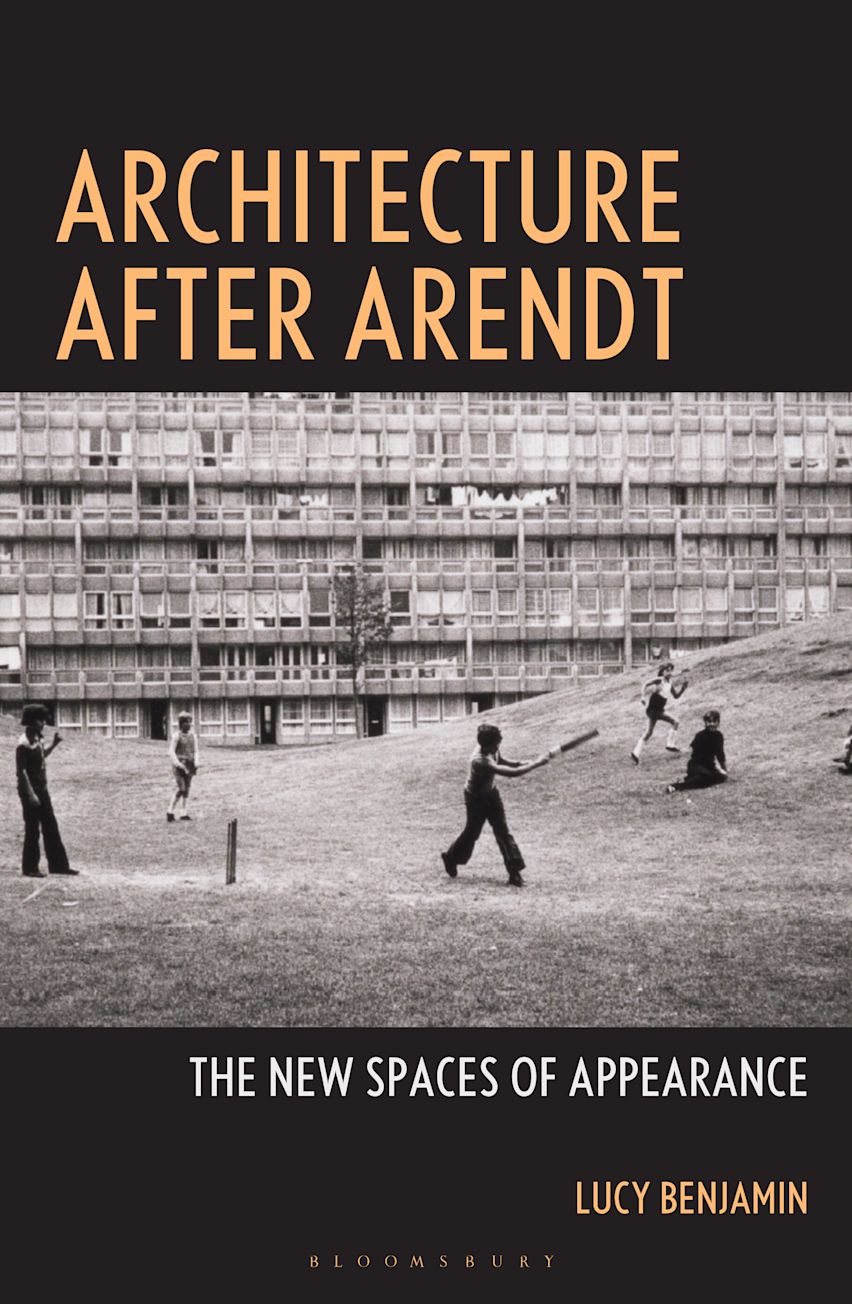
Description
Politics and architecture have long inhabited a common realm-whether in the public square, the assembly hall, the school, or the bedroom. This book considers how one of the 20th century's most prolific theorists might help us chart new political ground.
Hannah Arendt was an imminently spatial theorist. Her reflections on the space of appearance, itself a radical modernization of the Greek agora, brought notions of relationality, plurality, and public appearance to the foreground of contemporary political thought. As much a theorist of the ontological conditions of politics-recognition, togetherness, belonging-her work sought to interrogate the forms of material care that sustain the political realm. To this end, her work explores the meaning of living in a human world on a planetary earth, asking questions in relation to how those communities might cultivate artistic immortality and translate care for others into environmental responsibility.
Leaning on Arendt at a moment in architectural discourse when scholars are required, as Arendt once was, to “think without a banister,” Lucy Benjamin's Arendtian perspective on architecture departs from the stronghold of architectural ideologies. Whether it's the fiction of building from a tabula rasa, the architect as sole creator, or the staged equivalence between architecture and political solutions, this book invites readers to think the discipline anew.
Accessibility Information
Additional accessibility information
- PDF/UA-2, 1.4
- accessibility@bloomsbury.com
Hazards
The publication contains no hazards
Support for non-visual reading
Has alternative text descriptions for images
Navigation
- Page list to go to pages from the print source version
- Elements such as headings, tables, etc for structured navigation
- All or substantially all textual matter is arranged in a single logical reading order
Table of Contents
Acknowledgements
Introduction. Arendt: World-Building Thinker
1. Reading the Architecture of Arendt's Writing
2. The Theatre of Portbou
3. Ian Hamilton Finlay and the Revolution of Garden-Poems
4. The Public Playground
5. Housing: Salvaging the Public
Afterword. Architecture After Arendt
Bibliography
Product details

| Published | 21 Jan 2027 |
|---|---|
| Format | Ebook (PDF) |
| Edition | 1st |
| Pages | 232 |
| ISBN | 9798216197225 |
| Imprint | Bloomsbury Academic |
| Illustrations | 19 bw illus |
| Series | Toposophia: Thinking Place/Making Space |
| Publisher | Bloomsbury Publishing |
Reviews
Related Titles