A Cultural History of Slavery and Human Trafficking in the Age of Empire
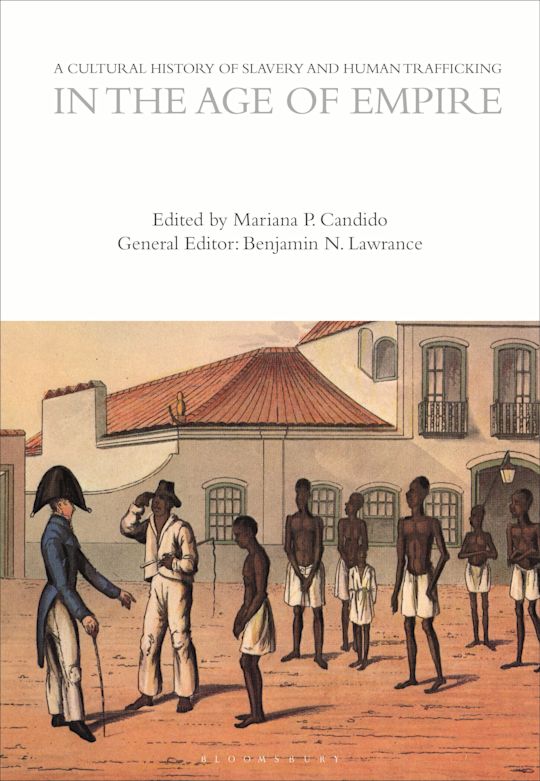

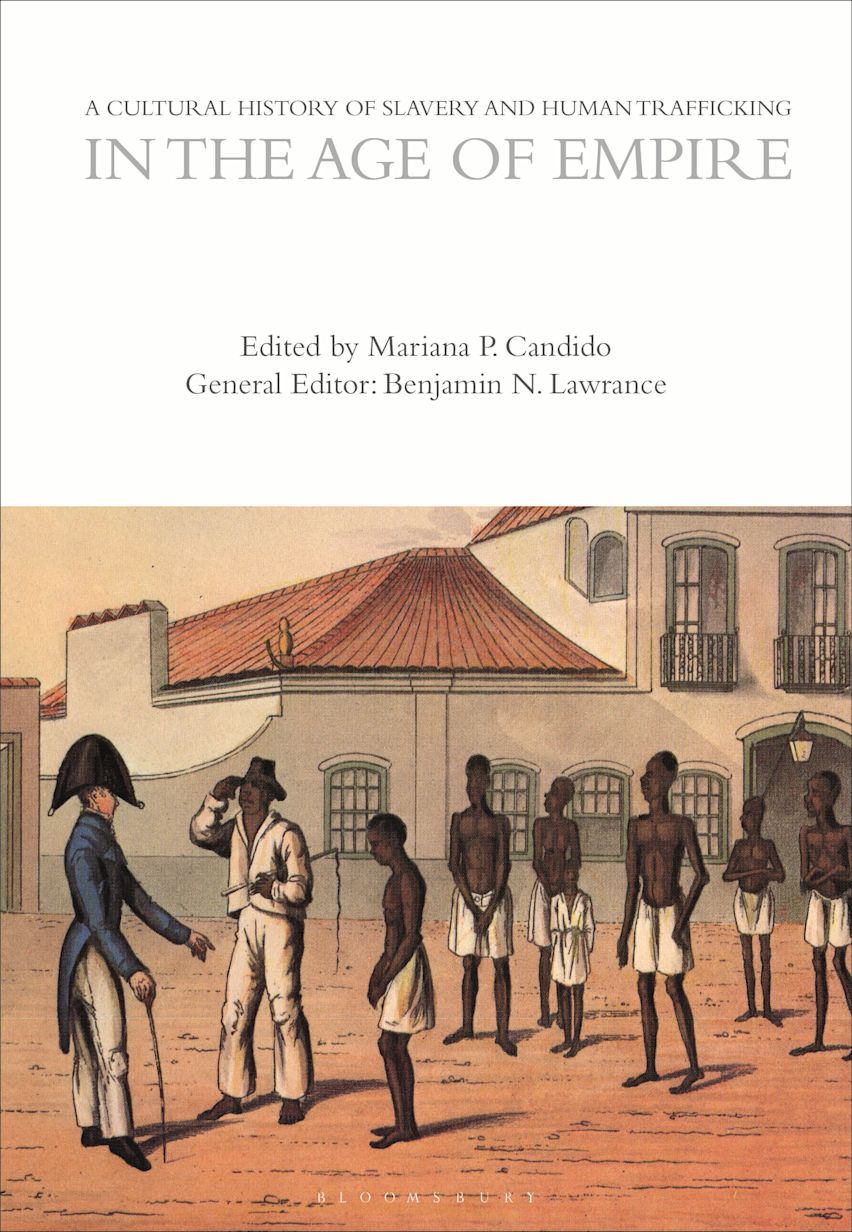
A Cultural History of Slavery and Human Trafficking in the Age of Empire
Description
The Age of Empire was also the age of enslavement. During the 1700-1900 period, the slave trade created a global system of commerce, where merchants, commodities, and work force circulated between Asia, Africa, Europe, Oceania, and the Americas. Goods and crops produced in different territories moved around the world, fueling consumers, demand and connecting merchant communities on every continent. African enslaved labor produced the sugar, tobacco, and coffee that supplied the cafes, taverns, and shops of Paris, Lisbon, Luanda, Philadelphia, Cape Town, and Cairo. Chinese tea was consumed in Zanzibar, London, and Timbuktu, indicating that crops, consumption patterns, and people were connected during the Age of Empire.
Contributors examine the expansion of human trafficking in this interconnected time. Slavery, capitalism, and imperialism were interrelated, despite earlier interpretations that portrayed slavery as less capable of producing labor output. Agricultural output, labor input, and consumer interests dominated much of the political and economic interests of the elites during the Age of Empire. In this context of change and transformations, chapters explore how slavery and freedom were redefined throughout the 1700-1900 period.
A Cultural History of Slavery and Human Trafficking is part of The Cultural Histories Series. Titles are available as hardcover sets for libraries needing just one subject or preferring a tangible reference for their shelves or as part of a fully-searchable digital library. The digital product is available to institutions by annual subscription or on perpetual access via www.bloomsburyculturalhistory.com . Individual volumes for academics and researchers interested in specific historical periods are also available in print or digitally via www.bloomsburycollections.com.
Accessibility Information
Additional accessibility information
- EPUB 3.0
- Conforms with the requirements of EPUB Accessibility Spec v1.1
- WCAG level AA
- WCAG v2.2 compliant
- accessibility@bloomsbury.com
Hazards
The publication contains no hazards
Support for non-visual reading
- No accessibility features offered by the reading system, device or reading software are disabled or otherwise unusable with the product
- Has alternative text descriptions for images
Visual adjustments
Appearance of the text and page layout can be modified according to the capabilities of the reading system (font family and size, spaces, as well as color of background and text)
Navigation
- Page list to go to pages from the print source version
- Elements such as headings, tables, etc for structured navigation
- All or substantially all textual matter is arranged in a single logical reading order
- Content is enhanced with ARIA roles to optimize organization and facilitate navigation
- Purposes of all links are made clear
Rich content
Language tagging provided
Table of Contents
Note on Contributors
General Editor's Preface
Introduction Mariana P. Candido (Emory University, USA)
1. Definitions and Ideologies of Slavery and Trafficking Marta Scaglioni (Cà Foscari University, Italy) and Bruno R. Véras (University of Toronto, Canada)
2. Slavery, Trafficking, and the Law Keila Grinberg (University of Pittsburgh, USA)
3. Political Cultures Assan Sarr (Ohio University, USA)
4. Coercive Laboring Economies Luciana Brito (Independent Scholar, Brazil) & Mariana P. Candido (Emory University, USA)
5. Social Organization, Culture, Identity, and Ritual Marcos Leitão de Almeida (Independent Scholar, USA)
6. Gender, Enslavement, and Trafficking Leonidas Mylonakis (Independent Scholar, USA) & Patrícia Martins Marcos (UCLA, USA)
7. Family, Age, and Bondage Audra A. Diptée (Carleton University, Canada)
8. Anti-Slavery, Anti-Trafficking, Resistance, and Abolition Outcomes Richard B. Allen (Independent Scholar, USA)
Notes
Bibliography
Index
Product details

| Published | 12 Nov 2026 |
|---|---|
| Format | Ebook (Epub & Mobi) |
| Edition | 1st |
| Pages | 224 |
| ISBN | 9781350547452 |
| Imprint | Bloomsbury Academic |
| Illustrations | 36 bw illus |
| Series | The Cultural Histories Series |
| Publisher | Bloomsbury Publishing |
Related Titles