A Cultural History of Slavery and Human Trafficking in the Age of Encounters
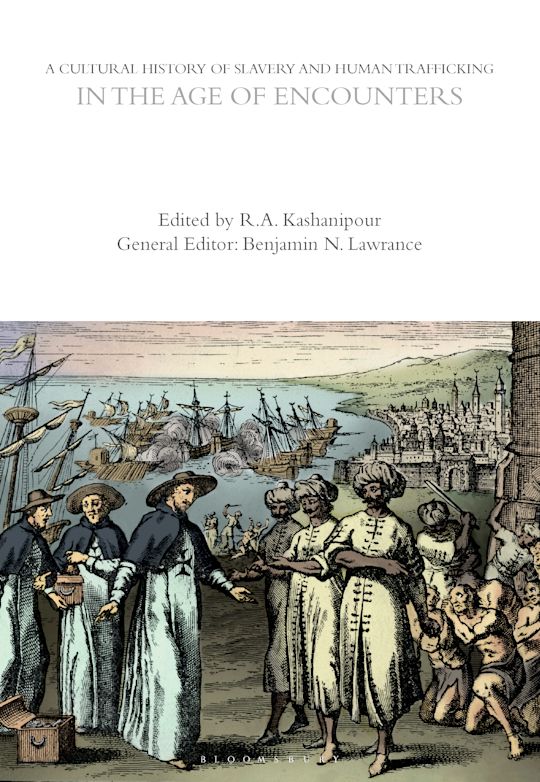

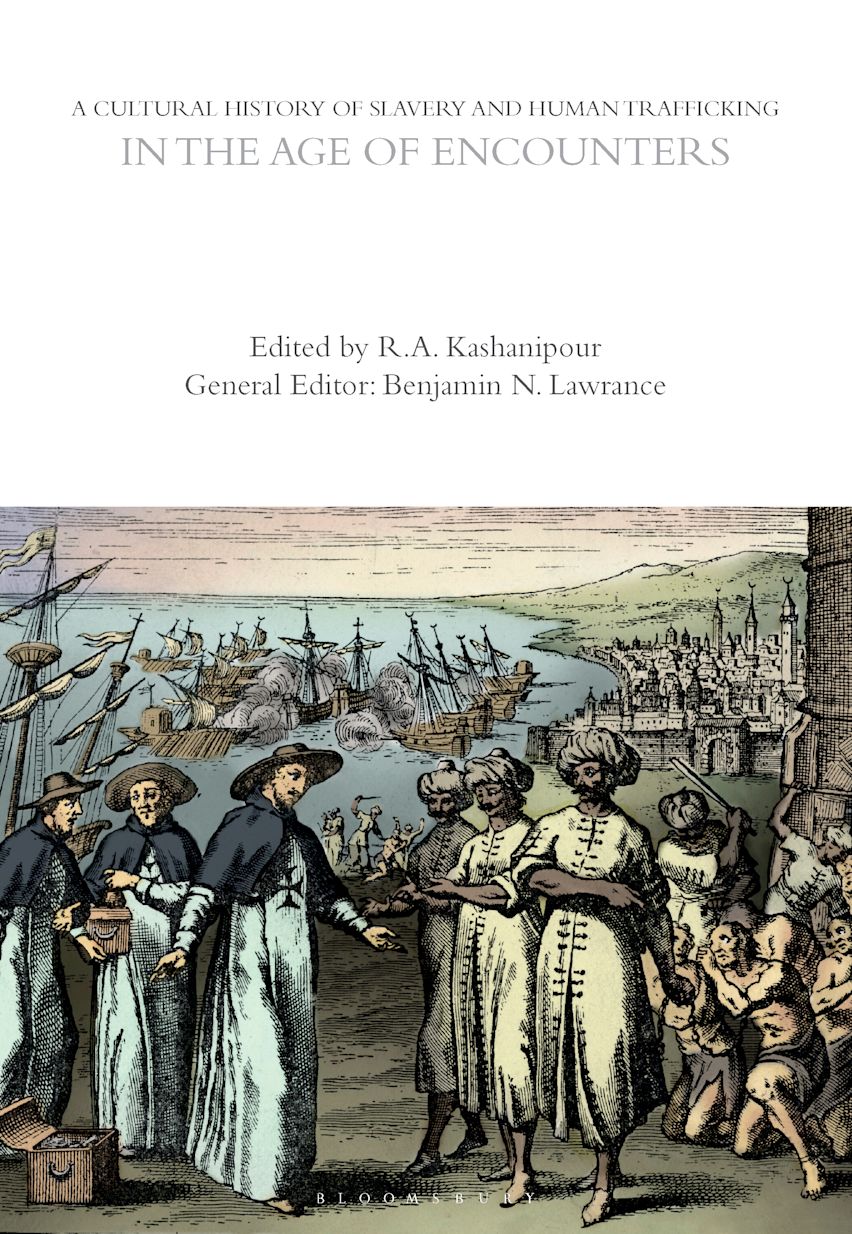
A Cultural History of Slavery and Human Trafficking in the Age of Encounters
Description
At the inception of the Age of Encounters (1450-1700), slavery was normative throughout much of the globe. Over several centuries, the interpenetration of previously discrete networks of human traffickers, the regions of the world became more closely intertwined, with enslaved men, women, and children enduring forced migrations not only across oceans, but, in some cases, now into new hemispheres. The authors in this volume explore how the increasingly transoceanic character of slave trading during this period fundamentally reshaped what had previously been more culturally specific forms of slavery and human trafficking.
Over the course of the 15th and 16th centuries, the worlds of Iberian and Ottoman corsairs, Caucasus-based wakò pirates, and slavers in Europe, Asia, Africa, Oceania, and the Americas converged. Though slavery and human trafficking were not introduced by Europeans to many of these spaces, European intervention generally proved transformative, affecting the volume, dynamics, and character of the slave trading and slaveholding in these regions. While an important legacy of the Age of Encounters was the forging of interdependencies between slave systems and the development of a larger, more globalized slave trade, the emergent “Atlantic” model of slavery was not universal. The contributors underline divergences between these various slaving systems as well as parallels and intersections.
A Cultural History of Slavery and Human Trafficking is part of The Cultural Histories Series. Titles are available as hardcover sets for libraries needing just one subject or preferring a tangible reference for their shelves or as part of a fully-searchable digital library. The digital product is available to institutions via www.bloomsburyculturalhistory.com . Individual volumes for academics and researchers are also available in print or digitally via www.bloomsburycollections.com.
Accessibility Information
Additional accessibility information
- PDF/UA-2, 1.4
- accessibility@bloomsbury.com
Hazards
The publication contains no hazards
Support for non-visual reading
Has alternative text descriptions for images
Navigation
- Page list to go to pages from the print source version
- Elements such as headings, tables, etc for structured navigation
- All or substantially all textual matter is arranged in a single logical reading order
Table of Contents
Note on Contributors
General Editor's Preface
Introduction R.A. Kashanipour (University of Arizona, USA)
1. Definitions and Ideologies of Slavery and Trafficking Linford D. Fisher (Brown University, USA)
2. Slavery, Trafficking, and the Law Benjamin N. Lawrance (University of Arizona, USA) and Joseph C. Miller (University of Virginia, USA)
3. Political Cultures Pablo Miguel Sierra Silva (University of Rochester, USA)
4. Coercive Laboring Economies Ana Lucia Araujo (Howard University, USA), Walter H. Hawthorne (Michigan State University, USA) and Benjamin N. Lawrance (University of Arizona, USA)
5. Social Organization, Culture, Identity, and Ritual Rachel Sarah O'Toole (University of California, Irvine, USA)
6. Gender, Enslavement, and Trafficking Arlette Gautier (University of Western Brittany, France)
7. Family, Age, and Bondage Gülay Yilmaz (Akdeniz University, Turkey)
8. Anti-Slavery, Anti-Trafficking, Resistance, and Abolition Outcomes Benjamin N. Lawrance (University of Arizona, USA)
Notes
Bibliography
Index
Product details

| Published | 12 Nov 2026 |
|---|---|
| Format | Ebook (PDF) |
| Edition | 1st |
| Pages | 248 |
| ISBN | 9781350540538 |
| Imprint | Bloomsbury Academic |
| Illustrations | 50 bw illus |
| Series | The Cultural Histories Series |
| Publisher | Bloomsbury Publishing |
Related Titles