Democratizing Secularization
Religion and Power in the Contemporary Public Space
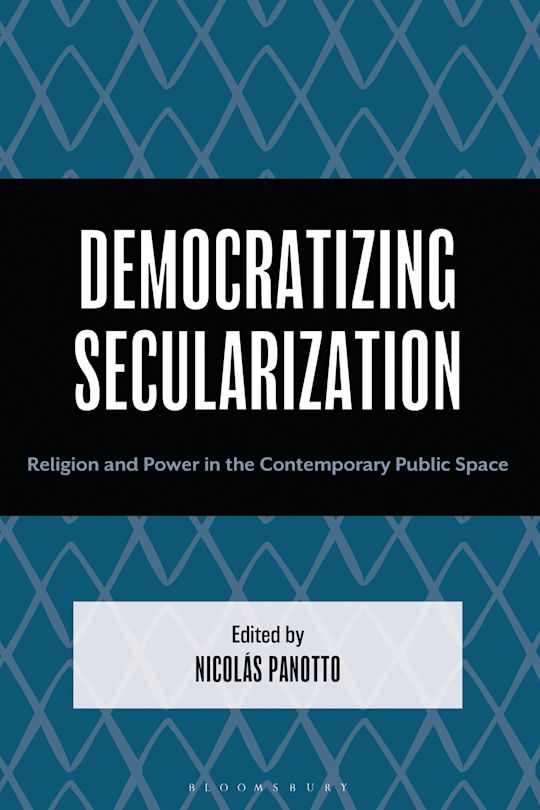

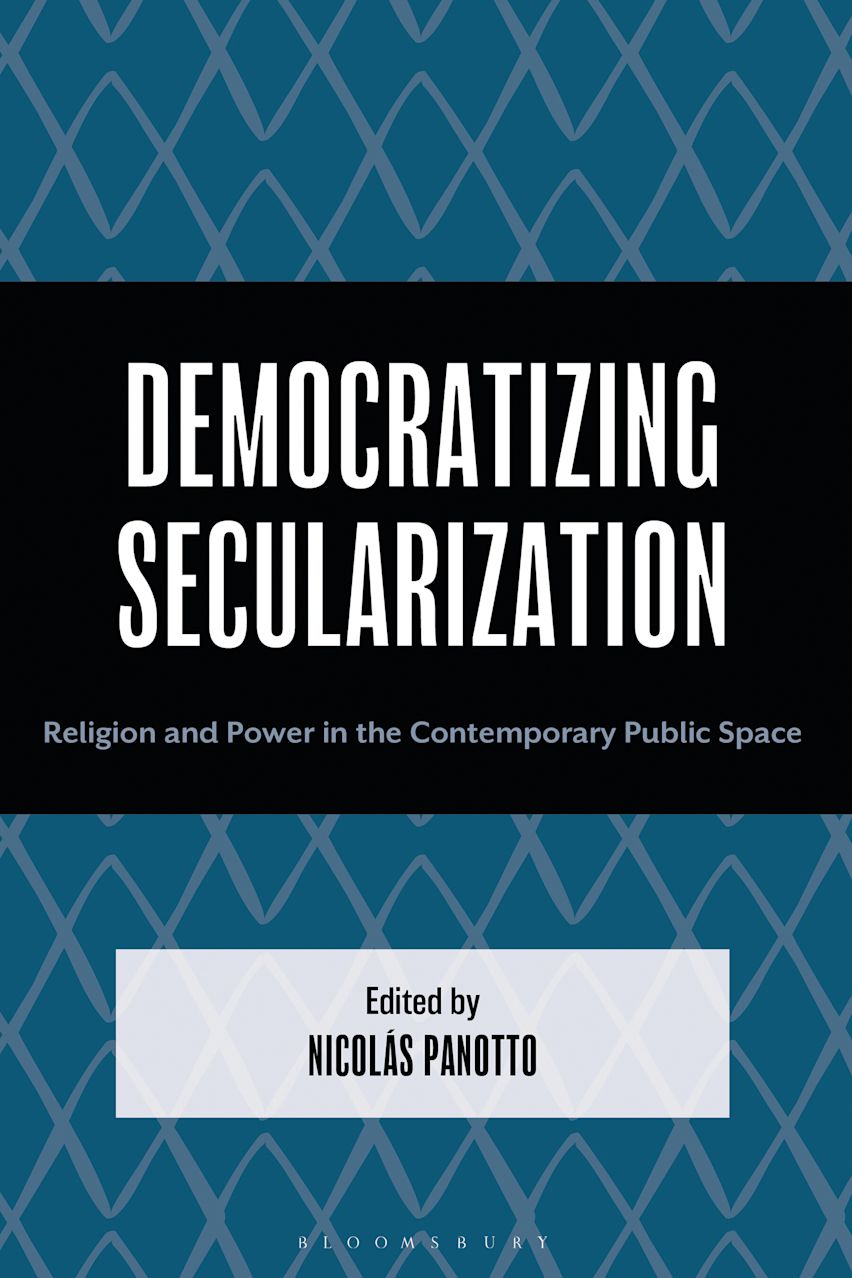
Democratizing Secularization
Religion and Power in the Contemporary Public Space
Description
Advancing a democratization of secularization theory from a distinctly Latin American standpoint, this book challenges the theory's modern-centric and colonial underpinnings.
Contemporary socio-political debates increasingly revisit the concept of secularization, yet not uniformly across disciplines or public arenas. The shifting visibility and agency of religion in modern contexts challenge the classical secularization thesis, whose early-twentieth-century formulations predicted a steady decline or confinement of religion within modernity. Contrary to these expectations, religious expressions have not only persisted but diversified, expanding their modes of influence within public and political spaces.
The theory of the encryption of power offers a critical framework for interpreting these dynamics by complicating traditional definitions of both power and the religious. Religion functions not merely as a legitimizing resource for dominant political narratives but also as a generator of differentiation, tension, and counter-hegemonic practices. It can simultaneously uphold, contest, and reconfigure colonial and decolonial projects, aligning this approach with post- and de-colonial critiques that view secularization itself as entangled with the coloniality of power, knowledge, and being.
This book brings together theoretical essays and case studies centered on Latin America, offering diverse contributions to the understanding of these contemporary dynamics. Edited by Nicolás Panotto, the collection interrogates the ways in which secularization has historically operated as a mechanism of colonial othering, shaping and marginalizing religious, racial, political, and cultural minorities.
Accessibility Information
Additional accessibility information
- EPUB 3.0
- Conforms with the requirements of EPUB Accessibility Spec v1.1
- WCAG level AA
- WCAG v2.2 compliant
- accessibility@bloomsbury.com
Hazards
The publication contains no hazards
Support for non-visual reading
- No accessibility features offered by the reading system, device or reading software are disabled or otherwise unusable with the product
- Has alternative text descriptions for images
Visual adjustments
Appearance of the text and page layout can be modified according to the capabilities of the reading system (font family and size, spaces, as well as color of background and text)
Navigation
- Page list to go to pages from the print source version
- Elements such as headings, tables, etc for structured navigation
- All or substantially all textual matter is arranged in a single logical reading order
- Content is enhanced with ARIA roles to optimize organization and facilitate navigation
- Purposes of all links are made clear
Rich content
Language tagging provided
Table of Contents
Part I. Towards A Decolonial and Theological-Political Critique of Secularization
Chapter 1. Democratizing Secularization: An Egalitarian Framework for Religion and Secularism in the Contemporary Public Sphere, Albert Soto Vilches (Diego Portales University, Chile)
Chapter 2. Decolonizing Secularization: Inward and Outward Processes to Dissolve Secular Dichotomies Toward a New Utopia, Andrea Meza Torres (Autonomous Metropolitan University, México)
Chapter 3. Deus sive demokratia: Radical-Democratic Political (A)Theologies and Decryption of Power, Andityas Matos (Federal University of Minas Gerais, Brazil)
Chapter 4. Judeo-Christian Panentheism in Spinoza as a Political Ontology for the Liberation of the Verbum Politicum, Maria Alejandra Zapata Ramirez (Autonomous University of Manizales, Columbia)
PART II. The Secular and the Polis: Case Studies
Chapter 5. Pentecostalism and Politics in 21st-century Brazil: A Democratic and Theological Assessment, Rudolf von Sinner (Pontifical Catholic University of Paraná, Brazil)
Chapter 6. Dominion Theology and Christian Nationalism in Bolsonarism Moral Grammar, Celso Gabatz (Faculdades EST, Brazil) and Günter Bayerl Padilha (Faculdades EST, Brazil)
Chapter 7. Secular Cosmologies in the Abyss: Towards Pluriversal Politics and Rhizomatic Imaginations from the Caribbean, Anthony Cruz Pantojas (Ana G. Méndez University, Puerto Rico)
Chapter 8. “Secular” Colony: Thinking the Paradigm in the Colonial Hispanic Caribbean Context, Nehemiah Lebrón-Gómez (Independent scholar, Puerto Rico)
Conclusions: Towards a Critical Theory for Democratizing Secularization, Nicolás Panotto (Facultad Evangélica Latinoamericana de Teología, Chile)
Index
Product details

| Published | 03 Sep 2026 |
|---|---|
| Format | Ebook (Epub & Mobi) |
| Edition | 1st |
| Pages | 252 |
| ISBN | 9781978768895 |
| Imprint | Bloomsbury Academic |
| Series | Decrypting Power and Coloniality: Philosophical Perspectives from and through the Global South |
| Publisher | Bloomsbury Publishing |


ONLINE RESOURCES
Bloomsbury Collections
This book is available on Bloomsbury Collections where your library has access.
Related Titles