
Description
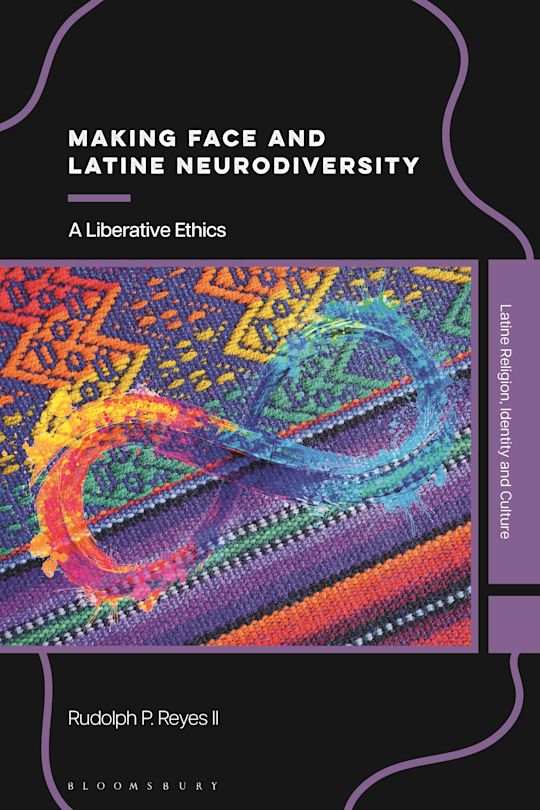
This book examines how neurodivergent Latines encounter racialized ableism and explores methods for dismantling it. Neurodivergent Latines are made invisible in the dominant society, when neurodiversity is framed as an issue of individual embodiment rather than social justice. At the same time, communities of color disavow disability due to how it is used to justify racism. To challenge these issues, the book explores Latine neurodiversity through a Christian ethical perspective.
The central metaphor of this work is “haciendo cara.” “Haciendo cara,” or “making face,” is a Latine expression to describe an expressive face. Building upon Gloria Anzaldúa's use of the metaphor, this book transforms it into an ethics for resisting racialized neuroableism. The metaphor draws upon the wells of Latine culture to challenge the marginalization of neurodivergent Latines.
Rudolph P. Reyes II deploys this metaphor as a tool to not only “make” one's own face or identity, but also to begin “making” a more just society. To “make face,” as we learn, is the continual process of being unapologetically neurodivergent, transforming oppressive realities, and imagining neuro-futures
Accessibility Information
Additional accessibility information
- PDF/UA-2, 1.4
- accessibility@bloomsbury.com
Hazards
The publication contains no hazards
Support for non-visual reading
Has alternative text descriptions for images
Navigation
- Page list to go to pages from the print source version
- Elements such as headings, tables, etc for structured navigation
- All or substantially all textual matter is arranged in a single logical reading order
Table of Contents
Series Introduction
Introduction
Part I: Caras/Face
1.The Neurodiversity Movement
2.The Neurodiversity Paradigm and the Scope of Neurodivergence
Part II: Mascarillas/ Masks
3. Racialized Neuroableism as a System of Power
4. Neurodivergent Latine Realities
Part III: Haciendo Cara/ Making Face
5. Going Beyond Unmasking: Haciendo Cara as Metaphor for Praxis
6. Proclaiming Neuro-Futures: An Unapologetic Divergent Jesucristo
7. Making Face, Imagining Neuro-futures: Enacting Haciendo Cara
Glossary
Bibliography
Index
Product details

| Published | 10 Dec 2026 |
|---|---|
| Format | Ebook (PDF) |
| Edition | 1st |
| Pages | 168 |
| ISBN | 9781350564336 |
| Imprint | Bloomsbury Academic |
| Series | Latine Religion, Identity, and Culture |
| Publisher | Bloomsbury Publishing |

Reviews
Related Titles