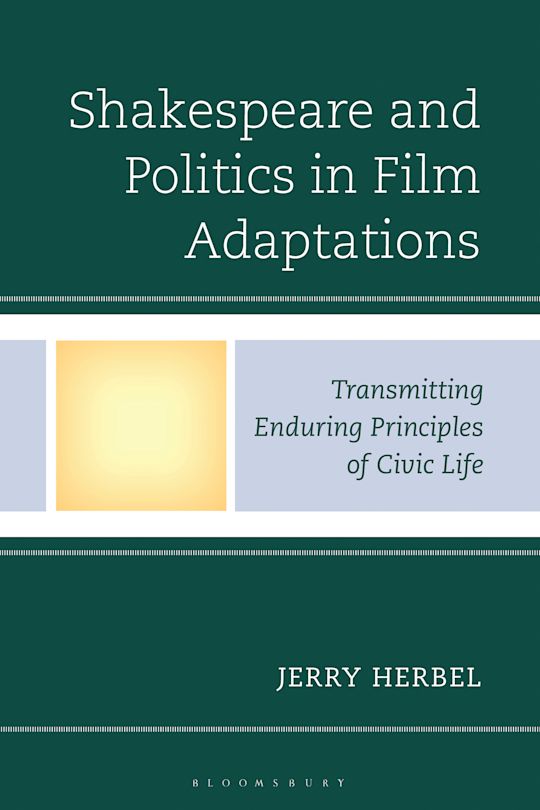
Shakespeare and Politics in Film Adaptations
Transmitting Enduring Principles of Civic Life

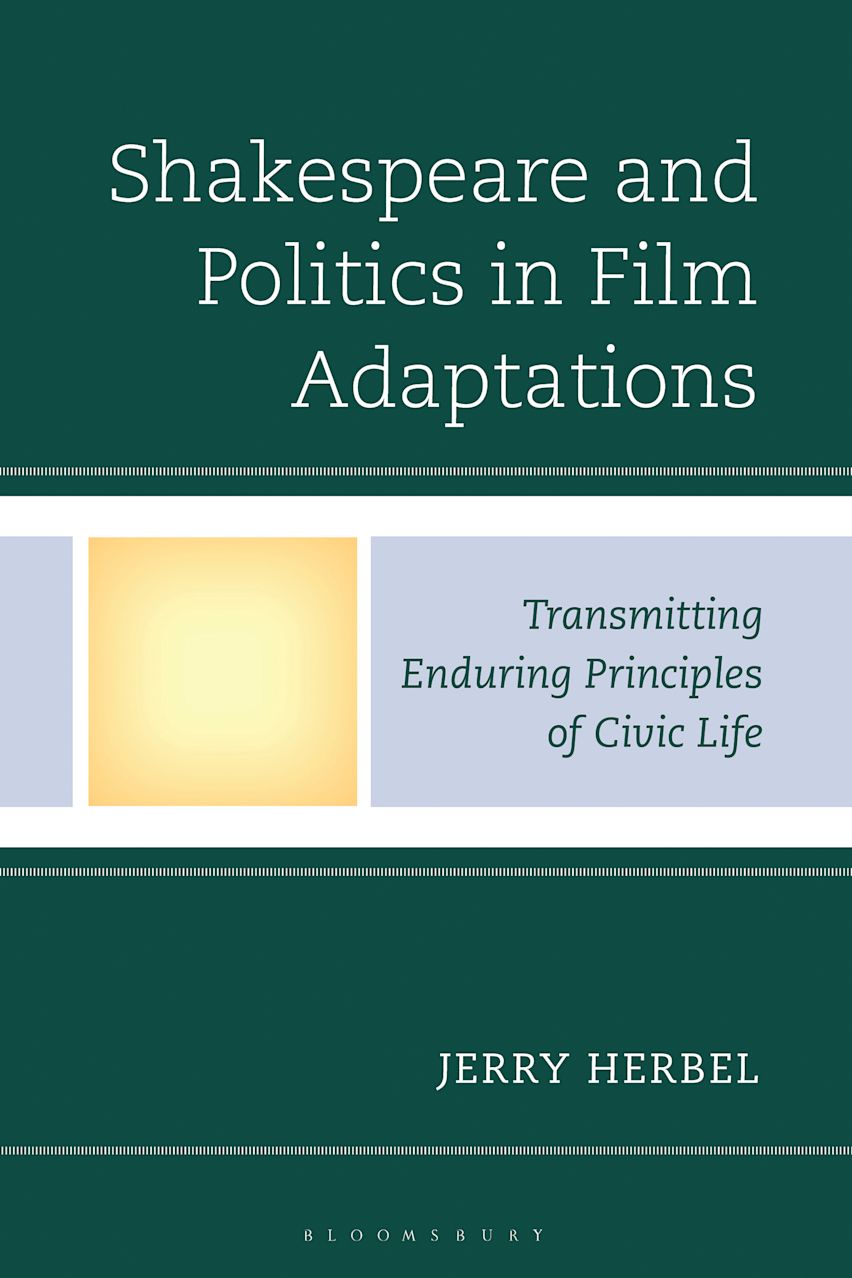
Shakespeare and Politics in Film Adaptations
Transmitting Enduring Principles of Civic Life
Description
Unquestionably the most filmed author of all time, the recent explosion of excellent film adaptations of Shakespeare has made his works accessible to filmgoers worldwide. Jerry Herbel argues that Shakespeare's ideas about enduring principles of politics transcend their own time. The book tackles head-on arguments criticizing Shakespeare's supposedly outdated ideas on war, family, law, and statesmanship, showing to the contrary that his insight into these crucial elements of civic life is still essential for students of modern politics. Many contemporary directors and actors of film adaptations have demonstrated this point. Herbel examines Henry V (1985) directed by Kenneth Branagh, Coriolanus (2011) directed by Ralph Fiennes, King Lear (2018) directed by Richard Eyre, and The Tragedy of Macbeth (2021) directed by Joel Coen. Each chapter provides historical context for Shakespeare's original productions along with analyses of how these films convey the same foundational elements of politics to the present. The book echoes Ben Jonson's famous statement about Shakespeare: “He was not of an age, but for all time!”
Accessibility Information
Additional accessibility information
- PDF/UA-2, 1.4
- accessibility@bloomsbury.com
Hazards
The publication contains no hazards
Support for non-visual reading
Has alternative text descriptions for images
Navigation
- Page list to go to pages from the print source version
- Elements such as headings, tables, etc for structured navigation
- All or substantially all textual matter is arranged in a single logical reading order
Table of Contents
Chapter 1: Shakespeare, Film, And First Principles Of Politics
Chapter 2: Shakespeare's Wars
Chapter 3: The Family the State Relies On
Chapter 4: The Unacknowledged Republic
Chapter 5: Statesmanship Reconsidered
Conclusion
Product details

| Published | 04 Mar 2027 |
|---|---|
| Format | Ebook (PDF) |
| Edition | 1st |
| Pages | 192 |
| ISBN | 9798216261414 |
| Imprint | Bloomsbury Academic |
| Series | Politics, Literature, & Film |
| Publisher | Bloomsbury Publishing |
Reviews
Related Titles