Indigenous Peoples and Sovereign Citizen Pseudolaw
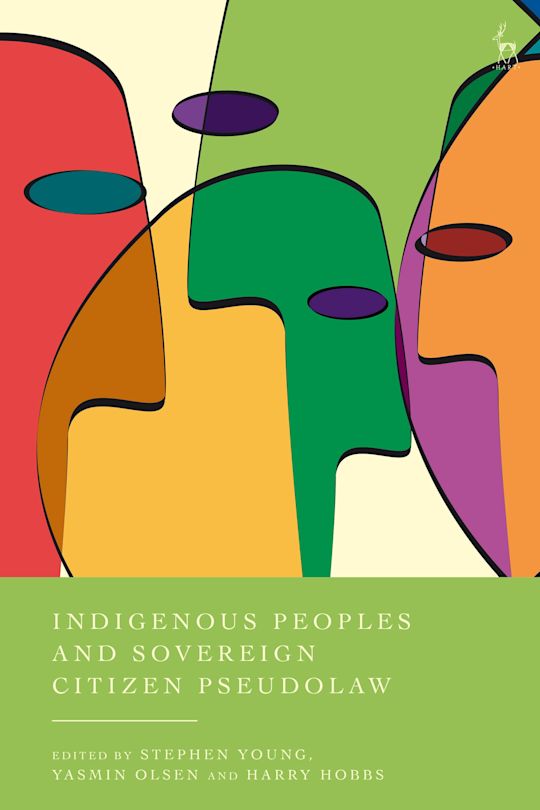

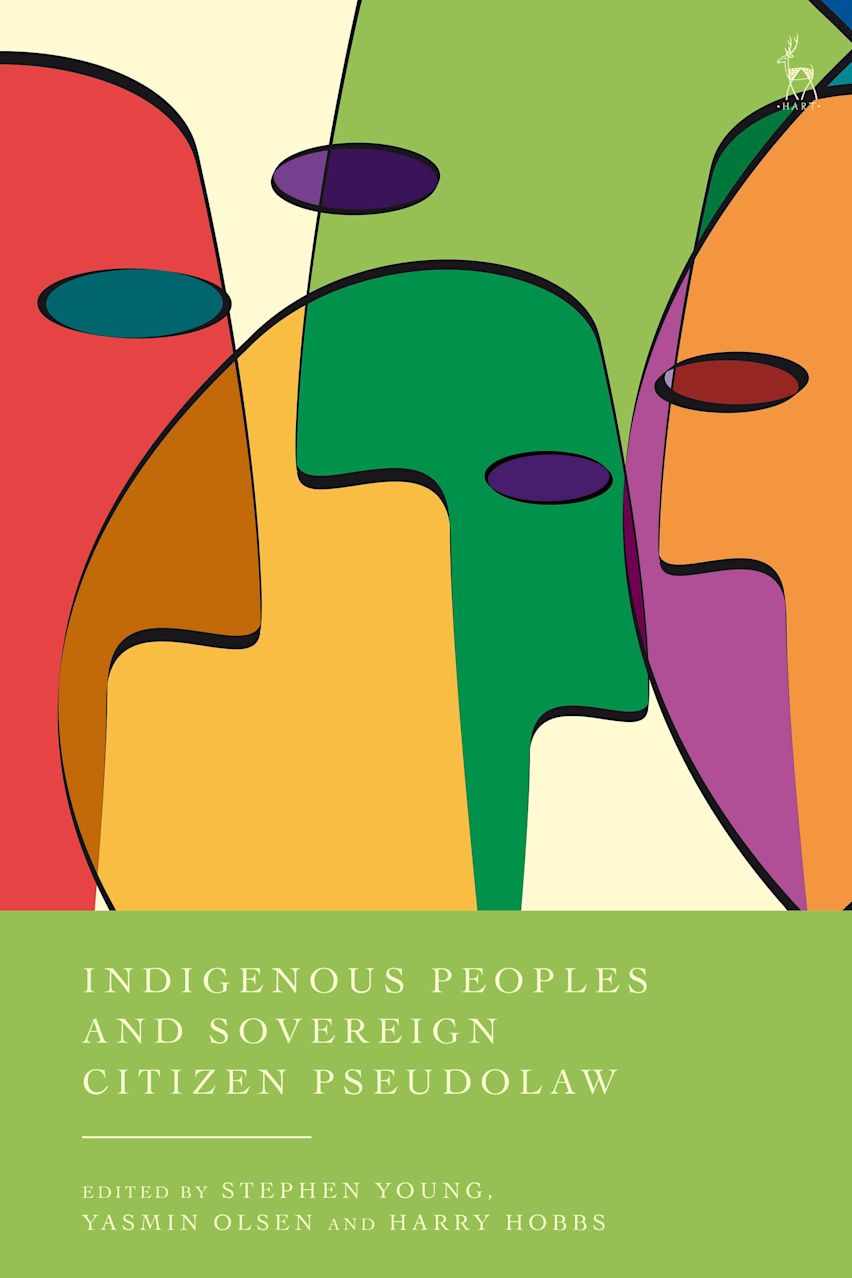
Indigenous Peoples and Sovereign Citizen Pseudolaw
Buying pre-order items
Ebooks and Audiobook
You will receive an email with a download link for the ebook or audiobook on the publication date.
Payment
You will not be charged for pre-ordered books until they are available to be shipped. Pre-ordered ebooks will not be charged for until they are available for download.
Amending or cancelling your order
For orders that have not been shipped you can usually make changes to pre-orders up to 72 hours before the publishing date.
Payment for this pre-order will be taken when the item becomes available
Description
This book confronts a pressing and unsettling development at the intersection of law, sovereignty, and Indigenous rights: the growing entanglement between Indigenous legal traditions and sovereign citizen pseudolaw.
Bringing together leading scholars from law, anthropology, Indigenous studies, and related disciplines, the volume exposes how pseudolegal movements increasingly appropriate the language and symbolism of Indigenous sovereignty to advance anti-state and conspiratorial agendas.
The collection shows that this appropriation is not confined to non-Indigenous actors. In contexts of long-standing injustice and frustration with state institutions, some Indigenous individuals are also drawn to sovereign citizen arguments that promise autonomy or escape from state authority. Through careful analysis, the contributors explain why these claims may appear attractive, while demonstrating that they rest on legal fantasies fundamentally at odds with Indigenous legal orders. Where Indigenous laws are collective, relational, and grounded in responsibilities to land and community, pseudolaw is individualistic, property-centred, and rooted in settler-colonial entitlement.
As the first scholarly collection to systematically address this phenomenon, the volume calls for renewed intellectual clarity and sustained engagement between academics, legal practitioners, and Indigenous communities. The book traces how pseudolaw repackages older colonial strategies of appropriation and erasure in new forms. It reveals the tangible harms these entanglements cause: legal confusion, political vulnerability, and the erosion of the credibility of genuine Indigenous sovereignty claims. It offers a powerful warning about the dangers of pseudolaw and a compelling case for strengthening Indigenous-led pathways to justice, self-governance, and sovereignty.
Accessibility Information
Additional accessibility information
- EPUB 3.0
- Conforms with the requirements of EPUB Accessibility Spec v1.1
- WCAG level AA
- WCAG v2.2 compliant
- accessibility@bloomsbury.com
Hazards
The publication contains no hazards
Support for non-visual reading
- No accessibility features offered by the reading system, device or reading software are disabled or otherwise unusable with the product
- Has alternative text descriptions for images
Visual adjustments
Appearance of the text and page layout can be modified according to the capabilities of the reading system (font family and size, spaces, as well as color of background and text)
Navigation
- Page list to go to pages from the print source version
- Elements such as headings, tables, etc for structured navigation
- All or substantially all textual matter is arranged in a single logical reading order
- Content is enhanced with ARIA roles to optimize organization and facilitate navigation
- Purposes of all links are made clear
Rich content
Language tagging provided
Table of Contents
Part One: Conceptualising the Relationship
2. The Concerning Intersections of Sovereign Citizens and Indigenous Sovereignty Claims, Stephen Young (University of Otago, New Zealand), Harry Hobbs (University of New South Wales, Australia)
3. Kia Mau ki te Aka Matua – Hold on to the Reliable Vine: The Incompatibility of Pseudolaw and Tikanga Principles, Anna Pinenga Coddington (Auckland University of Technology, New Zealand)
4. Differentiating Indigenous Sovereign Citizen Claims from Discourse on Indigenous Sovereignty in Australia: An Anthropological Insight, Pascale Taplin (Australia National University), Tahnee Innes (James Cook University), and Nicolas Peterson (Australia National University)
5. On “Sovereignty”: Indigenous Resistance in the Wake of Pseudolaw Extremists and Self-Indigenizers, Taylor Mills (Michigan State University, USA)
Part Two: Encounters and Convergence
6. You Stole the Air I Breathe: False Claims of Indigenous Legal Status in Canada, Donald J Netolitzky (Former and retired Complex Litigant Management Counsel, Alberta Court of King's Bench, Canada)
7. Improvise, Adapt, Overcome: Novel Pseudolaw in Aotearoa New Zealand and the Adoption of Tino Rangatiratanga by Pseudolaw Adherents, William Biss (University of Otago, New Zealand)
8. Something in the Water Supply? First Nations Sovereignty and Pseudolaw in Australia, Timothy Dauth (Crown Solicitor's Office, NSW, Australia)
9. Sovereign Nations or Sovereign Citizens? The Entanglement of Indigenous Jurisdictional Challenges and Pseudolaw in Aotearoa New Zealand's Criminal Courts, Fleur Te Aho (University of Auckland, New Zealand)
Part Three: Beyond the Settler-Indigenous Paradigm
10. Indigenous Germans? A Strategic Reframing in German Pseudolegal Discourse, Anna Löbbert (University of Oxford, England)
11. 'I'd rather be dead than a slave': On the Entanglement of Frisian Indigeneity and Sovereign Citizenship, Luuk de Boer (Rijksuniversiteit Groningen, Netherlands) and Itai Siegel (Leiden University, Netherlands)
12. Indigenous Dispositions: Sovereign Citizen Religious/Legal Claims to Indigeneity, Spencer Dew (Ohio State University, USA)
13. The Great White Brother from the East: David Icke, Indigenous Cultures, and the Creation of Cosmic Pseudolaw, Joseph McAulay (University of Oxford, England)
Afterword, Yasmin Olsen (University of Otago, New Zealand)
Product details
| Published | 29 Apr 2027 |
|---|---|
| Format | Ebook (Epub & Mobi) |
| Edition | 1st |
| Pages | 352 |
| ISBN | 9781509999439 |
| Imprint | Hart Publishing |
| Series | Hart Studies on Contested Legalities |
| Publisher | Bloomsbury Publishing |

Related Titles