A Genealogy of Personhood
Fictions of Law, Life, and Artificial Intelligence
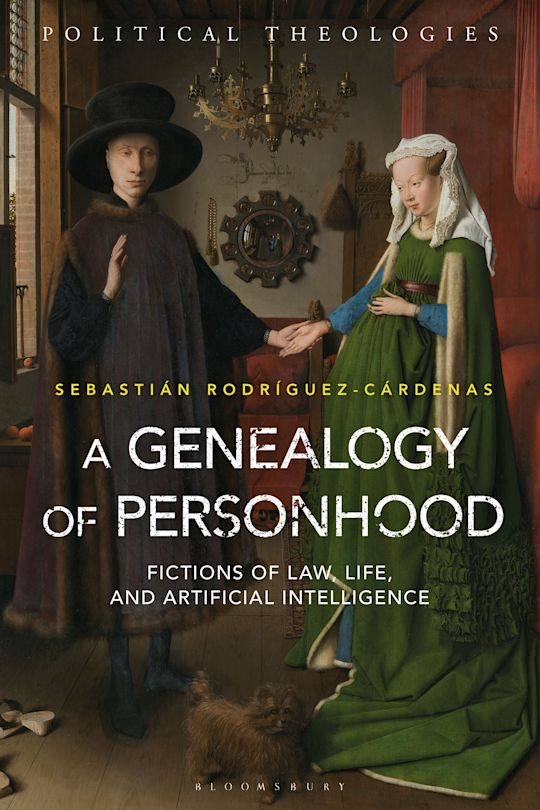

A Genealogy of Personhood
Fictions of Law, Life, and Artificial Intelligence
Buying pre-order items
Ebooks and Audiobook
You will receive an email with a download link for the ebook or audiobook on the publication date.
Payment
You will not be charged for pre-ordered books until they are available to be shipped. Pre-ordered ebooks will not be charged for until they are available for download.
Amending or cancelling your order
For orders that have not been shipped you can usually make changes to pre-orders up to 72 hours before the publishing date.
Payment for this pre-order will be taken when the item becomes available
Description
Are the boundaries of human life fixed or open to interpretation and reinvention, and is personhood just a fictional construct? The recent attributing of human dignity to rivers, robots, and now AI, has challenged how we think about the frame of the human. But is this a new phenomenon?
This book examines the shifting boundary between human and non-human dignities, rights and freedoms. From Roman law to today's debates surrounding animals, forests, and AI, the book reveals that the boundary between persons and things - between what is human and what is not - has never been fixed, but is an open and contested frame determined by legal, theological, and biopolitical practices.
The book presents a cartography of personhood in Western culture - from Roman jurists and theatre to theological ideas - followed by a consideration of how these same ideas have extended or challenged human definitions. Within this two-part structure, the six chapters map a deep relationality between the politics of humanization and dehumanization, between fictions that both protect and exclude, subjectify and subject; historical layers that have provided the groundwork for modern juridical and biopolitical conceptions of personhood, granted with rights, agency and freedoms.
Combining a historian's scope with the keen critical eye of a philosopher, Rodríguez-Cárdenas reveals how personhood works in two ways: it can be both forged by cultural narratives as well as denied. Rather than a timeless essence, personhood is a historical and contested formation, produced through shifting fictions of inclusion and exclusion.
Accessibility Information
Additional accessibility information
- EPUB 3.0
- Conforms with the requirements of EPUB Accessibility Spec v1.1
- WCAG level AA
- WCAG v2.2 compliant
- accessibility@bloomsbury.com
Hazards
The publication contains no hazards
Support for non-visual reading
- No accessibility features offered by the reading system, device or reading software are disabled or otherwise unusable with the product
- Has alternative text descriptions for images
Visual adjustments
Appearance of the text and page layout can be modified according to the capabilities of the reading system (font family and size, spaces, as well as color of background and text)
Navigation
- Page list to go to pages from the print source version
- Elements such as headings, tables, etc for structured navigation
- All or substantially all textual matter is arranged in a single logical reading order
- Content is enhanced with ARIA roles to optimize organization and facilitate navigation
- Purposes of all links are made clear
Rich content
Language tagging provided
Table of Contents
Part One: The Cartography of Personhood
1. A Mosaic of Personhood
2. Theatre, Grammar, Theology, Reason
3. From Politics to Biology
Part Two: Personhood of Non-human Entities
4. Thresholds
5. Simulacra and Erasures
6. Apertures, Frames, Voices
Conclusion
Notes
Bibliography
Index
Product details

| Published | Mar 18 2027 |
|---|---|
| Format | Ebook (Epub & Mobi) |
| Edition | 1st |
| Pages | 256 |
| ISBN | 9781350650749 |
| Imprint | Bloomsbury Academic |
| Series | Political Theologies |
| Publisher | Bloomsbury Publishing |
Related Titles