Born-digital Literature in the Foreign Language Classroom


Born-digital Literature in the Foreign Language Classroom
Buying pre-order items
Ebooks and Audiobook
You will receive an email with a download link for the ebook or audiobook on the publication date.
Payment
You will not be charged for pre-ordered books until they are available to be shipped. Pre-ordered ebooks will not be charged for until they are available for download.
Amending or cancelling your order
For orders that have not been shipped you can usually make changes to pre-orders up to 72 hours before the publishing date.
Payment for this pre-order will be taken when the item becomes available
- Delivery and returns info
-
Free CA delivery on orders $40 or over
Description
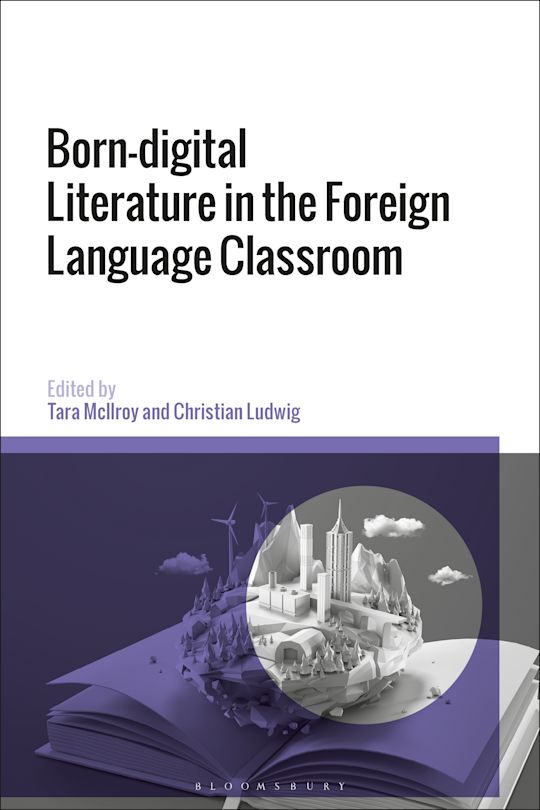
This edited collections brings together different approaches to born-digital literature across the foreign language learning curriculum, with practical applications for curriculum design and course planning. The book develops a framework that takes into account the increasing appearance of born-digital literature and how it shapes the interaction between creator and audience. It covers a broad variety of types of born-digital literature which so far have not been an explicit focus in the context of language teaching, while also providing a grounding in the current discussions around digital literacies in education. In response to the pace of change in recent years in the accessibility and wider use of new types of digital literature, this volume focuses on innovative approaches from a wide range of educational contexts while considering the needs of learners from diverse backgrounds. Running themes across the chapters are: creativity, learner autonomy, critical reading, reader response and teacher development. The volume includes contributions from both renowned scholars in the field and the new voices of early career researchers, from Belgium, Germany, Japan, Libya, Spain, Sweden and the UK.
Table of Contents
2. Embracing 21st Century Literature: Instapoetry in the Language Classroom, Mary Hillis (Ritsumeikan University, Japan)
3. Innovative Classroom Practices with Born-Digital Japanese Literature, Vicky Richings (Hosei University, Japan)
4. Viral Fiction Going Viral - Electronic Tales of Plagues and Pandemics, Christian Ludwig (Free University of Berlin, Germany)
5. Fanfiction and Role-Playing through the Movie Sing: A Born-Digital Text to Promote Students' Multiliteracies in EFL in Primary Education, Agustín Reyes-Torres, Margarida Castellano-Sanz and Natalia Huerta-Pastor (Universitat de València, Spain)
6. From the Digital Wilds to the Japanese Garden: Classroom Experiences with Implementing Fanfiction and Interactive Fiction-inspired Activities in the Secondary EFL Classroom, Joeri Van der Veken (KU Leuven, Belgium), Frederik Cornillie (KU Leuven, Belgium), J. Buendgens-Kosten (Goethe University, Germany)
7. What Scanlation Offers in Teaching Japanese-English Translation, Hiroko Inose (Dalarna University, Sweden)
8. Using Digital Storyboarding to Explore Short Fiction: Strategies for Implementing Digital Technology in the Libyan EFL Literature Classroom, Fatma Abu-Baker (University of Edinburgh, UK) and Hana A. El-Badri (University of Benghazi, Libya)
9. Hello, my AI (Co-)Writer: Creative Writing in the Age of Artificial Intelligence, Christian Ludwig (Free University of Berlin, Germany)
10. Afterword: The Future of Born-digital Literature, Tara McIlroy (Rikkyo University, Japan) and Christian Ludwig (Free University of Berlin, Germany)
References
Index
Product details

| Published | Feb 04 2027 |
|---|---|
| Format | Hardback |
| Edition | 1st |
| Pages | 224 |
| ISBN | 9781350470422 |
| Imprint | Bloomsbury Academic |
| Illustrations | 10 bw illus |
| Dimensions | 234 x 156 mm |
| Publisher | Bloomsbury Publishing |
Related Titles