Knowledge as a Feeling
How Neuroscience and Psychology Impact Human Information Behavior
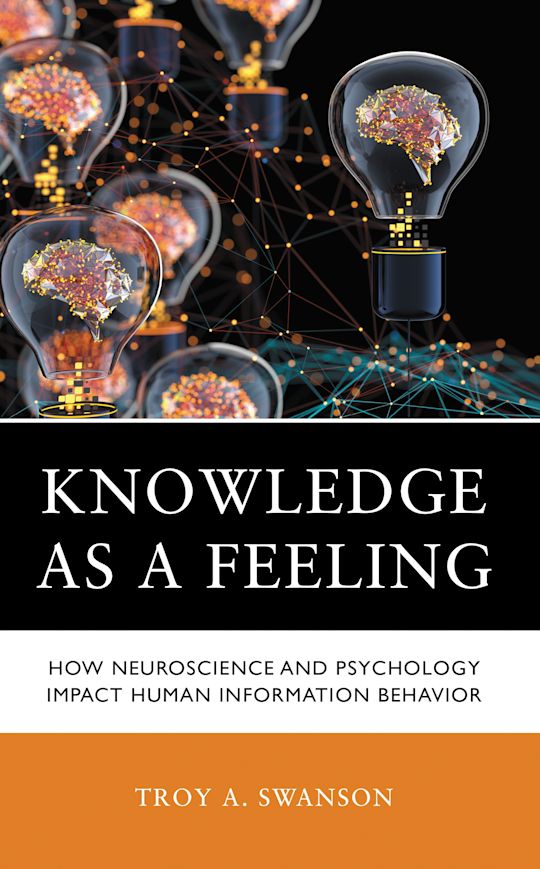

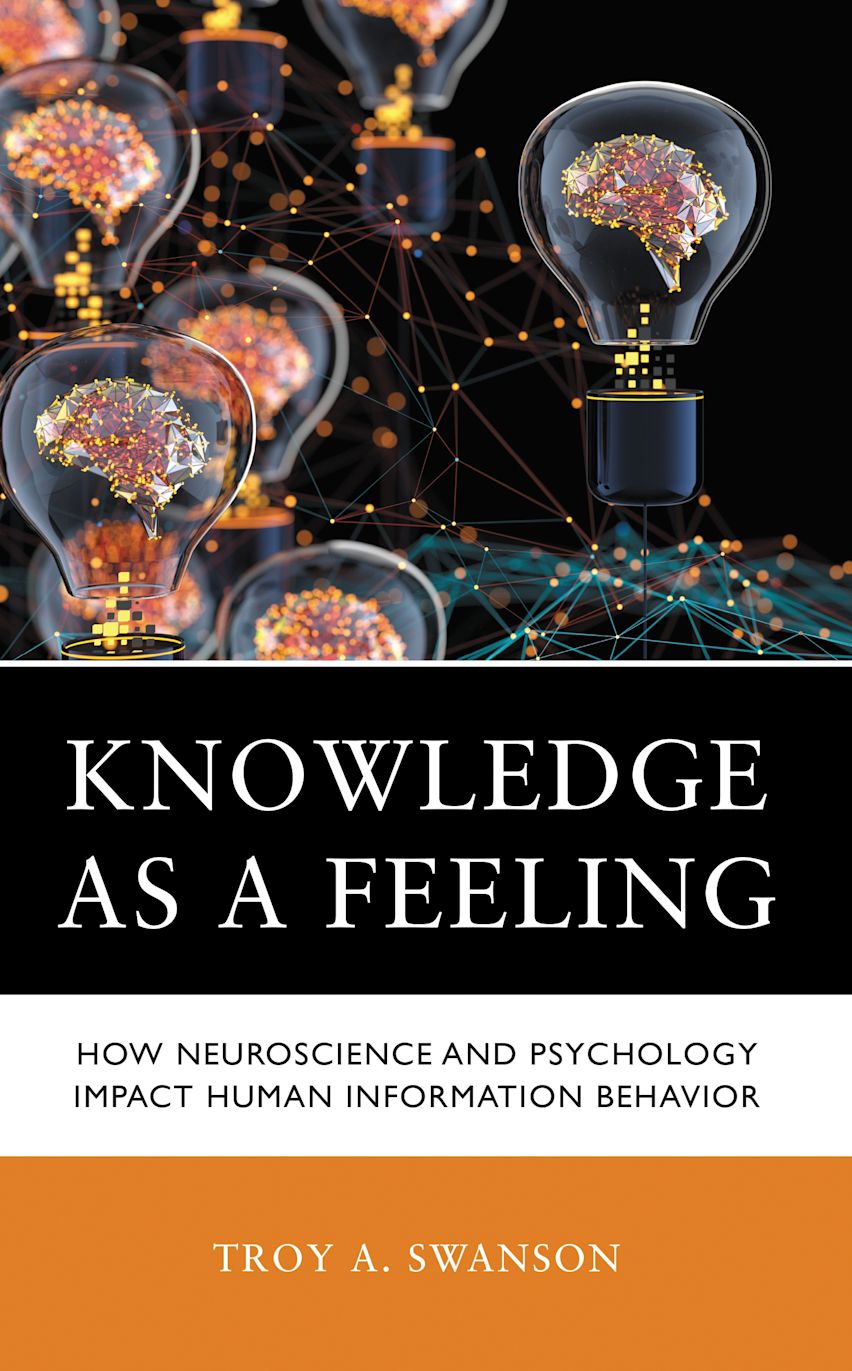
Knowledge as a Feeling
How Neuroscience and Psychology Impact Human Information Behavior
Buying pre-order items
Ebooks and Audiobook
You will receive an email with a download link for the ebook or audiobook on the publication date.
Payment
You will not be charged for pre-ordered books until they are available to be shipped. Pre-ordered ebooks will not be charged for until they are available for download.
Amending or cancelling your order
For orders that have not been shipped you can usually make changes to pre-orders up to 72 hours before the publishing date.
Payment for this pre-order will be taken when the item becomes available
This product is usually dispatched within 3 days following the publication date
- Delivery and returns info
-
Free CA delivery on orders $40 or over
Description
Much of information science theory assumes a type of rationality in how individuals process the world around them but the impact of misinformation and disinformation along with the polarization of society into competing information factions calls for new understandings around our relationships to information. Advances in neuroscience and psychology shed new light on how the brain processes information using both conscious and unconscious systems. Current theory in neuroscience emphasizes that the mind is not a unified whole but a network of networks constructing reality to anticipate needs. Knowledge is not a rational process but centers around the feeling of knowing which is the net output of competing brain processes. The feeling of knowing assumes a group context and offers a social epistemological stance that judges knowledge within this group context. With knowledge built into groups, power dynamics allow work to be accomplished but also privilege some group members over others.
The feeling of knowing has significant implications for information science challenging theoreticians and practitioners to reconsider how individuals process information. For information behavior, the feeling of knowing offers a fuller picture looking at conscious and unconscious processing in the production of knowledge. For information literacy, the feeling of knowing sheds light on how individuals evaluate information and synthesize new sources into their existing knowledge. Ultimately, the feeling of knowing leads us toward new reflective and metacognitive tools that help meet this moment in the evolution of our information ecosystem.
This book explores the idea that knowing is a feeling that results from the interactions of the brain’s unconscious and conscious processes and not through the accumulation of facts. It's intended to help librarians, educators, and information scientists better understand what neuroscience and psychology are teaching about what it means to know and how our brain learns.
Product details
| Published | Oct 29 2026 |
|---|---|
| Format | Paperback |
| Edition | 1st |
| Pages | 326 |
| ISBN | 9798216547815 |
| Imprint | Rowman & Littlefield |
| Dimensions | 229 x 152 mm |
| Publisher | Bloomsbury Publishing |
Reviews

ONLINE RESOURCES
Bloomsbury Collections
This book is available on Bloomsbury Collections where your library has access.
Related Titles