Black Statues, Monuments, and Public Memory in Washington, DC
Etched in Stone
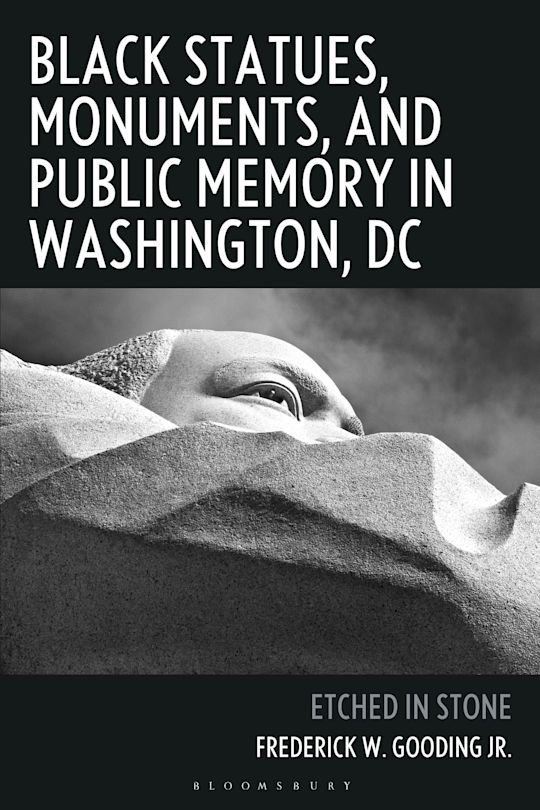

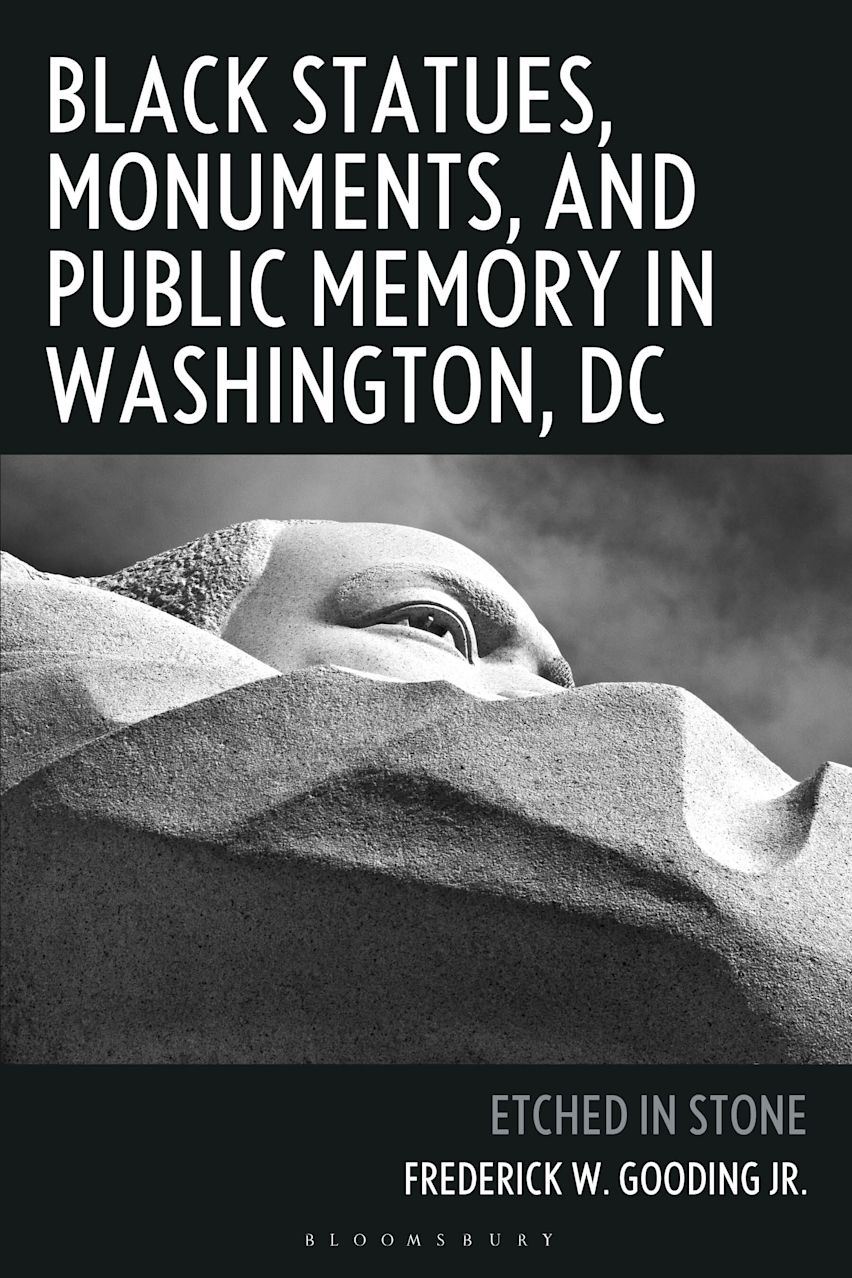
Black Statues, Monuments, and Public Memory in Washington, DC
Etched in Stone
Description
When was the last time you saw a Black statue?
By examining Black monuments in Washington, DC, this book offers an incisive reflection on cultural heritage and public history in the United States, showing how public monuments embody significant communal investments and serve as powerful expressions of political authority, signaling who is deemed worthy of collective remembrance and respect. Frederick W. Gooding Jr. combines quantitative and qualitative data in order to pose the question: What does the presence (or absence) of Black statues reveal about African American inclusion in the contemporary United States?
Tracing the evolving rhetoric, politics, and cultural weight of Black monuments from the nineteenth century to the present, Gooding examines how statues function as persuasive artifacts: what they assert, what they omit, and why they so often stand apart from dominant public narratives. He brings a missing perspective to current debates about Confederate monument removals by foregrounding Black monuments that have long remained hidden in plain sight. The striking scarcity of such works throughout the District not only signals visible absence but also reflects persistent messages about the perceived value and visibility of African Americans. Gooding offers a clear framework for understanding how monuments shape and are shaped by racialized histories of American public life, ultimately showing how the limited presence of Black statues is not merely a matter of representation, but a powerful indicator of whose histories and whose humanity is granted a place in national memory.
Accessibility Information
Additional accessibility information
- PDF/UA-2, 1.4
- accessibility@bloomsbury.com
Hazards
The publication contains no hazards
Support for non-visual reading
Has alternative text descriptions for images
Navigation
- Page list to go to pages from the print source version
- Elements such as headings, tables, etc for structured navigation
- All or substantially all textual matter is arranged in a single logical reading order
Table of Contents
Note on the Text
Preface: Initial Etchings
Chapter 1: Rock Solid Rhetoric
Chapter 2: Why Statues Stand Alone
Chapter 3: 19th Century
Chapter 4: Pre-World War II
Chapter 5: Black Freedom to Black Power
Chapter 6: 1980s
Chapter 7: 1990s
Chapter 8: 2000s
Chapter 9: 2010s
Chapter 10: 2020s
Chapter 11: What Do Black Monuments Stand to Tell Us?
Appendix A: ORB Test Analysis
Appendix B: Neoclassical Construction in DC
Bibliography
Index
About the Author
Product details

| Published | 07 Jan 2027 |
|---|---|
| Format | Ebook (PDF) |
| Edition | 1st |
| Pages | 336 |
| ISBN | 9798216252023 |
| Imprint | Bloomsbury Academic |
| Illustrations | 111 bw figures, 56 tables |
| Publisher | Bloomsbury Publishing |
Reviews
Related Titles