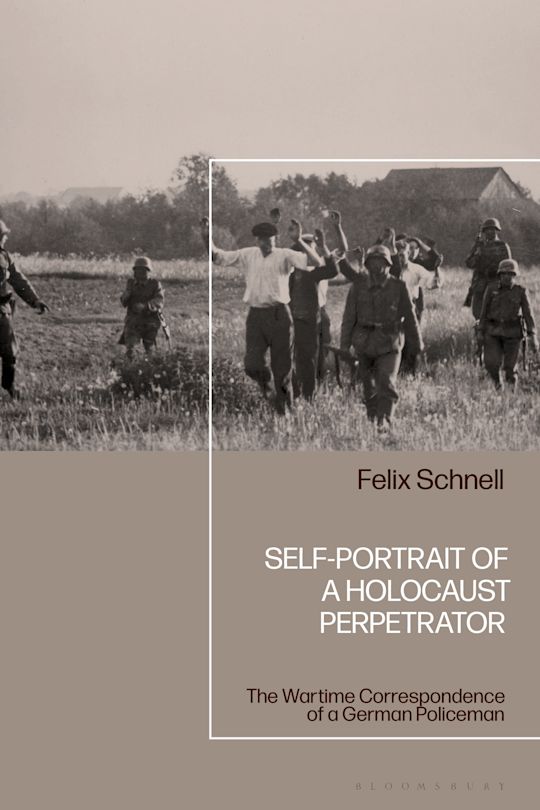
Self-Portrait of a Holocaust Perpetrator
The Wartime Correspondence of a German Policeman

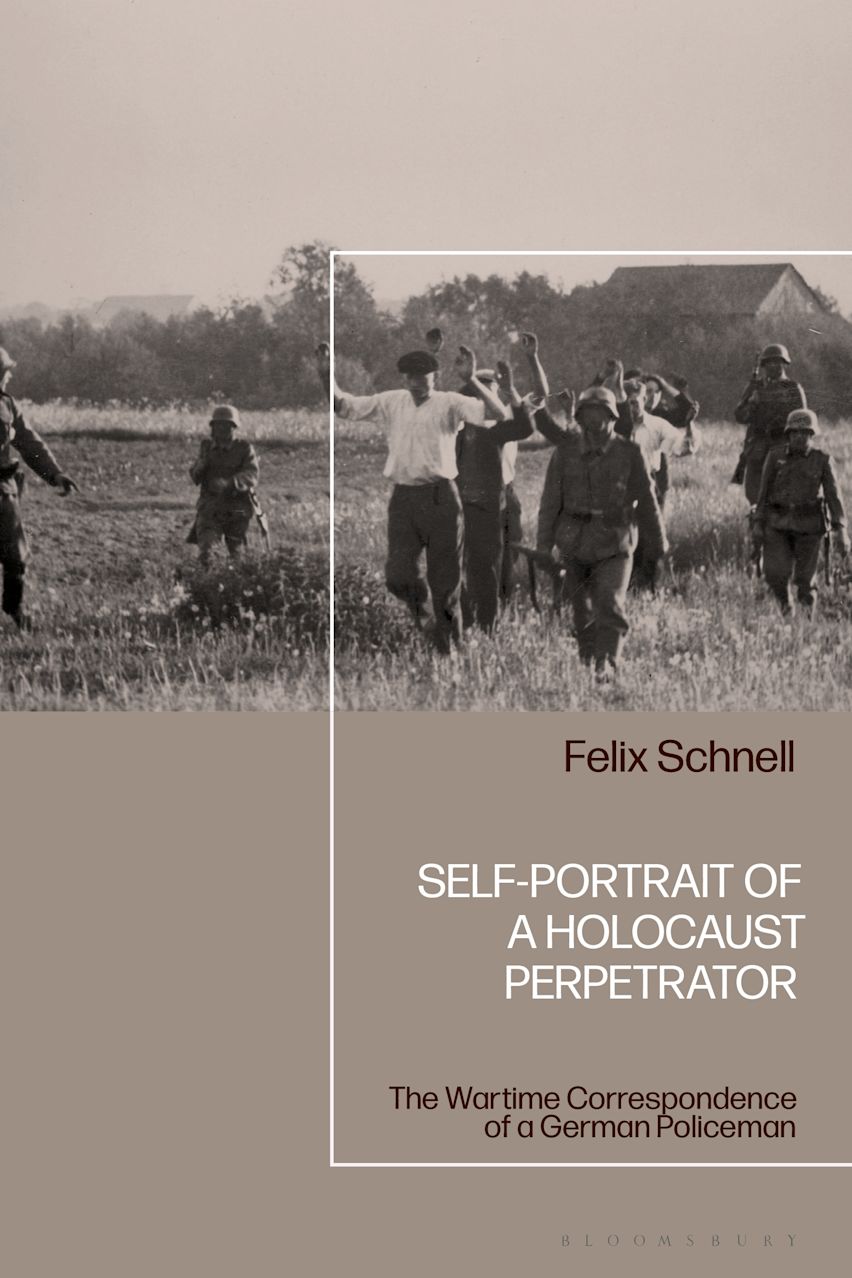
Self-Portrait of a Holocaust Perpetrator
The Wartime Correspondence of a German Policeman
Description
This book provides an insightful exploration of how a German policeman, Mathias Müller (Police Battalion 309), was involved in Nazi atrocities and mass murder behind the frontline in the Soviet Union during the Second World War. It does this through the analysis of Müller's own words and the actions he describes in the voluminous correspondence he shared with his wife at the time.
Self-Portrait of a Holocaust Perpetrator examines the correspondence from the perspective of the police unit's operational history and considers Mathias Müller's language in relation to discourses and discursive elements of the Third Reich. Schnell reflects on the personalities behind the letters, Mathias and Meta, and the rules of their 'correspondence game'. He also goes on to consider the narrative strategies Müller uses to convince his wife that he has an important role to fulfil in the East, without openly talking about what he and his comrades actually were doing. For though Müller was very much in line with the ideas and aims of the NS-leadership, his wife was not, and he had to navigate this problem skilfully in the correspondence.
The book is a unique and revealing study of a lower-rank Holocaust perpetrator that will enrich the understanding of all students and scholars of the Holocaust and the Second World War.
Accessibility Information
Additional accessibility information
- PDF/UA-2, 1.4
- accessibility@bloomsbury.com
Hazards
The publication contains no hazards
Support for non-visual reading
Has alternative text descriptions for images
Navigation
- Page list to go to pages from the print source version
- Elements such as headings, tables, etc for structured navigation
- All or substantially all textual matter is arranged in a single logical reading order
Table of Contents
1. The War of Annihilation in the East and Police Battalion 309
2. Describing Others and 'The Other'
3. Presenting the Self
4. Presenting Practices
Conclusion
Bibliography
Index
Product details

| Published | 20 Aug 2026 |
|---|---|
| Format | Ebook (PDF) |
| Edition | 1st |
| Pages | 256 |
| ISBN | 9781350603660 |
| Imprint | Bloomsbury Academic |
| Illustrations | 5 bw illus |
| Publisher | Bloomsbury Publishing |

Reviews

ONLINE RESOURCES
Bloomsbury Collections
This book is available on Bloomsbury Collections where your library has access.
Related Titles