The Silent City of Drancy
Social Housing and Holocaust Memory on the Margins of Paris

The Silent City of Drancy
Social Housing and Holocaust Memory on the Margins of Paris
Description
An expansive spatial history of Drancy, the Parisian antechamber to Auschwitz, from the 1930s to the present day.
Architecture gives form to history and memory. In this compelling book, Hesz-Wood tells the extraordinary story of a building in Drancy, a town on the north-eastern outskirts of Paris. Drancy's name has, in France at least, become synonymous with the internment and deportation of Jewish people. From 1941 to 1944, Drancy internment camp operated as an antechamber to Auschwitz: the beginning of a direct route from the suburbs of Paris to the death camps in the 'East'. 67,000 of the 75,000 Jews deported from France under Nazi occupation were at one time incarcerated in Drancy. Few returned.
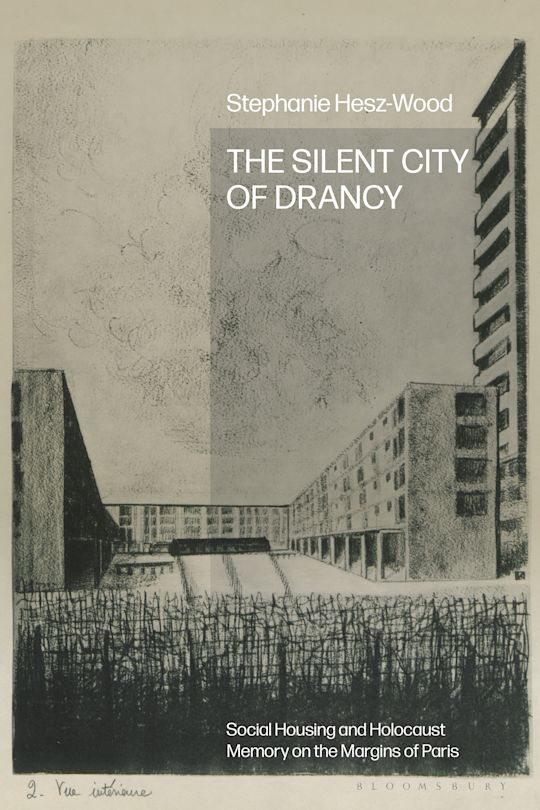
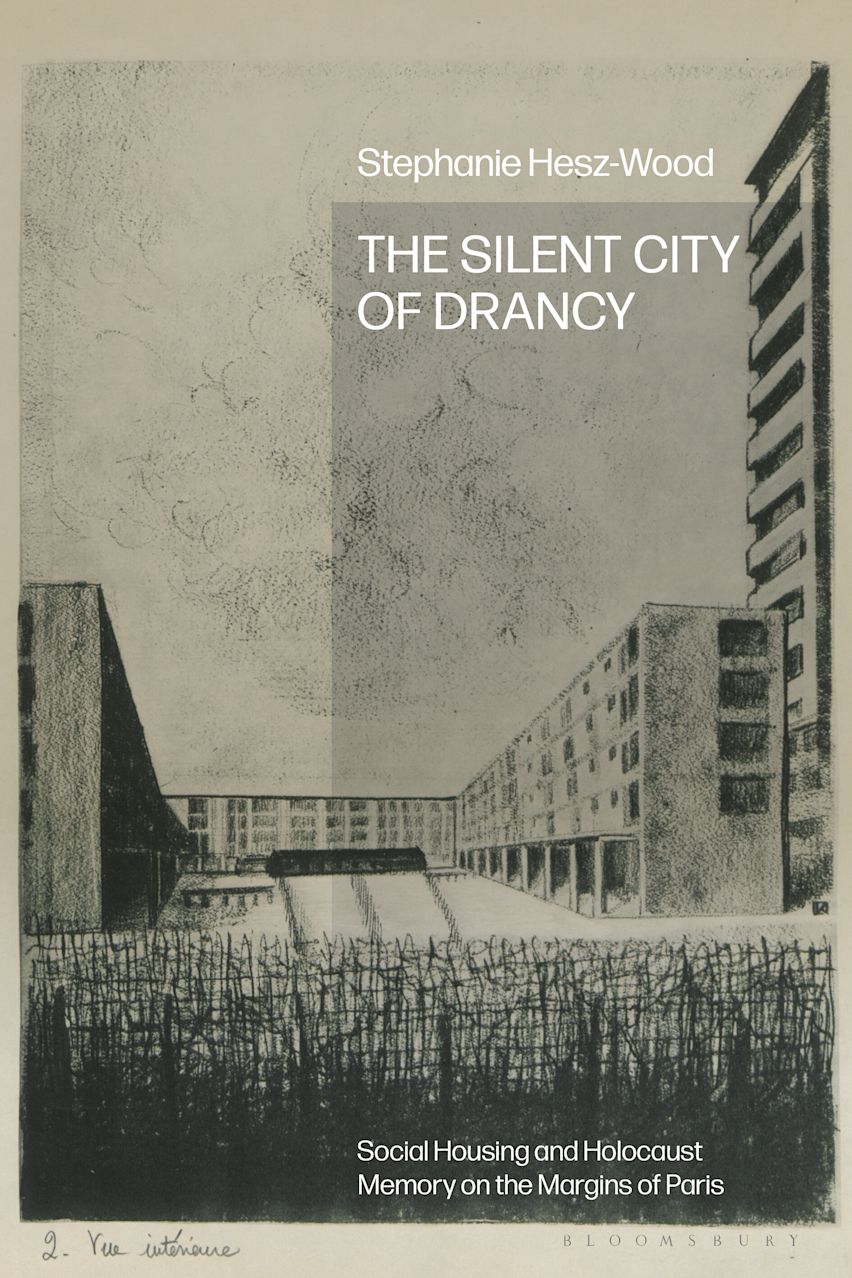
This book broadens perceptions of Drancy, revealing a place bound to, but not wholly defined by this inhuman horror. The vast building complex repurposed for the camp during the Second World War was, in fact, a ground-breaking prefabricated development, originally conceived as a model city in the early 1930s by French architects Eugène Beaudouin and Marcel Lods, and named the Cité de la Muette, 'The Silent City'. Following the war, the complex returned to its objective as social housing, which it remains today.
In listening to the narratives imbued within the Cité de la Muette over the past eight decades, Hesz-Wood describes how seemingly disparate layers interconnect. Questioning how the temporary interruption of a site permanently transforms perceptions of it, Hesz-Wood discovers how one place may come to represent antithetic ideals, and come to reconcile its cultural, social, and historical potency.
The Silent City of Drancy poignantly reveals how personal stories within one place over time can encapsulate the horrors and their after-image: a pertinent reminder that remarkable events were endured, witnessed - lived - by ordinary people in familiar places.
Accessibility Information
Additional accessibility information
- EPUB 3.0
- Conforms with the requirements of EPUB Accessibility Spec v1.1
- WCAG level AA
- WCAG v2.2 compliant
- accessibility@bloomsbury.com
Hazards
The publication contains no hazards
Support for non-visual reading
- No accessibility features offered by the reading system, device or reading software are disabled or otherwise unusable with the product
- Has alternative text descriptions for images
Visual adjustments
Appearance of the text and page layout can be modified according to the capabilities of the reading system (font family and size, spaces, as well as color of background and text)
Navigation
- Page list to go to pages from the print source version
- Elements such as headings, tables, etc for structured navigation
- All or substantially all textual matter is arranged in a single logical reading order
- Content is enhanced with ARIA roles to optimize organization and facilitate navigation
- Purposes of all links are made clear
Rich content
Language tagging provided
Table of Contents
PART 1: SPATIAL ORIGINS
Chapter 1. The Cité de la Muette
PART II: REPURPOSING
Chapter 2. Internment
Chapter 3. Deportation
Chapter 4. Liberation
PART III: MEMORIALISATION AND CO-EXISTENCE
Chapter 5. Normalisation and Remembrance
Chapter 6. History, Memory, Life
Chapter 7. Interpretation, Intervention, Representation
Conclusion
Index
Product details

| Published | 03 Sep 2026 |
|---|---|
| Format | Ebook (Epub & Mobi) |
| Edition | 1st |
| Pages | 240 |
| ISBN | 9781350455085 |
| Imprint | Bloomsbury Academic |
| Illustrations | 20 bw illus |
| Publisher | Bloomsbury Publishing |

Reviews
Related Titles