The Circumstances of Justice
Scarcity, Pluralism, and Liberal Political Philosophy
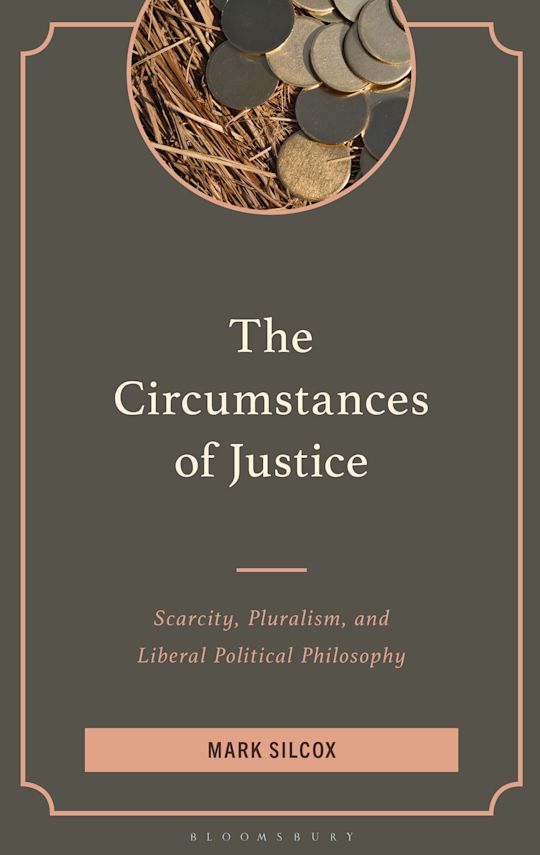

The Circumstances of Justice
Scarcity, Pluralism, and Liberal Political Philosophy
Description
The ephemeralist theory of justice challenges a foundational tenet of modern liberal political theory: that justice is the primary virtue of social institutions.
In the writings of John Rawls and his many followers, political goods in general (and much of the rest of morality) routinely get treated as having their basis in a broader human capacity to discern the norms of social justice. In Mark Silcox's alternative account, justice is better understood as an adaptive and historically situated norm, instrumentally useful, but ultimately provisional. Even if justice is rightly viewed as the most exalted goal of political life in the contemporary world, this situation is fundamentally ephemeral, insofar as our very sense of what makes the norms of justice authoritative is inseparable from an impulse to seek out conditions under which this authority might be superseded. Philosophers in the modern liberal tradition have often (following Hume) characterized justice as a fundamentally artificial concept, one that only arises as a topic of concern for human beings in certain contingent economic and psychological circumstances. But Rawls's efforts to treat justice thus conceived as the “first virtue” of human societies are misguided and philosophically indefensible. The forms of intellectual artifice involved in constructing and holding ourselves accountable to norms of justice should not also be regarded as establishing the outermost boundaries of the moral imagination.
The ephemeralist theory treats the concept of justice as tied inexorably to the circumstances of its origin, and as destined to cede its normative authority to other, latterly emergent demands of morality as historical circumstances change.
Accessibility Information
Additional accessibility information
- PDF/UA-2, 1.4
- accessibility@bloomsbury.com
Hazards
The publication contains no hazards
Support for non-visual reading
Has alternative text descriptions for images
Navigation
- Page list to go to pages from the print source version
- Elements such as headings, tables, etc for structured navigation
- All or substantially all textual matter is arranged in a single logical reading order
Table of Contents
Chapter One –Scarcity, Pluralism, And Projection
Chapter Two – Distributional Goods and Political Persons
Chapter Three – Distributive Games and the Transcendence of Justice
Afterword – Fences and the Future
Bibliography
Product details

| Published | 15 Apr 2027 |
|---|---|
| Format | Ebook (PDF) |
| Edition | 1st |
| Pages | 208 |
| ISBN | 9798216396093 |
| Imprint | Bloomsbury Academic |
| Publisher | Bloomsbury Publishing |
Related Titles